Cluely offers undetectable real-time AI prompts for interviews, exams, and dates
Founders Lee and Shanmugam parlayed a campus suspension into $15M funding
Sparks debate on privacy, ethics, and redefining mastery in the AI era

In case you didn’t know, Cluely has recently gained a lot of infamy in tech, offering an “undetectable” desktop AI assistant that monitors screens and audio to deliver real-time prompts for cracking job interviews, sales pitches, exams and even dates.
 Survey
Embracing the slogan “cheat on everything,” and backed by serious venture capitalists and securing millions in funding, Cluely’s bold marketing and privacy-raising platform seriously blurs the line between empowerment and deception. Making us reassess how AI assistance reshapes our definitions of mastery, trust and authenticity.


Beginning of Cluely “cheating AI”
Emerging in early 2025 under the provocative slogan “We want to cheat on everything,” Cluely offers an “undetectable” desktop assistant that monitors users’ screens and audio to deliver live suggestions across high-stakes scenarios – job interviews, sales pitches, online exams and even first dates.
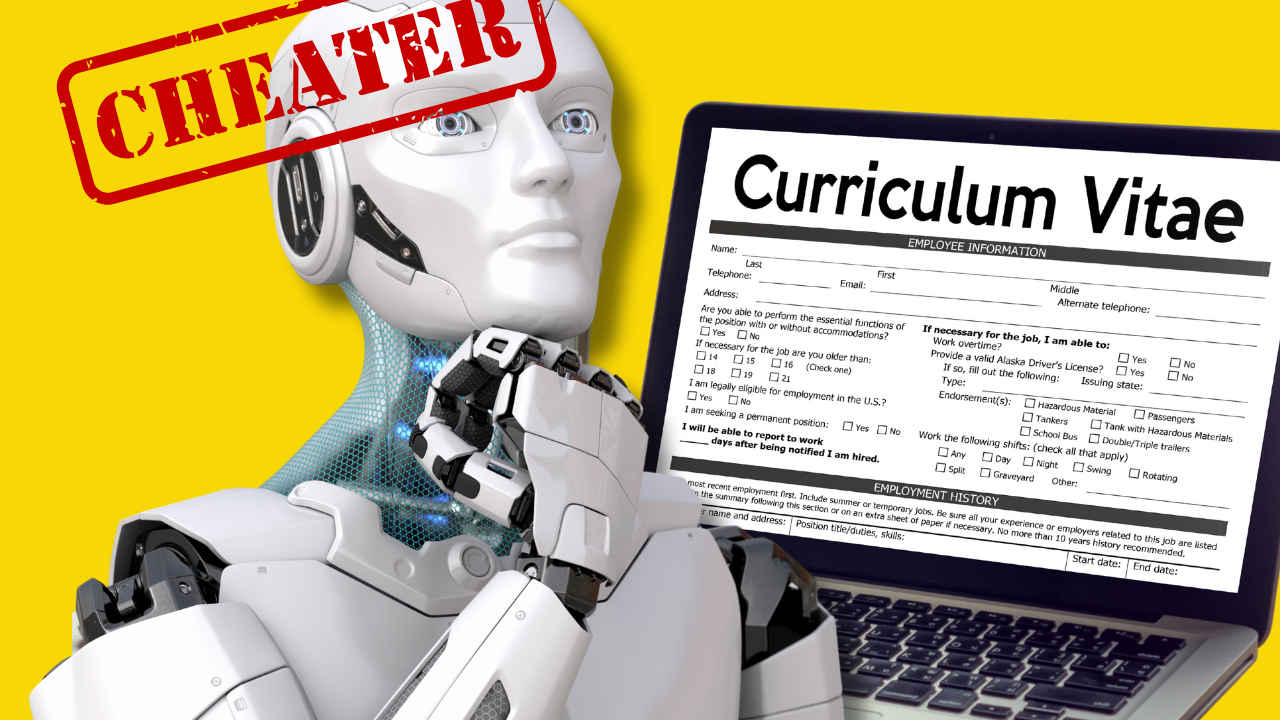
Originally launched as Interview Coder, the tool secretly injected coding answers during LeetCode-style assessments. Chungin “Roy” Lee, 21, and co-founder Neel Shanmugam conceived Cluely as a response to “broken systems” that privilege polished facades over actual competence.
A viral demo video showing the AI prompt Lee through an Amazon interview ignited campus outrage and led to the suspension of its student creators at Columbia University.
Also read: Navigating the Ethical AI maze with IBM’s Francesca Rossi
After their suspension at Columbia, the pair leaned into controversy – rebranding with a punk-rock ethos and courting virality on TikTok and Twitter. Lee’s unflinching tweets – “$5 million to change what cheating means” – encapsulate the startup’s unapologetic swagger.
Rather than retreat, the founders doubled down on their vision, broadening the scope of their offering beyond programming tests, framing AI-enabled deception as the next evolutionary leap in digital assistance – just like calculators, spell-checkers and GPS were in their early days.
Investors moved quickly. In April 2025, Cluely secured a $5.3 million seed round, and just weeks later landed a $15 million Series A led by Andreessen Horowitz. A16Z partner Bryan Kim praised Lee’s “fearlessness,” while venture-round rumors hint at aggressive growth plans: hiring fifty “growth interns” to pump out daily TikTok content and targeting one billion cumulative video views. Cluely claims $3 million in annual recurring revenue from its $20-per-month Pro plan – implying over 70,000 subscribers in mere weeks, though independent audits have yet to verify these figures.
Cluely’s “undetectable” interface sits invisibly in a browser window, ensuring that users can share screens without revealing the AI prompts. A launch video that went viral depicted the assistant coaching a live date – advising when to fake surprise, pivot after a slip-up and other “cheating” acts.
Such stunts have fueled intense discussion, obviously, where on one hand supporters hail Cluely as a confidence amplifier and productivity booster, but on the other hand detractors warn of an ethics meltdown and the erosion of merit-based systems.
What Cluely means for future of “honest AI”
Cluely’s rise forces a hard look at the boundary between assistance and deception in an AI-augmented world. Its real-time screen and audio monitoring raises privacy alarms and prompts educators, recruiters and ethicists to debate whether algorithmic scaffolding undermines authentic learning and trust.
If “cheating” becomes algorithmic, the meritocratic foundations of diplomas and résumés risk crumbling under a viral wave of polished performance acts by would-be job seekers.
Also read: What does the evolution of AI so far tell us about its future?

Yet, there’s an argument to be made that digital tools inevitably blur lines – Cluely’s doing it in a way we never truly imagined. From autocorrect to search engines, these shortcuts have now become essential conveniences. Isn’t the real challenge then not in mindless outlawing of tech-fuelled assistance but in redesigning evaluation systems? Where we shift from mere rote memorization to assessments of creativity, critical thinking and real-world problem-solving. Where employers start focusing on process over polish, probing candidates’ reasoning rather than rehearsed scripts. Similarly, educators start emphasizing on project-based learning and oral defences to counter invisible aid.
Ultimately, there’s no putting the AI genie back into the bottle, and Cluely’s provocation may actually help catalyze a new social compact – one where the measure of human ingenuity is perceived not by flawless execution but by the originality of thought and depth of insight. In this scenario, the question isn’t whether we will cheat, but how we will choose to demonstrate our humanity when every answer can be whispered into our ears or flash in front of our eyes.
Also read: Balancing AI ethics with innovation, explained by Infosys’ Balakrishna DR
 Follow Us
Jayesh Shinde
Executive Editor at Digit. Technology journalist since Jan 2008, with stints at Indiatimes.com and PCWorld.in. Enthusiastic dad, reluctant traveler, weekend gamer, LOTR nerd, pseudo bon vivant. View Full Profile


