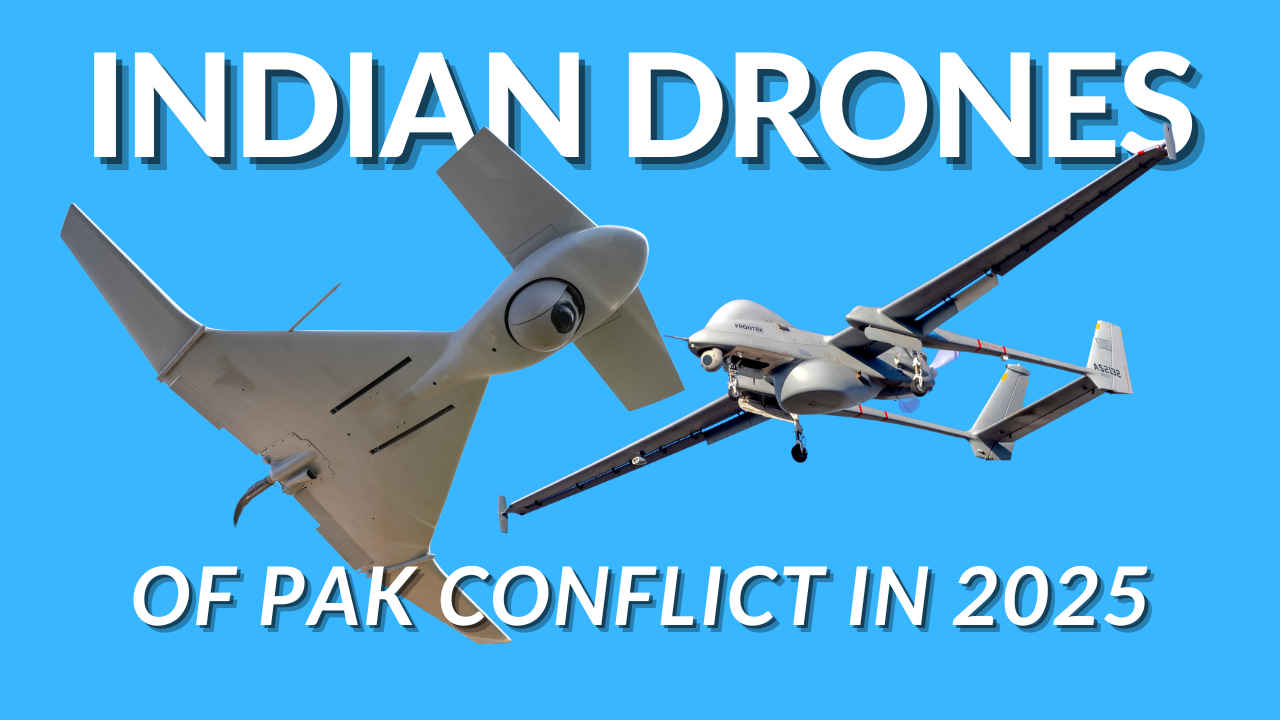
With the intensification of India-Pakistan clashes along the border, drones are now the cutting-edge military technology at the frontlines. During Operation Sindoor, India’s deployment of high-tech unmanned platforms-from loitering weapons to reconnaissance UAVs-has made deep penetration strikes, instantaneous intelligence, and instant retaliation possible while avoiding risk to Indian soldiers.
 Survey
The following is a review of the primary drones employed by India, their distinctive features, and their proven effect in this and other war theatres.


1. IAI Harop: Precision Kamikaze drone
The Harop, manufactured by Israel Aerospace Industries (IAI), is a loitering weapon that has been called a “kamikaze drone” due to its capability to act as both a UAV and a guided missile. It has the ability to detect and destroy enemy air defense systems independently and can loiter over a battlefield for six hours searching for radar emissions before descending into its target and exploding a 23 kg warhead. With electro-optical/infrared (EO/IR) sensors and anti-radiation homing, the Harop is highly effective against radar-based defense systems. Because of its compact size and low radar cross-section, its stealthiness is increased and it becomes hard to detect and intercept.
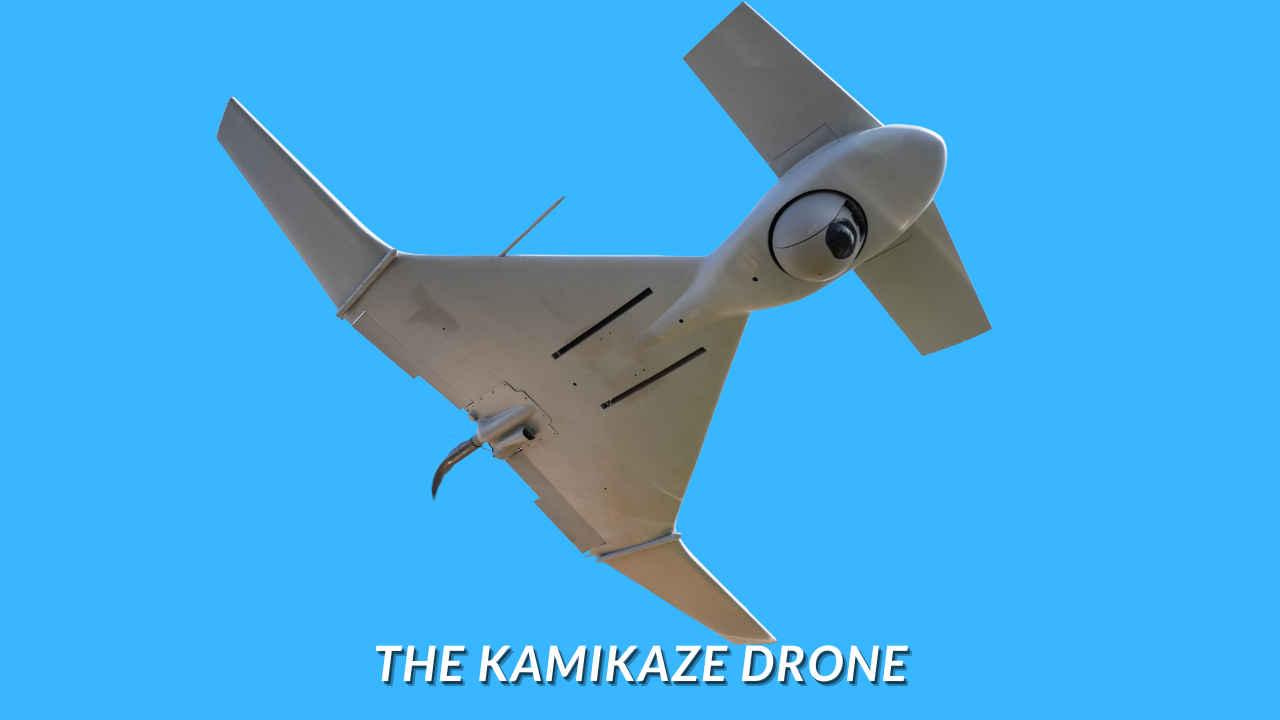
It has a combat range of 200 km and has been deployed in several wars, such as Israeli operations across Syria and Azerbaijani operations during the Nagorno-Karabakh conflict. According to reports, India deployed the Harop in recent tensions with Pakistan and dropped dozens of Harop drones on Pakistani air defense and military installations in major cities like Lahore and Karachi. Even though Pakistan had asserted that it had destroyed 25 drones, some Harops had reportedly broken through defenses and caused heavy damage to military equipment and had caused casualties.
2. IAI Harpy: SEAD specialist drone
The Harpy, designed by Israel Aerospace Industries (IAI), is an earlier generation of loitering munition technology and the immediate predecessor of the Harop. Particularly designed for Suppression of Enemy Air Defenses (SEAD), the Harpy detects and identifies radar emissions independently, homing in on active radar installations and destroying them by crashing into the source. After deployment, it runs autonomously without the necessity of additional operator intervention, and it is a very effective weapon for neutralizing hostile air defenses in contested environments.
Also read: Operation Sindoor: India’s military tech and precision strike capability explained
Proven during service with a number of nations, the Harpy boasts a good record in SEAD operations. In the recent Operation Sindoor, India is said to have employed Harpy drones in addition to the more capable Harops to destroy Pakistan’s radar and missile defense systems. Among the notable achievements during this operation was the disabling of one Chinese-supplied HQ-9 air defense battery in Lahore, showing the Harpy drone remains relevant and effective in current conflict scenarios.
3. IAI Heron: High-endurance surveillance drone
Heron, produced by Israel Aerospace Industries (IAI), is a medium-altitude, long-endurance (MALE) unmanned aerial vehicle (UAV) that is intended mainly for intelligence, surveillance, and reconnaissance (ISR) roles. In contrast to the Harop or Harpy, which are one-time strike mission loitering munitions, the Heron is a reusable vehicle that can conduct extended missions – spending up to 52 hours in flight. It has day and night sensor loads and, aside from this, can also be armed with guided weapons when needed to have limited strike missions.
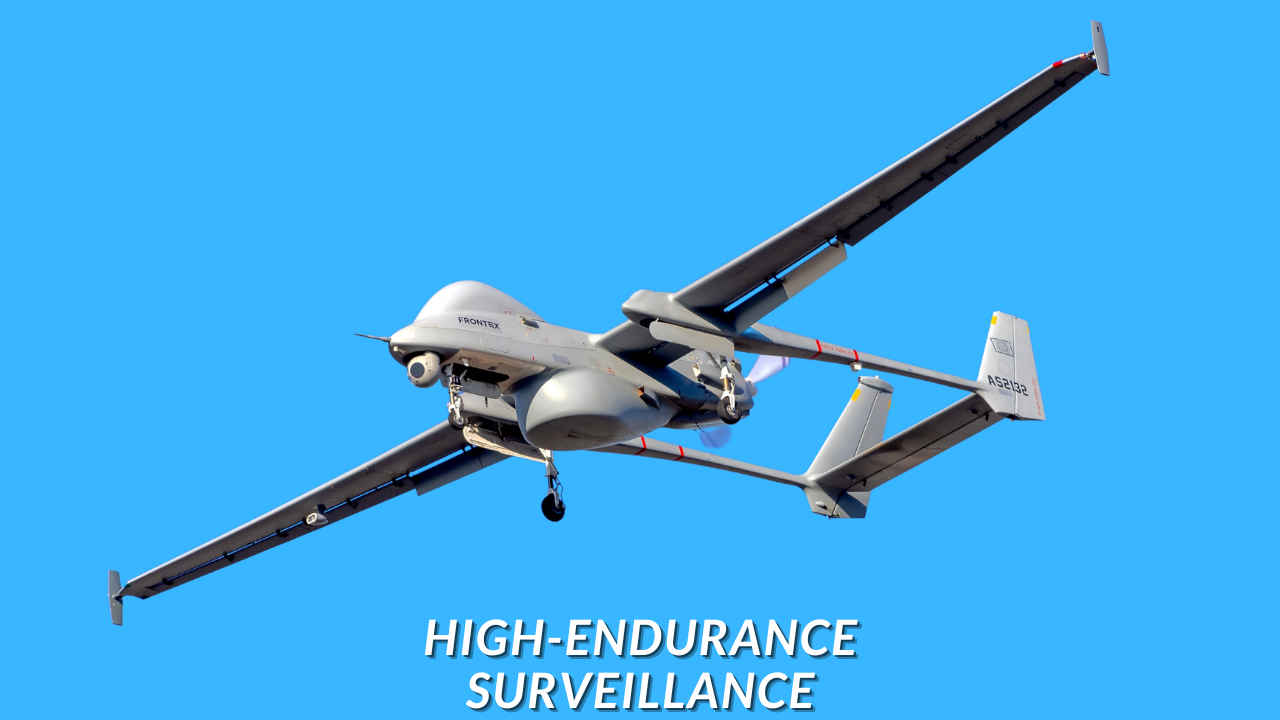
Tactically, Herons are an important asset on modern battlefields by providing situational awareness and real-time intelligence. In the current India-Pakistan conflict, Herons have been important in tracking enemy movement, targeting, and guiding air and missile strikes. Their ongoing airborne surveillance allows Indian forces to maintain areas of contention under situational awareness, resulting in better and timelier decision-making in combat operations.
4. IAI Searcher: Tactical reconnaissance drone
The Searcher, produced also by Israel Aerospace Industries (IAI), is a short-range battlefield tactical reconnaissance and intelligence gathering unmanned air system. It is more powerful and bigger than its brother, Heron, and is best suited for frontline missions because of its maneuverability and utilization for real-time surveillance. It has a 15–18 hour endurance and is fitted with electro-optical and infrared (EO/IR) sensors, thus the capability to record live video and images in day and night missions.
Also read: India-Pakistan conflict: AI, satellites, and cyber tools used to track terror targets
In battlefield operations, Searcher UAVs have been found to enhance situational awareness across open terrain. During the ensuing India-Pakistan conflict, these unmanned aerial vehicles have been deployed in large quantities along the border to monitor movement and detect potential incursions. Their uses in artillery spotting, target location, and battlefield reconnaissance make them a highly sought-after asset to Indian forces, particularly in rapidly changing tactical environments.
India’s counter-drone operations
India’s recent action in countering Islamabad’s drone swarms reflects its growing maturity in modern counter-UAS warfare. Indian Army Air Defence assets intercepted and destroyed over 50 Pakistani drones on May 8-9 by deploying a multi-layered defence grid. These incorporated an integration of optical and radar sensors, legacy platforms like the L-70 and Zu-23mm anti-aircraft guns, Schilka systems, and third-generation electronic warfare systems that could jam or spoof the incoming drones.
Also read: India-Pak conflict: India’s anti-drone UAS grid and air defence system explained
The joint strategy facilitated swift detection, tracking, and destruction of enemy drones across all theaters. The exercise was a firm display of India’s capability to neutralize nascent airborne threats, including coordinated drone swarms. Leveraging distributed defense assets, along with the employment of kinetic and non-kinetic methods, India showcased its willingness to neutralize conventional and unconventional airspace penetrations in a high-threat environment.
Drones provide decisive edge
India’s deployment of cutting-edge drones such as the Harop and Harpy has provided accurate, penetrating attacks against Pakistani air defenses and military facilities, and persistent ISR assets such as the Heron and Searcher have ensured precious intelligence. Effective neutralization of Pakistani drone swarms once again reflects India’s technological superiority and flexibility in current conflict.
With the addition of loitering munitions, high-endurance surveillance, and robust counter-drone defenses, India has established a new standard for drone warfare in South Asia-with both offensive capability and defense power on the battlefield.
Also read: India-Pak conflict: 5 examples of rise in cyber warfare threats
 Follow Us
Vyom Ramani
A journalist with a soft spot for tech, games, and things that go beep. While waiting for a delayed metro or rebooting his brain, you’ll find him solving Rubik’s Cubes, bingeing F1, or hunting for the next great snack. View Full Profile


