A neuromorphic system combines both analog and digital features and mimics the working of a human brain.
The Hala point is powered by the dynamic Loihi 2 processor.
Currently, it can be a helpful tool for advancing research in advanced computing.
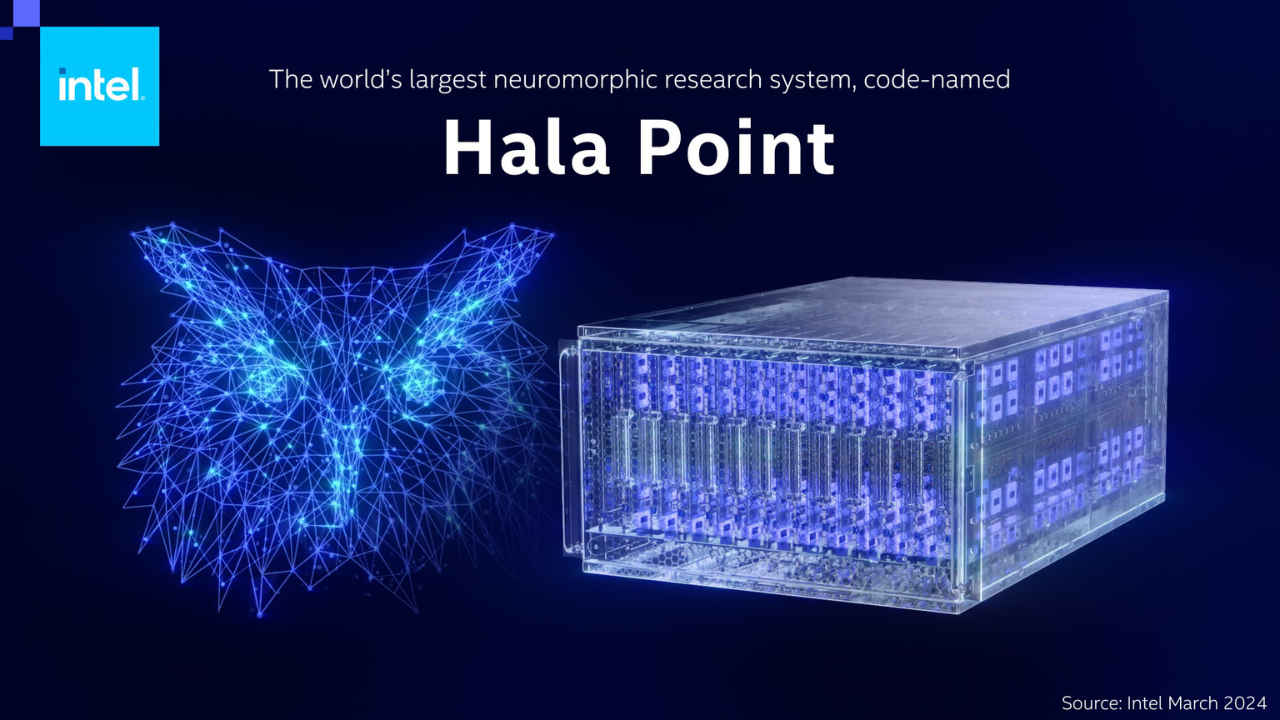
The advancements that we are seeing in the AI space are just mind-blowing, to see the least. Intel has now introduced its latest feat in the AI space. The project goes by the codename ‘Hala Point’ and is Intel’s most powerful world’s largest neuromorphic system to date. It is currently situated at the Sandia National Laboratories and is a major advancement. It is a neuromorphic system built to advance brain-inspired AI.
 Survey
So, what is a neuromorphic system? It is a system that combines both analog and digital features and mimics the working of a human brain by creating patterns with real-time computing, simulation, and copying. Just like a human nervous system functions. This is what Hala Point does.


Hala Point is an upgrade over Intel’s previous system, Pohoiki Springs. It is powered by the dynamic Loihi 2 processor which provides it with increased neuron capacity and enhanced performance. This system can perform up to 20 quadrillion operations per second, which means really powerful computational efficiency. Further, it also easily beats the traditional GPU and CPU architectures.
Also read: Intel Vision 2024: Intel Gaudi 3 boasts 50% better performance over Nvidia H100 AI processor
Where will Intel Hala Point be used?
Hala Point’s strength makes it a good choice for a variety of tasks, which range from
scientific research to infrastructure management. Currently, it can be a helpful tool for advancing research in advanced computing, particularly in tackling complex scientific computing challenges. This is hinted at by its positioning at the Sandia National Laboratories. It will also be an essential part of the quest for AI advancements.
How will it help boost AI technology?
When it comes to AI technology, there are a lot of critical environmental sustainability concerns that come forward. Hala Point can be an answer to that. It integrates energy-efficient processing and eventually addresses the sustainability concerns associated with large AI models.
It is a significant milestone for future AI development too. With the capabilities of its level, focus on sustainability and real-time AI performance, a lot can be achieved.
Dr. Lisa Barsotti, Chief Scientist at Sandia National Laboratories, said, “Hala Point represents a major milestone in AI technology,” she stated. “Its high performance and energy efficiency make it an invaluable asset for our research initiatives, particularly in the realm of scientific computing.”
It will be interesting to see the possibilities with this system.
 Follow Us
Mustafa Khan
Mustafa is a young tech journalist who tells it like it is, cutting through buzzwords to deliver straightforward smartphone reviews. He’s the office go-to for insider tips and quick demos, and his video content doesn’t waste anyone’s time. When he’s off the clock, he geeks out over cars, photography, and hunting down the best spot for Indian food. View Full Profile


