Instagram explores TV app to expand Reels beyond mobile screens
Meta aims to bring doomscrolling from smartphones to smart TVs
Does Instagram's core audience even wants Instagram on television?
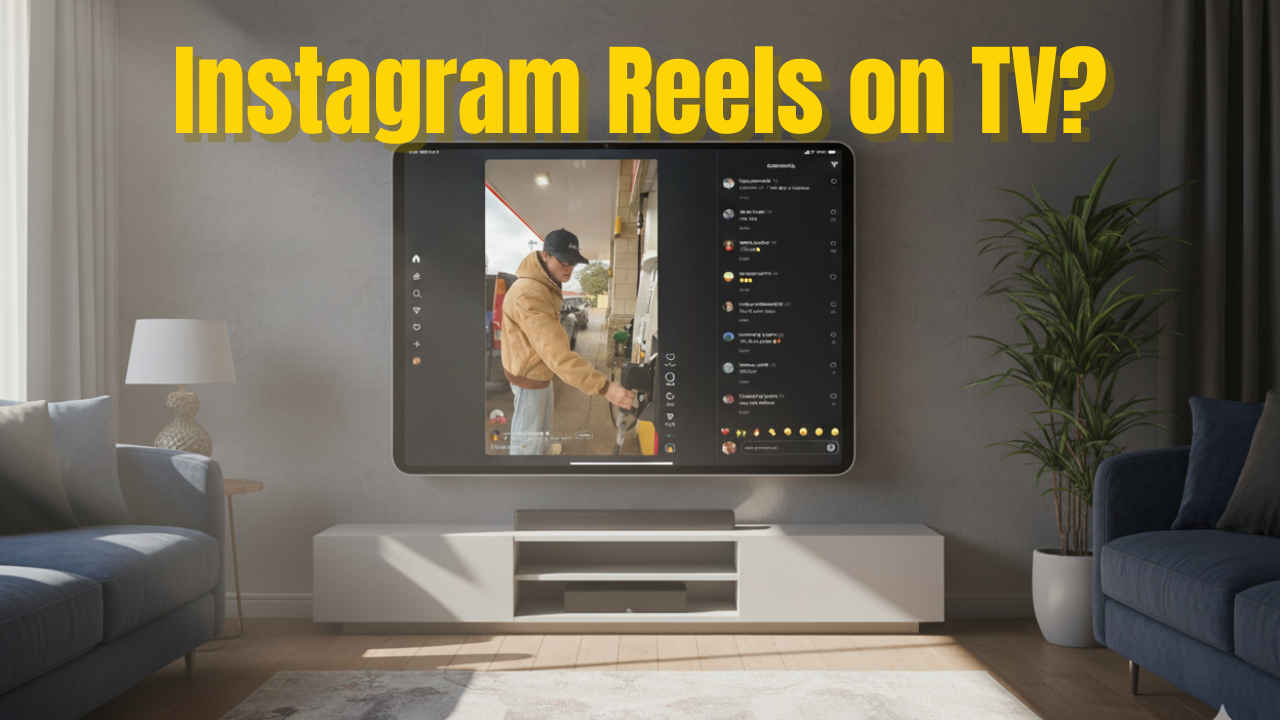
The news, dropped casually at a Bloomberg conference, felt less like an innovation announcement and more like a declaration of war on our last few pockets of peace. Instagram chief Adam Mosseri confirmed that the platform is “exploring” the development of a dedicated TV application, stating, “If behavior [and] the consumption of these platforms is moving to TV, then we need to move to TV, too.”
 Survey
On the surface, it’s a standard move in the great social media land-grab. But scratch below the surface, and the entire premise feels like a digital stretch too far. Instagram, the chief imitator of TikTok’s dopamine-fueled infinite scroll, the very definition of doomscrolling, is now plotting to bring that high-friction, hyper-personal content delivery model to the low-friction, communal territory of the living room. As if the constant, immediate presence of the app on our primary mobile devices wasn’t enough to keep us perpetually tethered to the scroll, Meta now wants to bring it to the biggest screen in the house.


Also read: Google TV to get AI-based interactive features for enhanced learning and power efficiency
Meta’s video envy
For Meta, the reasoning is brutally simple. They must follow the eyeball wherever it goes, and TV remains the most significant source of consumer screen time. The move is a direct competitive strike against YouTube, which dominates the connected TV space, and a validation of Reels as content worthy of a large screen. Mosseri even expressed regret that they hadn’t explored a TV app sooner, so this is possibly a reaction to missed opportunities, not a fresh strategic vision.
Instagram’s TV dreams don’t come from nowhere. Meta has been obsessed with video for years; Reels was its answer to TikTok. Now, a TV app that looks like a shot at YouTube’s dominance of the big screen. It’s a logical strategy on paper: video watch time is growing on connected TVs, advertisers are shifting budgets to “premium” big-screen placements, and YouTube’s living-room ads are some of the most lucrative in the industry. Meta, perpetually chasing rivals’ successes, doesn’t want to miss the party.
Who is the audience?
But does this make sense for the user? This is where the core logic of the move breaks down, particularly when examining Instagram’s primary demographic.
The first major flaw lies in the target audience. Is Instagram’s core Gen Z audience even watching TV in the traditional sense? Research consistently shows that younger generations have abandoned the linear cable model and view the TV primarily as a monitor for VOD services (Netflix, Hotstar, Prime Video), gaming consoles, or YouTube. They are accustomed to controlling their media consumption instantly and personally. The idea of firing up a communal TV set to watch a personalized, vertical feed of short-form Reels runs counter to their established consumption habits. The TV is for the epic, the cinematic, or the shared experience; the phone is for the fleeting, personalized, and disposable.
Older users might welcome the ability to view family videos or creators’ posts on a large screen, but they’re not the demographic driving Instagram’s engagement.
The paradox of “Big-screen scrolling”

Also read: Samsung Project Moohan XR leak reveals almost everything ahead of expected Oct 21 launch
This brings us to the fundamental difference between the phone and the television experience – the psychology of doomscrolling.
Friction vs. zero-friction immediacy
Doomscrolling is a behavioral loop predicated on zero-friction immediacy. It is an intimate act: the phone is held inches from the face, requiring only a slight flick of the thumb. The content is tailored exactly to your emotional state and echo chamber. This immediacy is what makes the addiction so potent and difficult to break.
Now, consider the TV experience. The app’s success comes from its intimacy, a screen inches from your face, an algorithm that knows you better than you know yourself, and a dopamine drip of endless, bite-sized content. Doomscrolling works precisely because it’s private, fast, and mindless. Put it on a 55-inch OLED, and the effect breaks down.
The UI is designed for thumbs, not remotes. Imagine trying to “like” a Reel with your TV remote, or worse, trying to comment while lounging on a couch. These friction points aren’t just small annoyances; they fundamentally clash with the kind of passive engagement that fuels Instagram’s time-sink success.
The inevitable UX nightmare
Furthermore, there is the inevitable UX nightmare: the vertical video on a horizontal screen. While Reels might adapt better than the old IGTV format, the visual compromise will involve large, distracting black or blurred bars on either side of the feed. The aesthetic and design brilliance of Instagram is wasted when its signature content is forced into an unnatural, boxy aspect ratio, making the experience feel cheap compared to the full-screen cinematic immersion offered by dedicated video services.
When innovation becomes imitation
The irony is that Instagram once had a TV experiment – IGTV, launched in 2018, which was quietly shut down after struggling to find users or creators. That failure was a lesson in product-market fit: just because people love video on Instagram doesn’t mean they want to watch Instagram videos anywhere else.
Yet here we are again, circling back to the same idea under a new name. This effort risks highlighting just how fragmented Instagram’s identity has become: part TikTok clone, part shopping hub, part messaging platform, now possibly a YouTube rival. It’s trying to be everything at once, which usually means being nothing in particular.
Moreover, Instagram’s revenue engine is built around personalized, interactive ads. That precision targeting becomes less potent on a shared household device. The ad industry may cheer a new placement opportunity, but it’s unclear whether Instagram can replicate the same monetization efficiency on TV that it enjoys on mobile.
Ultimately, Instagram’s TV push is less about improving the user experience and more about eliminating the final attention gap. The TV app is an attempt to turn a passive, communal relaxation activity like watching television into an active, private, and potentially unhealthy consumption mechanism. It is Meta’s calculated bet that even the slightest barrier to attention, like having to pick up a phone, is too much. By bringing the infinite, personalized feed to the one device that previously offered respite, Meta ensures that the doomscrolling never truly has to end. It’s not just a video push; it’s a relentless pursuit of 100% market share of human attention.
Also read: Tim Cook to directly oversee Apple’s design team, here’s why
 Follow Us
Vyom Ramani
A journalist with a soft spot for tech, games, and things that go beep. While waiting for a delayed metro or rebooting his brain, you’ll find him solving Rubik’s Cubes, bingeing F1, or hunting for the next great snack. View Full Profile


