Scientists use AI to design bacteriophages that kill drug-resistant bacterial strains
AI-generated viruses show promise for phage therapy against antibiotic resistant infections
Breakthrough study reveals artificial intelligence can create functional viruses destroying bacteria
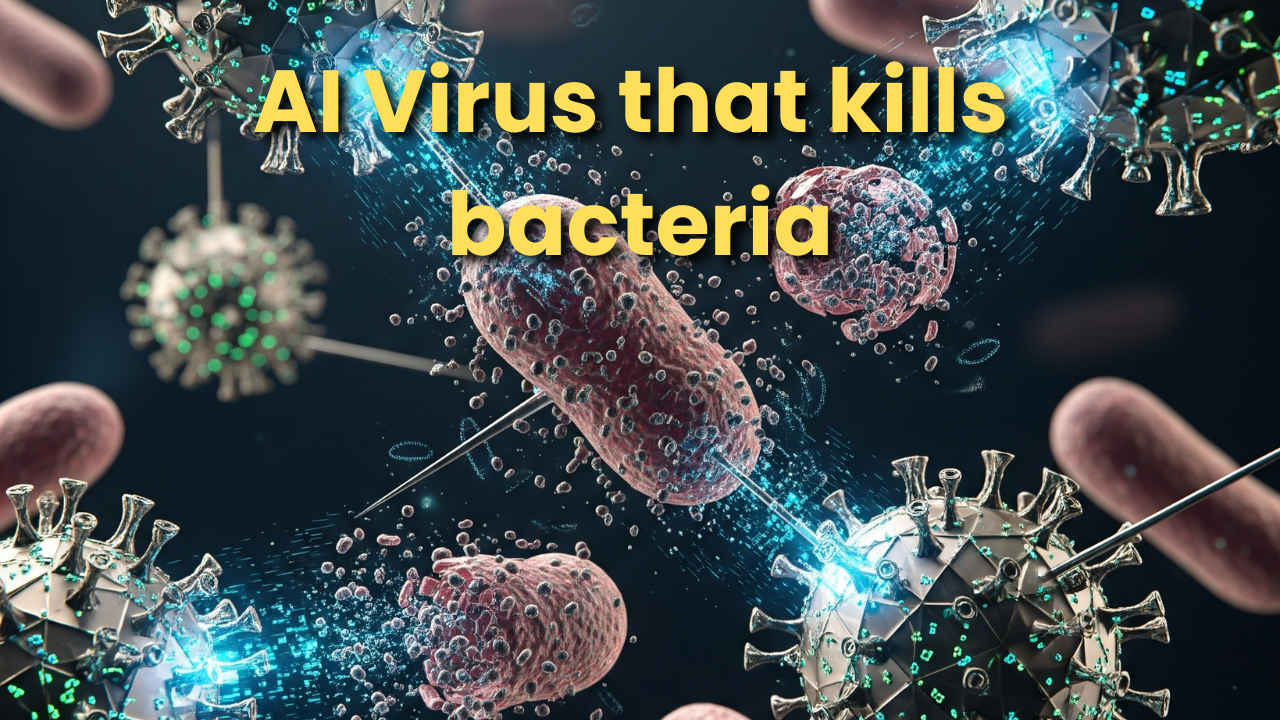
In a breakthrough that pushes the boundaries of synthetic biology, researchers have for the first time used artificial intelligence to design viruses capable of infecting and killing bacteria. The study, led by teams at Stanford University and the Arc Institute, demonstrates how generative AI models can produce functional bacteriophages – viruses that specifically target bacteria – opening up new possibilities for medicine while raising important ethical and safety questions.
 Survey
Also read: OpenAI to build age-prediction system, restrict flirtation and suicide talk for teens


From code to contagion
The research focused on phiX174, a tiny bacteriophage that infects E. coli. PhiX174 has long been a workhorse of molecular biology; its small, well-mapped genome makes it a perfect test case for synthetic design.
Using a generative genome model known as Evo, scientists created 302 entirely new versions of phiX174 in silico. These weren’t minor tweaks or mutations on existing viruses, but AI-designed genetic blueprints for potentially novel life forms. The genomes were then synthesized in the lab and tested for viability.
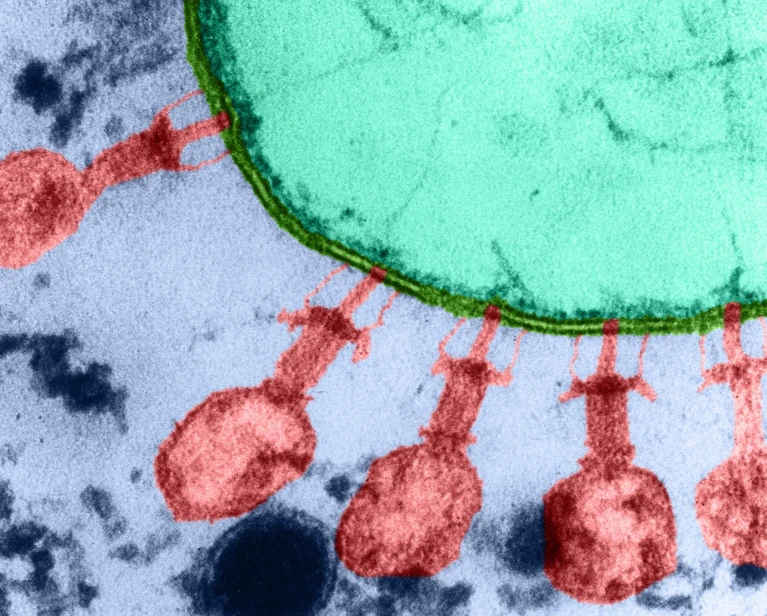
The result? Sixteen of the AI-created designs assembled into working viruses that successfully infected E. coli and destroyed the bacterial cells. Electron microscope images confirmed that these phages not only replicated but also formed viral particles indistinguishable from naturally occurring ones.
Why this matters
The achievement represents a leap forward for phage therapy, a promising alternative to antibiotics in the fight against drug-resistant bacteria. Unlike antibiotics, bacteriophages are highly specific – they infect only certain bacterial strains, leaving the rest of the microbiome unharmed. But natural phage discovery is slow and limited.
By tapping AI, researchers could rapidly generate vast libraries of phages tailored to specific pathogens. This could, in theory, lead to bespoke treatments for infections that don’t respond to existing drugs, a growing crisis in global health. This isn’t just evolution sped up; it’s evolution directed. Instead of waiting for nature to give us the right phage, we can ask AI to design one.
Also read: Nothing to launch first AI-native devices in 2026, CEO hints they won’t be phones
The implications stretch beyond medicine. AI-assisted viral design could help scientists better understand the rules of life, why certain sequences work and others don’t. Each successful or failed phage variant is a data point that refines our understanding of genetic constraints.
The technology also illustrates how biology and computation are converging. Just as generative AI has been used to design new proteins and materials, it is now shaping the genetic code of living systems. That blurs the line between what is “discovered” and what is “invented.”
Risks and red flags
The work, however, is not without controversy. The same tools that can design therapeutic phages could, in theory, be misused to design harmful viruses. Although the Stanford and Arc teams deliberately excluded any human-infecting viruses from their training data, critics warn that the method itself could be repurposed with malicious intent.
There are also questions of unintended consequences. A phage designed in silico might behave unpredictably once released into complex environments or living organisms. Viruses evolve quickly, and interactions with other microbes could produce unexpected outcomes.
Biosecurity experts argue that as AI becomes more capable in biological design, robust oversight and safety protocols are essential. We are entering an era where generating functional viral genomes could become easier than ever before, that’s both an opportunity and a profound risk.
A glimpse into the future of biology
For now, the AI-created phages are limited to lab experiments on bacteria, but the milestone marks a new frontier in synthetic biology. Scaling the method to larger, more complex viruses or tailoring phages for human use remains a formidable challenge.
Still, the successful synthesis of 16 viable viruses from AI designs signals a turning point: artificial intelligence is no longer just interpreting biological data; it is helping create new life forms.
As the world struggles with antibiotic resistance and the need for new medical tools, AI-generated phages could become part of the solution. But their development also forces society to confront a new question: what does it mean when machines can invent life?
Also read: India’s AI PC shipments to cross 15 million in 2025 as tablets decline: Report
 Follow Us
Vyom Ramani
A journalist with a soft spot for tech, games, and things that go beep. While waiting for a delayed metro or rebooting his brain, you’ll find him solving Rubik’s Cubes, bingeing F1, or hunting for the next great snack. View Full Profile


