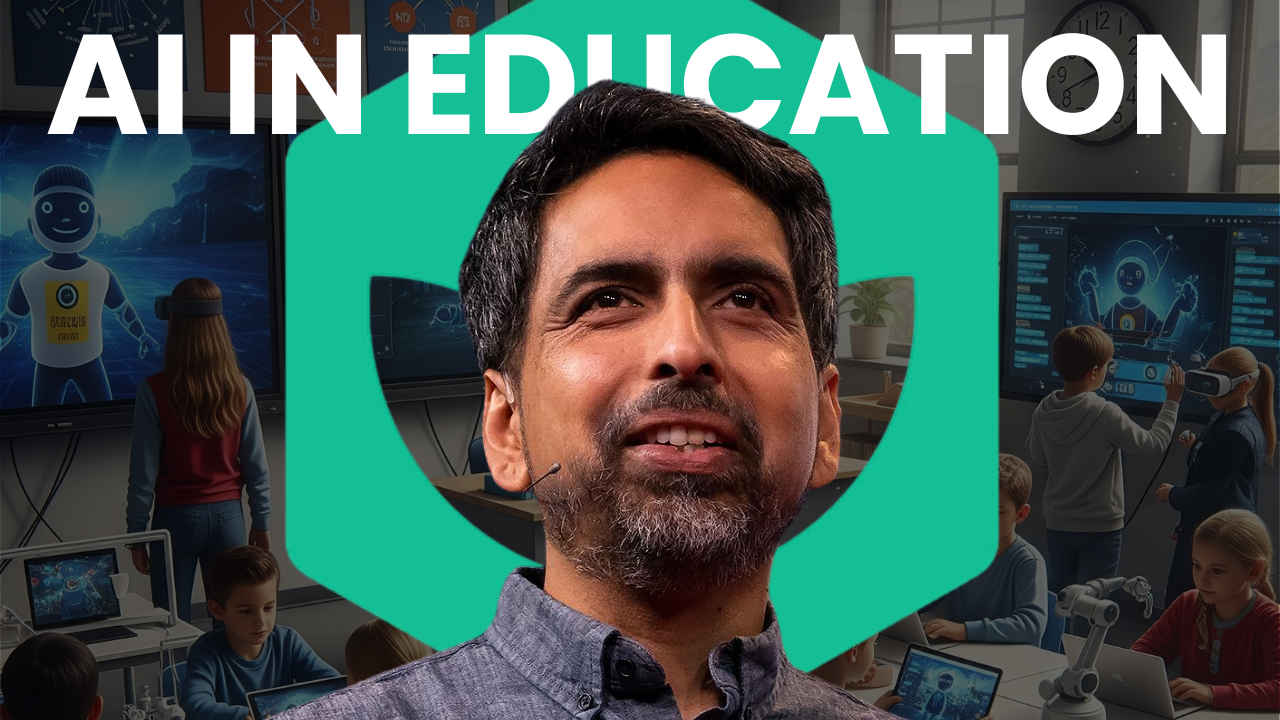
When Sal Khan first launched Khan Academy in 2008, it was little more than a collection of YouTube math tutorials recorded for his cousins. Today, it’s a global nonprofit serving over 150 million registered users across 190 countries. Now, with artificial intelligence rewriting the rules of technology, Khan Academy’s founder and CEO believes AI could become the most powerful educational tool of our time, if it’s handled with care.
 Survey
That belief was at the center of a wide-ranging conversation on The Verge’s Decoder podcast, where Sal Khan talked about the risks, opportunities, and future of AI in classrooms.


Also read: GenAI effect: US college students are questioning value of higher education due to AI
AI tutors in the classroom
Khan Academy has long stood at the intersection of technology and learning. During the COVID-19 pandemic, it became a lifeline for millions of students and teacher
s suddenly thrust into remote learning. That moment, Khan recalls, showed the organization both the promise and the limits of digital education.
The next frontier is Khanmigo, an AI-powered tutor built on large language models. Designed to act less like a search engine and more like a thoughtful guide, Khanmigo can walk students through math problems step by step, role-play historical figures, and even help teachers draft lesson plans.
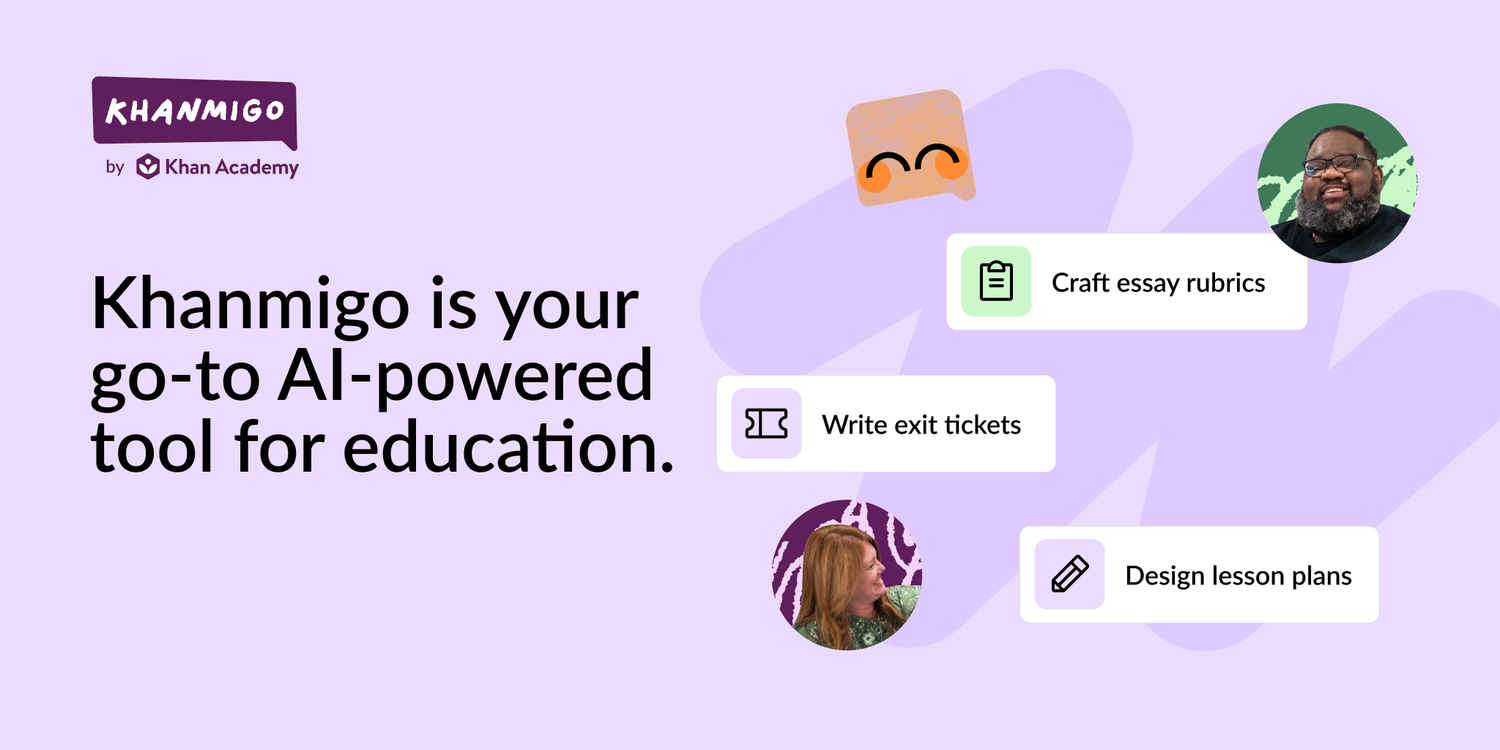
But Khan is adamant: “The goal isn’t to replace teachers, it’s to empower them,” he told Decoder. The AI is meant to supplement human instruction, not supplant it.
Building trust in AI-powered education
For all its potential, AI in education comes with serious concerns: privacy, bias, reliability, and the risk of over-dependence. Khan is acutely aware that without trust, even the best tools will fail.
Also read: Study mode in ChatGPT explained: How students can use AI more effectively
That’s why Khan Academy has focused on transparency and ethical design. Student data isn’t sold or used for advertising. The AI is tested rigorously to avoid giving harmful or misleading responses. And unlike many consumer AI apps, Khanmigo is deliberately constrained, it won’t solve a math problem outright, but will instead guide a student through the logic behind it.
“Trust is the currency of education,” Khan said on Decoder. “If we lose that, nothing else matters.”
How AI could democratize tutoring worldwide
Khan’s optimism stems from a belief that AI can finally tackle one of education’s oldest inequities: the lack of one-on-one tutoring. For centuries, individualized instruction has been available only to the wealthy. If AI can provide high-quality tutoring at scale, it could narrow achievement gaps worldwide.
The challenge is making that promise real. Khan Academy has partnered with schools, states, and districts to test Khanmigo in classrooms, ensuring the tool is accessible to underserved students and not just a perk for those who can pay.
“We see AI as a way to lift everyone,” Khan explained. “It can’t just be a luxury.”
As AI technology advances, so do the ethical dilemmas. Some educators fear that AI tools could deskill teachers, reduce human interaction, or worsen digital divides between well-resourced and underfunded schools.
What’s next for AI education
Khan Academy’s strategy is to move deliberately – scaling slowly, working with schools, and putting educators at the center of the process. The organization is committed to testing Khanmigo in real-world classrooms, refining its safety features, and ensuring that it helps teachers rather than replacing them.
Looking ahead, Khan believes that AI could transform education for the better, provided it’s rolled out responsibly. With guardrails in place, AI tutors could personalize learning for every student, lighten the load for teachers, and make quality education more accessible globally.
“Technology can either erode trust or deepen it,” Khan said on Decoder. “Our job is to make sure it’s the latter.”
For Khan Academy, the mission is clear: build tools that scale the human touch, not erase it. And in doing so, safeguard the future of education at a moment when trust in AI has never been more important.
Also read: Google’s Guided Learning versus ChatGPT’s Study Mode: Which is better?
 Follow Us
Vyom Ramani
A journalist with a soft spot for tech, games, and things that go beep. While waiting for a delayed metro or rebooting his brain, you’ll find him solving Rubik’s Cubes, bingeing F1, or hunting for the next great snack. View Full Profile


