
 E-Magazine
Mijia Smart Air Purifier 6 vs Philips AC2221/63: Which air purifier should you buy under Rs 20,000?
Both air purifiers offer advanced filtration and smart features.
Philips is quieter, while Mijia offers more purification features.
Mijia costs around Rs 17,999, while Philips is priced at Rs 18,999.
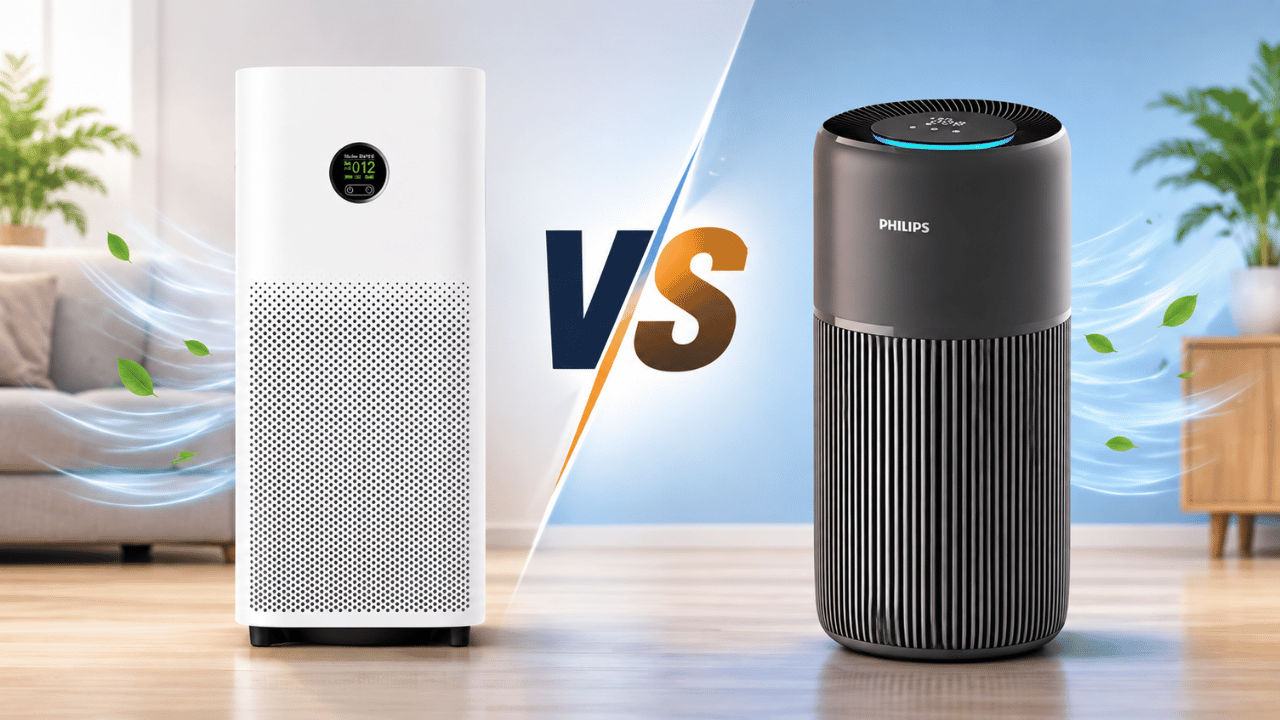
Indoor air quality has become an important concern, especially if you live in North India, where the AQI is getting worse on a daily basis. But, choosing the right air purifier today can be difficult because brands offer different filters, smart features and, most importantly, prices. If you have a budget of Rs 20,000, then the Xiaomi Mijia Smart Air Purifier 6 and Philips Smart Air Purifier AC2221/63 are two good options that can keep indoor spaces cleaner. If you're also confused between the two air purifiers, then here is a detailed spec-based comparison between the two that can help you make a wise decision.
Mijia Smart Air Purifier 6 vs Philips Smart Air Purifier AC2221/63: Filtration performance
The Mijia Smart Air Purifier 6 comes with a five-stage purification system which comprises a primary filter, high-efficiency filter, activated carbon, UVC light and a negative ion generator. Not only that, but it also claims to remove 99.98 per cent of 0.3-micron particles, 99.99 per cent of H1N1 viruses and 98 per cent of formaldehyde (in one hour), along with 92.4 per cent of TVOCs. Other than that, it also offers a particle CADR of 443 cubic metres per hour and a formaldehyde CADR of 218 cubic metres per hour.
In comparison, the Philips Smart Air Purifier AC2221/63 offers a three-layer HEPA NanoProtect system. The company claims that the air purifier can capture 99.97 per cent of particles as small as 0.003 microns. Furthermore, its CADR stands at 420 cubic metres per hour. The device also has an activated carbon filter that helps tackle odours and gas pollutants.
Mijia Smart Air Purifier 6 vs Philips Smart Air Purifier AC2221/63: Noise and smart features
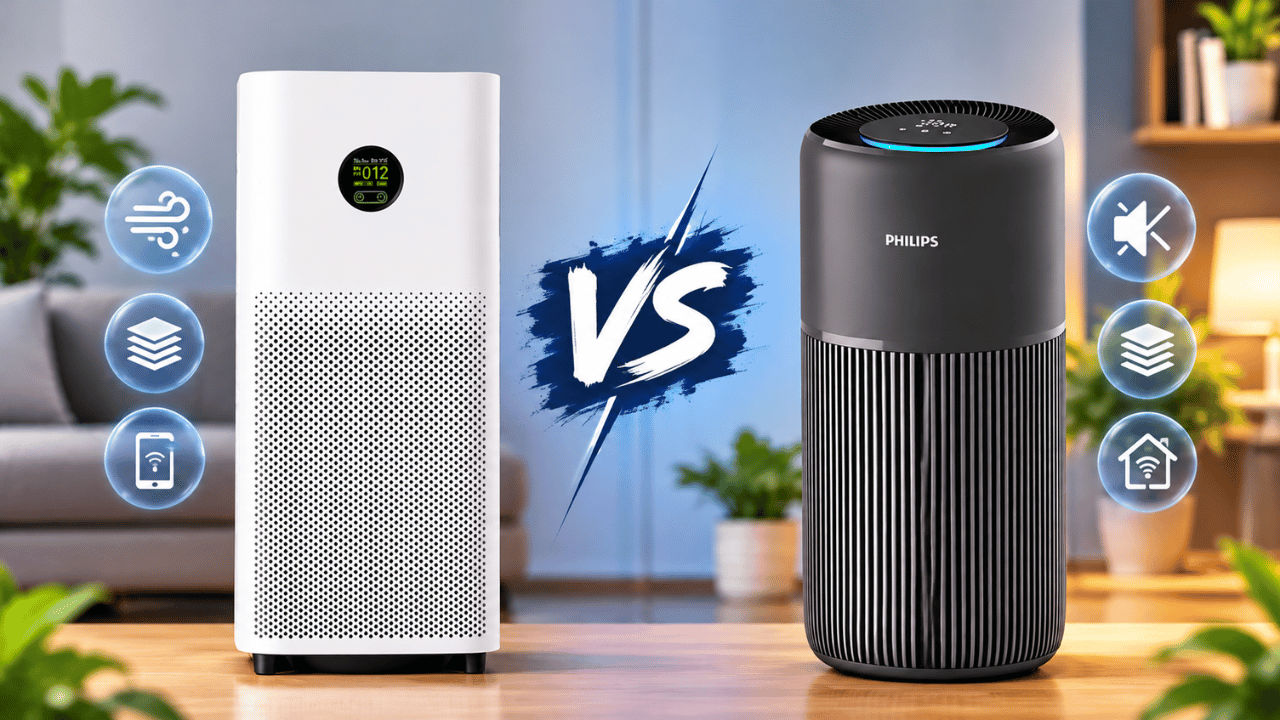
When we talk about the noise, then the Philips air purifier has a clear advantage on paper, as its sleep mode is rated at just 13 dB, which instantly makes it one of the best options to use in your bedrooms, especially at nighttime. The device also offers a child lock.
Whereas, Mijia’s has a sleep mode of around 32 dB in India, which is considerably higher when compared to the Philips Smart Air Purifier AC2221/63. The device also showcases the live readings on the LCD colour screen at the front. Furthermore, the users can also control it through the Xiaomi Home app.
It’s important to note that both Mijia Smart Air Purifier 6 and Philips Smart Air Purifier AC2221/63 support Amazon Alexa and Google Assistant, along with smartphone-based controls.
Mijia Smart Air Purifier 6 vs Philips Smart Air Purifier AC2221/63: Operational costs and maintenance
Mijia recommends replacing the filter every 6 to 12 months, depending on usage and air quality, with a magnetic door that makes the replacement of the filter easy. Aside from that, the detachable top cover of the device also helps with cleaning it. The Mijia is rated at 40W power consumption.
Philips lists a 28W power consumption, which makes its electricity requirements relatively modest. However, its filter replacement interval and replacement filter price should be checked before purchase. These details will help buyers estimate long-term ownership costs.
Mijia Smart Air Purifier 6 vs Philips Smart Air Purifier AC2221/63: Price
The Mijia Smart Air Purifier 6 from Xiaomi sells for around Rs 17,999, while you can grab Philips Smart Air Purifier AC2221/63 for around Rs 18,999.

Bhaskar Sharma Bhaskar is a Senior Copy Editor at Digit India who keeps a close watch on everything shaping the world of technology from smartphones and home appliances to AI, government tech initiatives, digital safety, and the latest industry developments. Whether it's breaking news, in-depth features, hands-on reviews, practical how-to guides, or exclusive scoops, he translates complex tech into stories that are easy to understand and worth reading. His work has been featured in iGeeksBlog, GuidingTech, and other leading publications. Before joining Digit India, he served as an assistant editor at TechBloat. A B.Tech graduate and full-time tech journalist, he is driven by just one goal, which is to help readers stay informed, stay secure, and stay ahead in an ever-changing digital world.
View full profile