
Will Galaxy AI become a paid subscription? Samsung explains its thinking
 Follow Us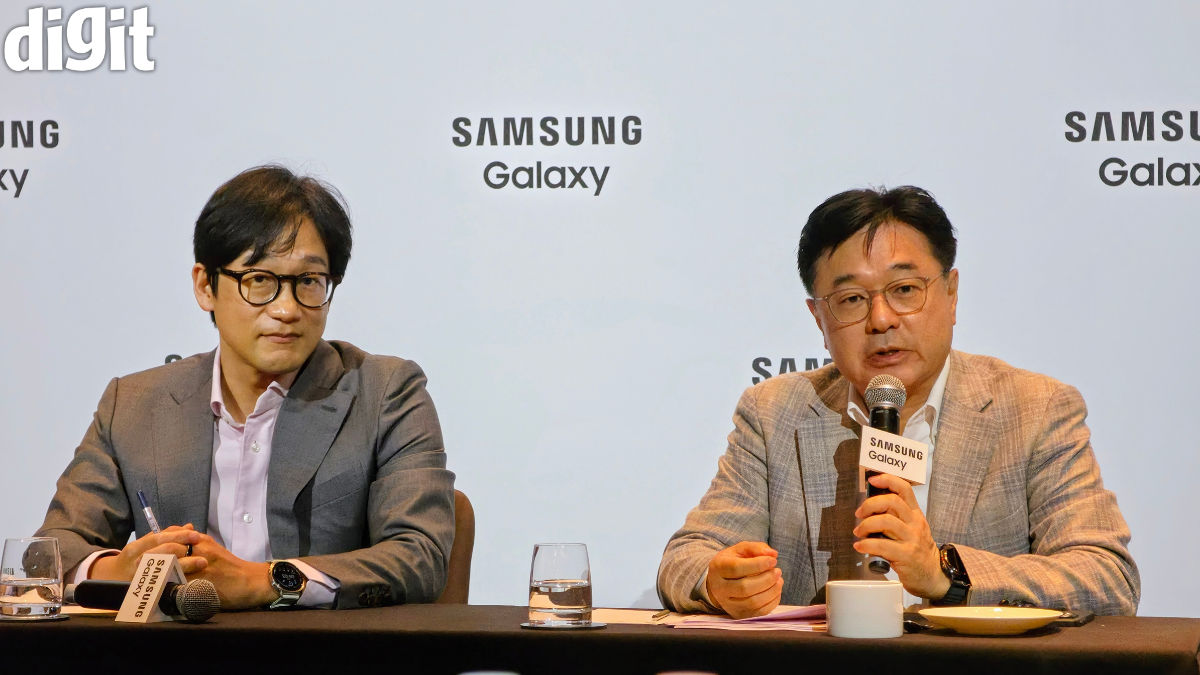

AI on our smartphones is no longer just about editing photos, translating languages or summarising text. To put it into perspective, AI on phones can understand context, automate tasks across apps and even make recommendations before you ask. But delivering these smarter experiences isn’t as simple as running everything on your smartphone. During an AI roundtable at Galaxy Unpacked in London last month, Samsung executives JB Park, President and CEO, Samsung South West Asia and Jay Kim, Corporate EVP and Head of Customer Experience Office at Samsung MX, explained why the company believes the future lies in a hybrid approach that combines on-device processing with cloud computing. They also offered fresh insight into whether Galaxy AI could eventually include paid features and why the company believes some AI experiences will always need more computing power than a phone alone can provide.
 Survey
Also read: Samsung Galaxy Z Fold 8 early review: Lots to unpack!
Why Samsung isn’t choosing between on-device and cloud AI
One of the biggest questions surrounding AI today is whether future smartphones can process everything locally or whether cloud computing will remain essential. According to Jay Kim, the answer isn’t one or the other. Instead, Samsung is building what it calls a hybrid AI approach.
The idea is simple. Tasks that benefit from speed, privacy and local processing should run directly on the device whenever possible. At the same time, requests that require deeper reasoning, access to global knowledge or more advanced computation are better handled in the cloud.
Kim explained that there isn’t a fixed ratio for how much AI should run locally versus remotely because every user interacts with AI differently. Some people may rely almost entirely on on-device features, while others regularly use cloud-powered experiences. Samsung’s goal, he said, is to make that transition seamless rather than expecting users to think about where the processing happens.
Partnerships remain central to Samsung’s AI strategy
Building this hybrid experience also means Samsung isn’t developing AI in isolation.
During the discussion, Kim highlighted the company’s close collaboration with Google and Qualcomm, describing AI as something that spans every layer of the technology stack, from chipsets and operating systems to software and user experience. Rather than depending on a single AI model, Samsung said it already uses multiple models across different services, selecting whichever is best suited for a particular task. As AI models continue evolving, the company expects to keep adapting instead of committing itself to one provider or one technology.
That flexibility, Samsung believes, will allow Galaxy devices to benefit from future AI advances without locking users into a single ecosystem.
Why cloud AI may eventually cost money?
As AI becomes more capable, another question naturally follows: who pays for the computing power?
Kim acknowledged that AI services come with real operating costs, especially when cloud infrastructure is involved. He noted that consumer attitudes have also changed dramatically over the past few years, pointing out that people are now increasingly comfortable paying for AI services and that token-based computing has become part of the wider AI conversation.
However, Samsung stopped well short of announcing a paid Galaxy AI subscription.
Instead, Kim reiterated that Samsung’s core AI services will continue to be provided without charge. At the same time, the company is evaluating how to make future services sustainable and scalable while continuing to deliver what it considers the best AI experience for consumers.
In other words, Samsung isn’t ruling out premium AI experiences in the future, but neither is it signalling that today’s core Galaxy AI features are about to move behind a paywall.
What this means for Galaxy users?
Samsung’s message is very clear: the company believes users shouldn’t have to think about whether a feature is powered by on-device processing or cloud computing. Instead, the focus is on delivering the right experience while balancing privacy, performance and cost.
Also read: Samsung Galaxy Z Fold 8 Ultra display tested: The most colour accurate foldable screen
For Galaxy users, that likely means future smartphones will continue relying on a mix of local intelligence for everyday tasks and cloud processing for more demanding AI capabilities. It also suggests that while Samsung sees value in keeping its core AI experience free, more advanced cloud-powered services could eventually become part of a broader premium offering if they prove sustainable to deliver.
For now, Samsung’s vision is clear: AI shouldn’t be defined by where it runs, but by how naturally it helps people get things done.


