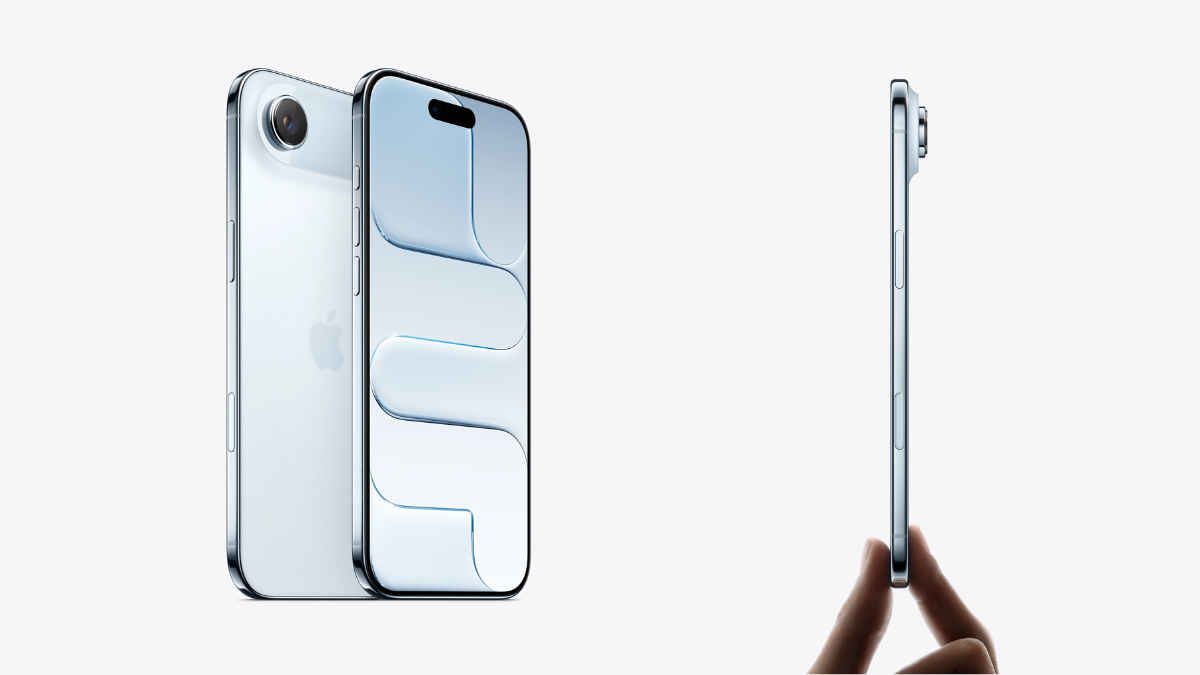
If there’s one category in Apple’s iPhone lineup that has always stood out, it’s the one that sits between the standard and the Pro models. This segment has seen multiple iterations over the years. It all began with the iPhone 12 series, when Apple introduced the 12 Mini. That was later replaced by the Plus in the iPhone 14 lineup, and then the iPhone 14 Plus quietly took the place of the 13 Mini. Now, three generations later, we’re seeing another big refresh. This time it’s not a Mini, not a Plus, and interestingly, not even carrying the number in its name. It is simply called the iPhone Air.
 Survey
Also read: Despite price hike, iPhone 17 may still sell strongly in India thanks to Apple Store craze


Positioned between the iPhone 17 and the iPhone 17 Pro, the iPhone Air essentially takes the slot where we would have expected an iPhone 17 Plus. But Apple clearly wanted to take a different route. And this year, despite all the hype around the Pro models and the value-for-money proposition of the iPhone 17, it’s the Air that feels like the real showstopper.
The big question, of course, is whether the iPhone Air will go on to break sales records. Will it set the trend for super-slim phones, or will it merely ride the initial wave of hype before people return to more familiar choices? That remains to be seen. But one thing is clear: whether it’s a hit or not, the iPhone Air is the most talked-about iPhone this year.
From Plus to Air
To understand the iPhone Air’s place, we need to look at the phone it effectively replaces — the iPhone 16 Plus. The iPhone 16 series itself was a blockbuster, with the standard iPhone 16 repeatedly topping global sales charts. But the 16 Plus never really matched that success. Many buyers felt the iPhone 16 was the smarter pick, offering almost the same experience for less money, even if it came with a smaller screen and battery. Others, who wanted a big-screen iPhone, preferred stretching to the Pro Max, which offered more features. That left the Plus in an awkward spot, appealing only to a niche set of buyers who wanted a larger iPhone without going all the way up to the Pro Max.
Now comes the iPhone Air. On paper, it checks a lot more boxes than the Plus ever did. But the catch is the price. The iPhone 16 Plus with 256GB storage launched at Rs 99,900, and its 512GB version went for Rs 1,19,900. The iPhone Air, on the other hand, starts at Rs 1,19,900 for 256GB, while the 512GB model costs Rs 1,39,900. So, variant to variant, the Air is Rs 20,000 more expensive. The real question is: Does the premium really make sense?
Slimmer, lighter, and still big
The iPhone Air’s biggest selling point is its design. Compared to the iPhone 16 Plus, which weighed 199 grams and was 7.8mm thick, the iPhone Air is a mere 165 grams and just 5.6mm thick. That makes it even lighter than the iPhone 17, which means ergonomics are pretty much sorted. And yet, Apple hasn’t sacrificed size completely. With a 6.5-inch display, it still qualifies as a big phone, but one that looks pocketable and unbelievably light.
It also carries some serious upgrades under the hood. The iPhone Air is powered by the new A19 Pro SoC, just like the 17 Pro models, compared to the standard A18 chip that powered the 16 Plus. RAM is also expected to jump from 8GB to 12GB. Then there’s the new 120Hz ProMotion OLED display, a big step up from the 60Hz panel on the Plus. Not to mention, all iPhone 17 models sport an anti-reflective coating.
Cameras see a refresh too. The iPhone Air has a single 48-megapixel rear sensor, probably the same primary camera from the iPhone 17. Not having an ultra-wide camera is a bummer though, but that’s the compromise Apple seems to have made to achieve this design. On the bright side, the entire iPhone 17 lineup benefits from a new 18-megapixel selfie camera, finally a welcome change after years of the same front cameras.
Battery life, however, is where the iPhone Air might fall short. Rumours suggest a battery of around 3,000mAh, significantly smaller than the 4,674mAh on the iPhone 16 Plus. And yes, on paper and in real life, the Plus will likely beat it in endurance. But does that matter enough? Apple’s pitch here looks pretty clear: with fast charging, MagSafe support, and the way people live with their phones constantly near a charger — whether at their desks, bedside, or in cars — the trade-off might be acceptable.
That said, the USP of the iPhone Air remains its design. This is a phone made to be seen. The people who will buy it will likely want their device’s looks to do the talking. Because if anyone has the budget to spend over a lakh on an iPhone, and performance is their top priority, they’d probably still go for the iPhone 17 Pro or 17 Pro Max.
The bigger picture
What really works in favour of the iPhone Air is the premium feel of convenience. For Rs 20,000 more, buyers are not just getting the latest Apple hardware but also a phone that is thinner, lighter, and easier to live with, all while still being a big-screen device. And in India, despite the recent economic conditions, the upper middle class is still spending more freely on premium phones. With Apple expanding its retail network here, the Air could find a strong foothold.
It all boils down to this: the iPhone 16 Plus was a decent phone, but it always felt stuck in the middle. The iPhone Air, on the other hand, is unapologetically ambitious. Yes, it’s more expensive, yes, it might be compromising on endurance, but it brings a fresh form factor, top-tier internals, and enough distinctiveness to justify its existence.
For now, all we can do is wait to test it in detail. But make no mistake, the iPhone Air has already made its mark.
Also read: Why the iPhone 17 feels like the first complete iPhone in years
 Follow Us
Aman Rashid
Aman Rashid is the Senior Assistant Editor at Digit, where he leads the website along with the brand’s YouTube, social media, and overall video operations. He has been covering consumer technology for several years, with experience across news, reviews, and features. Outside of work, Aman is a sneaker enthusiast and an avid follower of WWE, Dragon Ball, and the Marvel Cinematic Universe. View Full Profile


