Most laptop buyers focus on specifications like refresh rate, resolution, and panel type, yet beneath these visible features lies a microscopic world that fundamentally affects your viewing experience. The arrangement of sub-pixels, those tiny coloured elements that compose each pixel on your screen, significantly impacts everything from text clarity to gaming performance. When paired with the increasingly popular high refresh rate displays, understanding these arrangements becomes even more crucial for discerning users. So in this article, we will walk you through how sub-pixel architecture affects your laptop experience, which most reviewers never mention.
 Survey
Understanding the building blocks of your display
At the most fundamental level, each pixel on your laptop screen is composed of smaller elements called sub-pixels. These sub-pixels typically come in three primary colours: red, green, and blue. By varying the intensity of each sub-pixel, your display can reproduce millions of colours. However, not all sub-pixel arrangements are created equal.


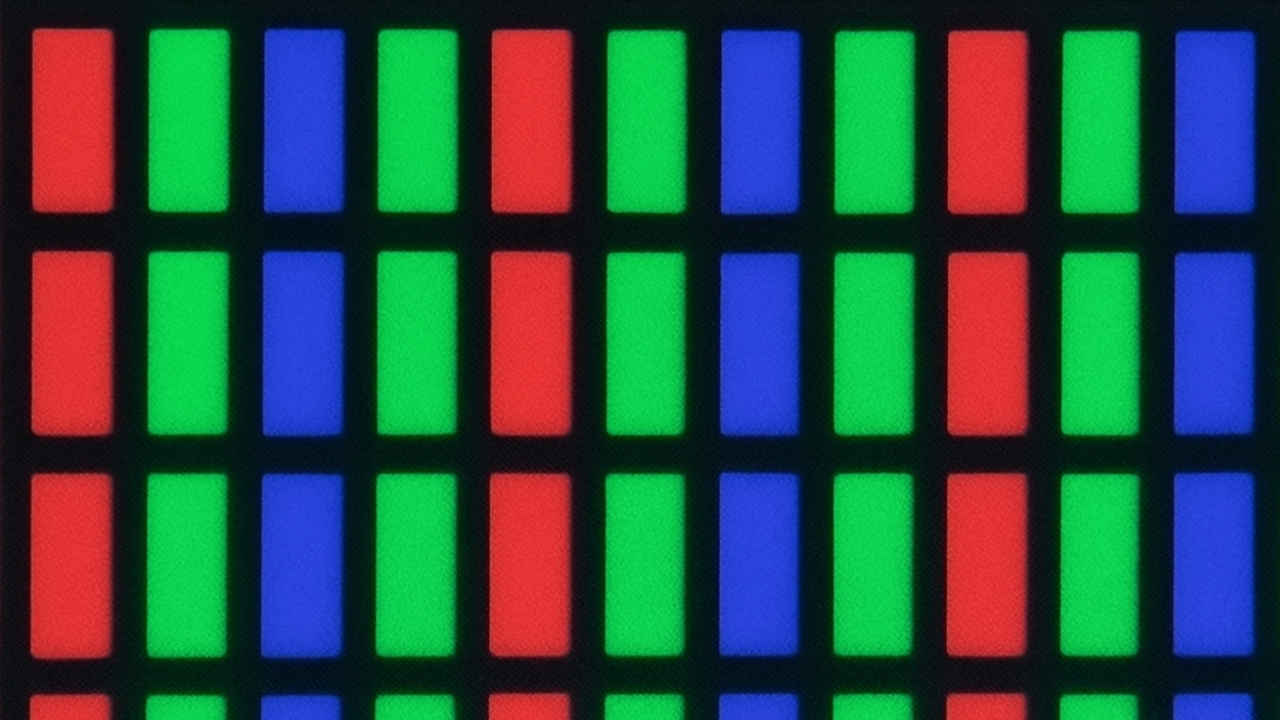
The classic arrangement, known as RGB Stripe, organises sub-pixels in vertical bands, with each pixel having its own complete set of red, green, and blue elements aligned side by side. This straightforward arrangement offers consistent colour rendering and excellent clarity, particularly for text and fine details. For traditional office work and content creation, this arrangement remains the gold standard, providing predictable performance and accurate colour reproduction. The RGB Stripe arrangement particularly excels when displaying fine, detailed content like spreadsheets or text documents, where clarity is paramount.
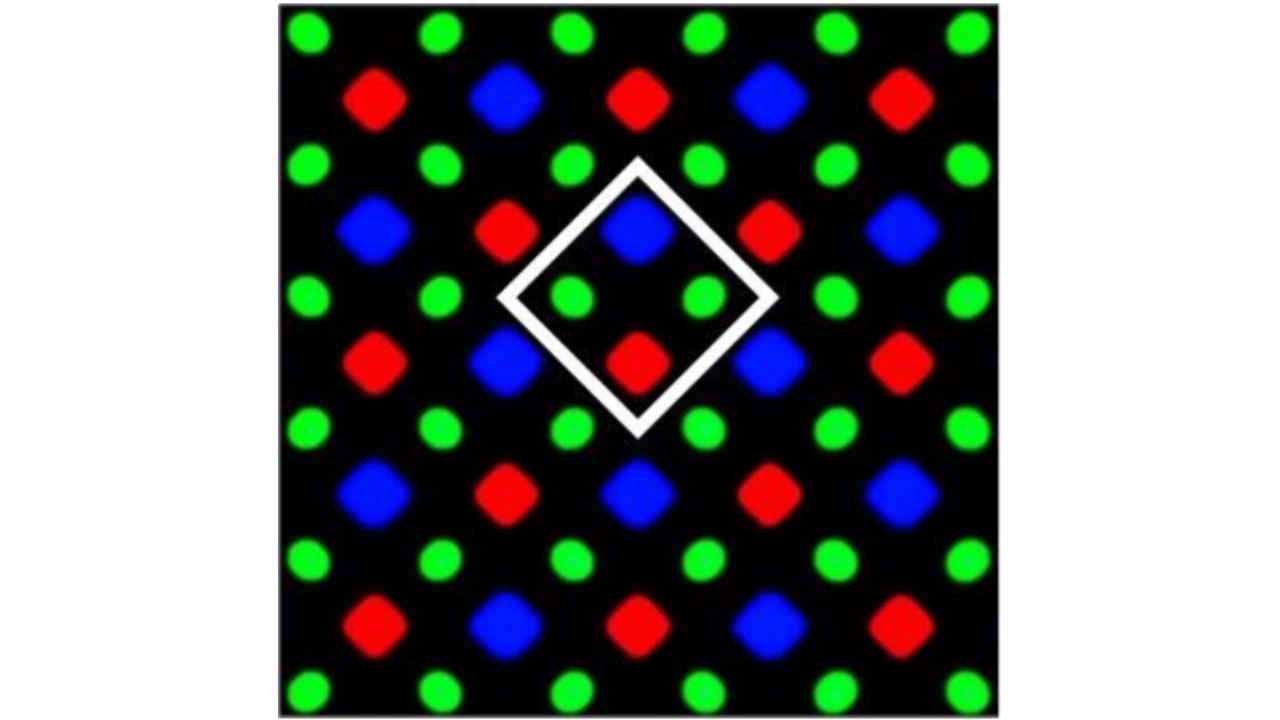
PenTile arrangements, pioneered by Samsung, take a different approach altogether. Rather than giving each pixel its own complete set of RGB sub-pixels, PenTile displays share sub-pixels between adjacent pixels. Typically, PenTile displays feature more green sub-pixels than red or blue, mimicking the human eye’s increased sensitivity to green light. This arrangement allows manufacturers to achieve higher nominal resolution with fewer total sub-pixels, reducing power consumption and manufacturing costs.
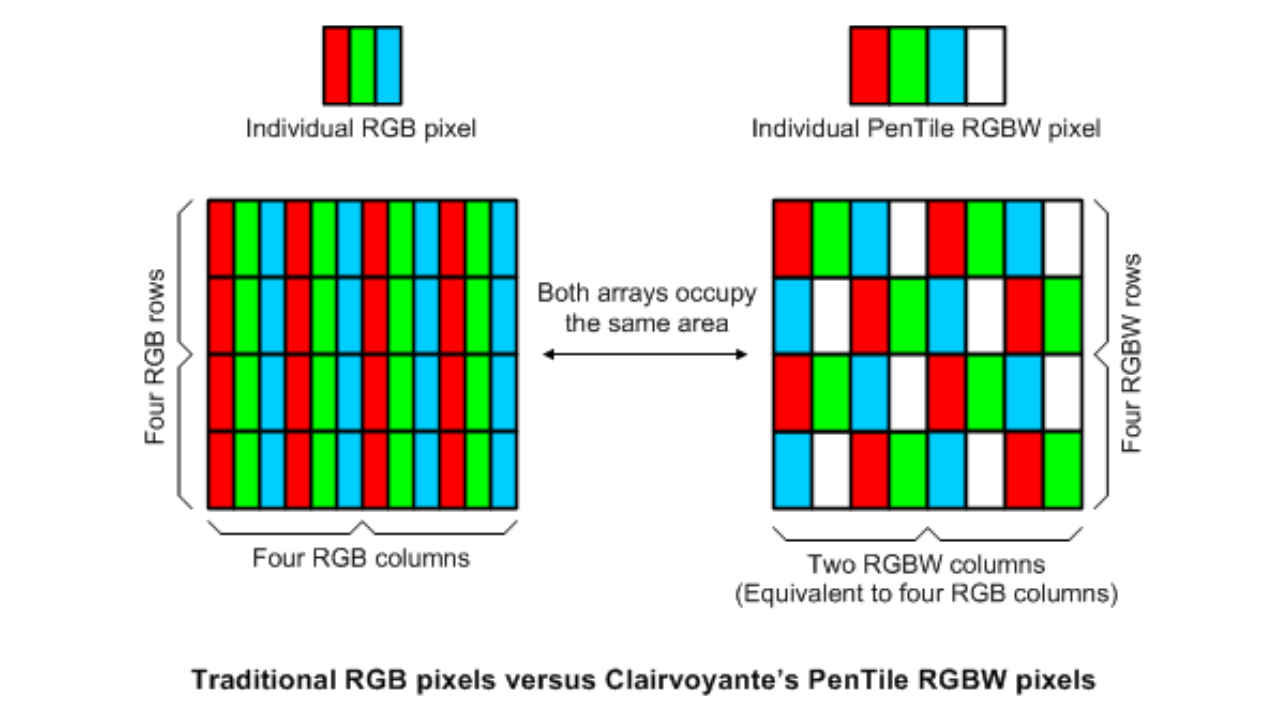
The RGBW arrangement introduces a fourth, white sub-pixel alongside the traditional red, green, and blue elements. This additional white sub-pixel significantly boosts brightness without increasing power draw proportionally. For laptop users who frequently work outdoors or in brightly lit environments, RGBW displays offer improved visibility and reduced battery drain when displaying bright content. The white sub-pixel effectively increases the light transmission, allowing the backlight to operate at lower power levels while maintaining perceived brightness.
The technical impact of sub-pixel arrangements on performance
The differences between these arrangements become particularly pronounced when examining their performance characteristics at high refresh rates. Traditional RGB Stripe arrangements deliver consistent performance across refresh rates, with minimal degradation in colour accuracy or text clarity. Each pixel being independent means motion handling remains predictable, with clear delineation between moving objects. This makes RGB Stripe particularly suitable for professional content creation where accuracy trumps power efficiency.
PenTile arrangements present interesting trade-offs at high refresh rates. The shared sub-pixel approach means that certain colour transitions may appear less sharp during rapid movement. Text in particular can suffer from what enthusiasts call the “colour fringing effect,” where white edges against dark backgrounds display subtle green or magenta halos. This effect becomes more noticeable during scrolling or when viewing content with high contrast edges. At refresh rates above 144 Hz, some users report that this fringing becomes less noticeable as the frames blend together more seamlessly, but it remains a technical limitation of the architecture.
The RGBW arrangement offers compelling advantages for high refresh rate gaming, particularly for laptops where power efficiency directly impacts battery life and thermal performance. By offloading brightness to the dedicated white sub-pixel, RGBW displays can achieve higher peak brightness during gaming sessions while maintaining lower power draw. This translates to extended battery life during gaming sessions or reduced thermal load when plugged in. The trade-off comes in colour volume, where the four-sub-pixel arrangement may display slightly less saturated colours in certain scenarios compared to pure RGB arrangements.
Beyond these common arrangements, other variations exist, including Delta arrangements (where sub-pixels form triangular patterns), RGBY (which adds a yellow sub-pixel to expand the colour gamut), and various proprietary implementations specific to certain manufacturers. Each offers unique characteristics that might benefit specific use cases, but they remain less common in the mainstream laptop market.
The refresh rate relationship
The interaction between sub-pixel arrangement and refresh rate creates unique visual characteristics that informed buyers should understand. At lower refresh rates (60 Hz – 90 Hz), the differences between sub-pixel arrangements are more pronounced. Individual frames persist longer on screen, making any arrangement-specific artefacts more noticeable. Text clarity differences, colour fringing on PenTile displays, and brightness advantages of RGBW arrangements all stand out more prominently.
As refresh rates climb beyond 144 Hz into the increasingly common 240 Hz territory, interesting perceptual shifts occur. The human visual system begins to blend frames together more seamlessly, reducing the perceptibility of certain arrangement-specific limitations. PenTile displays, for instance, may appear sharper during motion at 240 Hz than at 60 Hz, as the colour fringing becomes averaged across frames. Conversely, the power efficiency advantages of RGBW become even more valuable at high refresh rates, where power consumption would otherwise increase significantly.
For gaming specifically, the choice of sub-pixel arrangement can affect competitive performance. RGB Stripe arrangements typically offer the clearest text rendering during fast motion, benefiting games with important user interface elements. PenTile arrangements may offer higher resolution specs while requiring less graphics processing power, potentially allowing for higher frame rates. RGBW arrangements strike a balance, offering good visibility and power efficiency during extended gaming sessions.
Should You Be Really Concerned About This?
The practical importance of sub-pixel arrangements varies dramatically depending on your use case. For professional content creators working with text, photography, or precise colour grading, the consistent performance of RGB Stripe arrangements remains advantageous despite potential power consumption penalties. The predictable pixel structure ensures what you see truly represents the final output, with minimal distortion or artefacts.
For competitive gamers, the relationship becomes more nuanced. While purists might prefer the clarity of RGB Stripe, the power efficiency of RGBW or the higher nominal resolution of PenTile might provide practical advantages in specific scenarios. Gaming laptops with PenTile OLED displays, for instance, offer exceptional contrast and potentially higher resolutions while managing power consumption, though text clarity during fast scrolling may suffer slightly.
For the average user who combines productivity work, content consumption, and casual gaming, the practical differences may not justify restricting your options. Modern display implementations have largely mitigated the most obvious drawbacks of each arrangement through software compensation and improved manufacturing. Unless you have specific needs that align with the strengths or weaknesses of particular arrangements, other factors like overall panel quality, colour accuracy, and refresh rate consistency likely deserve more attention.
 Follow Us
Sagar Sharma
A software engineer who happens to love testing computers and sometimes they crash. While reviving his crashed system, you can find him reading literature, manga, or watering plants. View Full Profile


