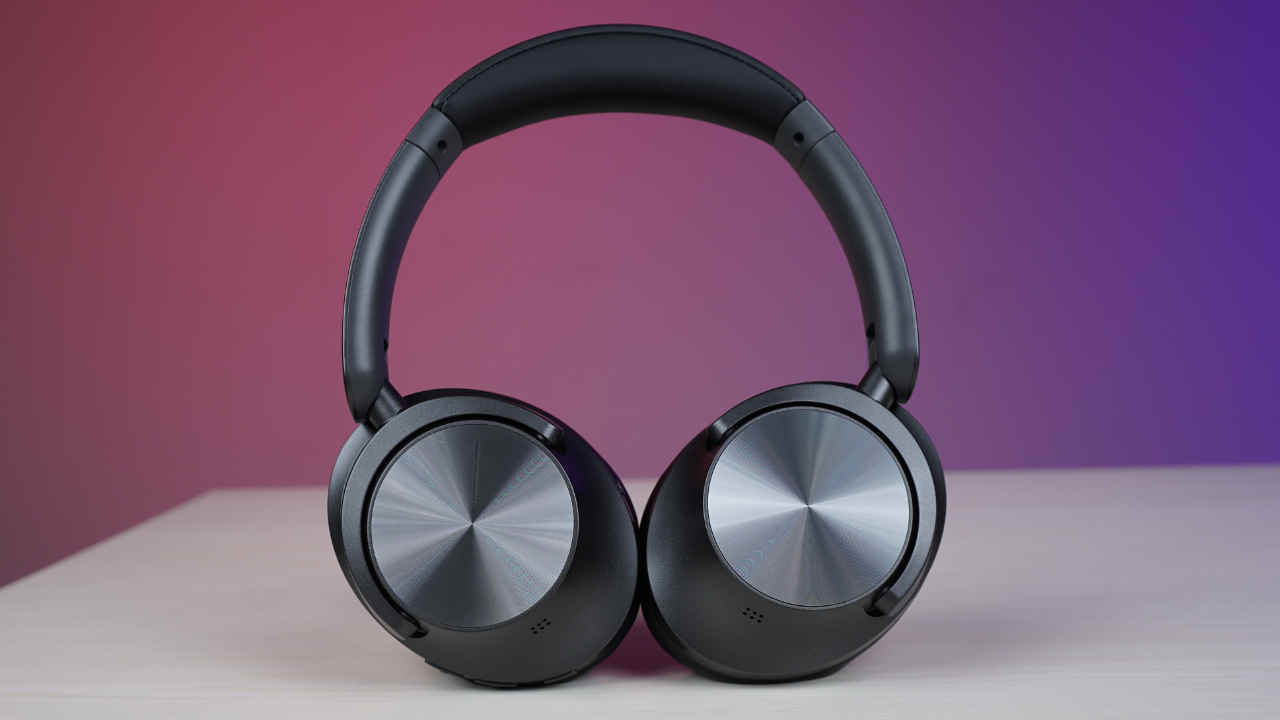
Noise has launched the first over-ear headphones from its Master series called the Master Buds Max. Like the Master Buds TWS that came before, the newcomer also comes with Sound by Bose. In our exclusive interview, Noise co-founder Amit Khatri said, ‘Without Bose’s involvement, this product wouldn’t even be possible.’ Further, the audio is said to be ‘expertly tuned’ with ‘deeper bass, cleaner mids and softer treble’. So, I was excited to see the claims that set some expectations as I unboxed the headphones. Since then, I’ve had limited time with the headphones but managed to listen to a few tracks, and these are my initial impressions.
 Survey
You can also find my quick takes on various other aspects, such as the pairing process, Active Noise Cancellation (ANC), Transparency mode, Spatial Audio, the Noise Audio app, which allows you to control some of these settings, and the device’s fit and finish.


Let’s begin with the unboxing experience, followed by its design and other aspects.
Also Read: Sony WH-1000XM6 vs Apple AirPods Max specifications comparison
First of all, the Noise Master Buds Max comes in a premium packaging: a cubic box with angular edges. Inside, you get the headphones, a velvety pouch to carry them around, a short USB Type-C to Type-C cable, and a quick guide booklet. Additionally, if you want a more premium-feeling case, you can buy it separately from Noise. That one looks loosely inspired by the AirPods Max case and has a vegan leather finish with suede microfiber lining.
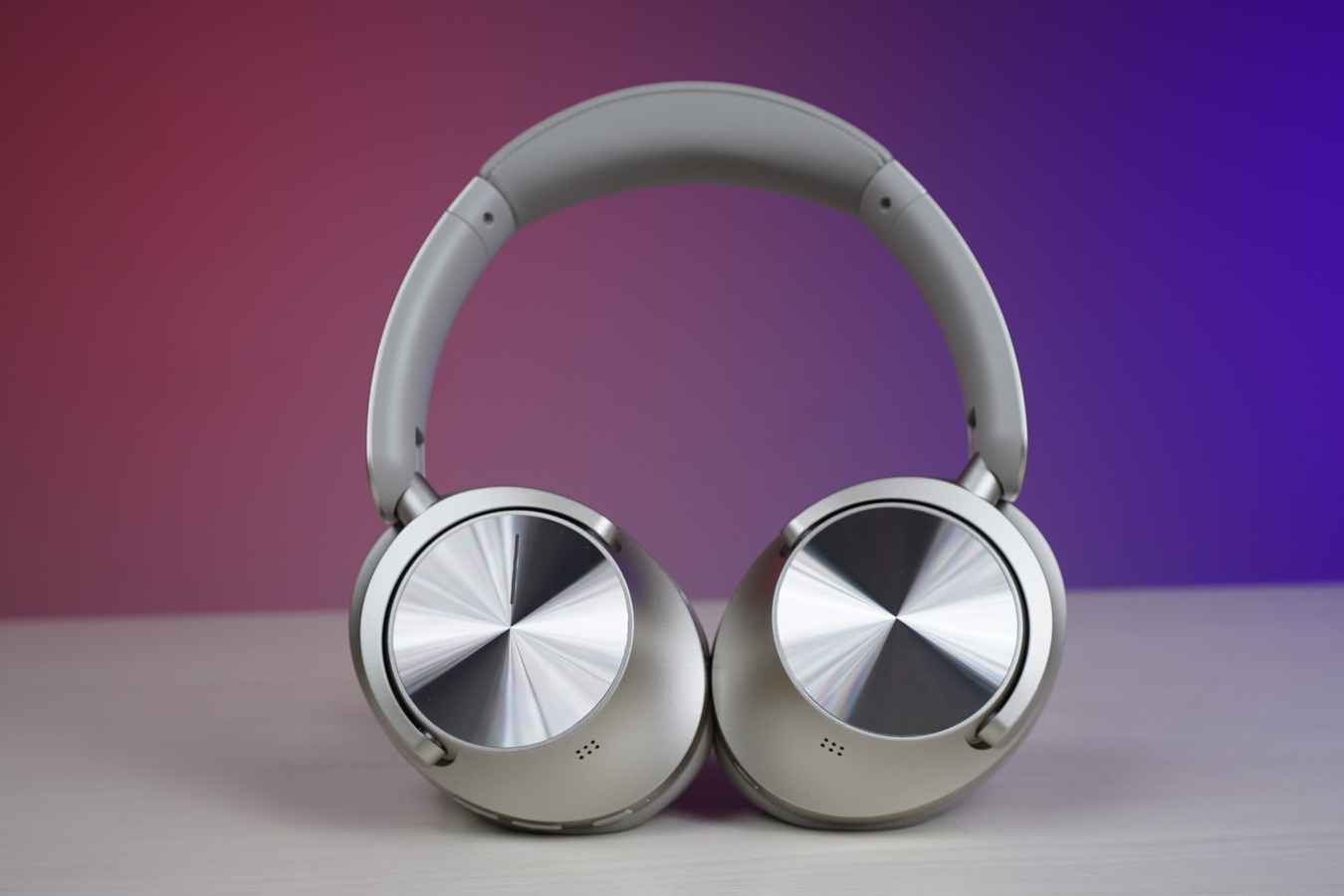
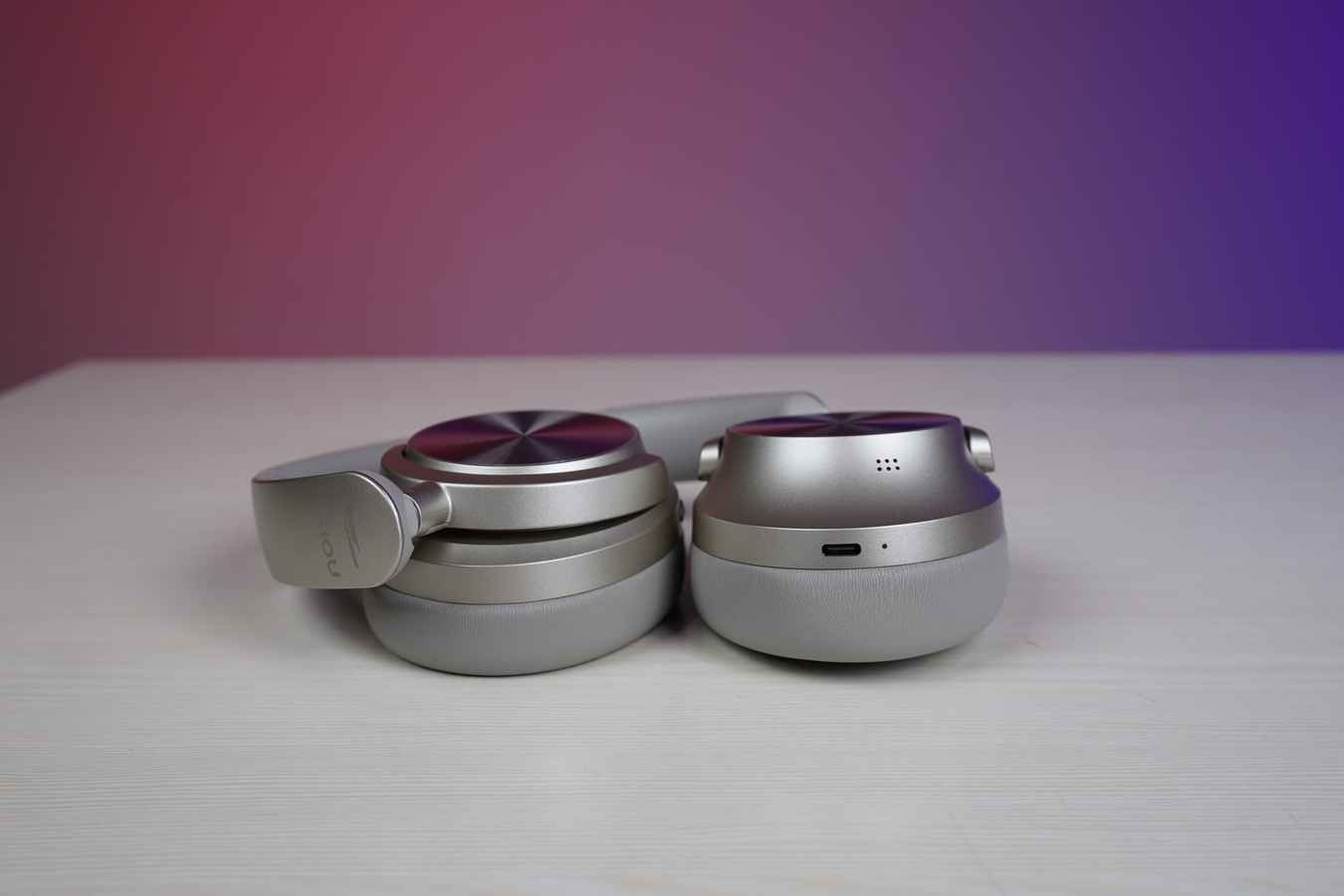
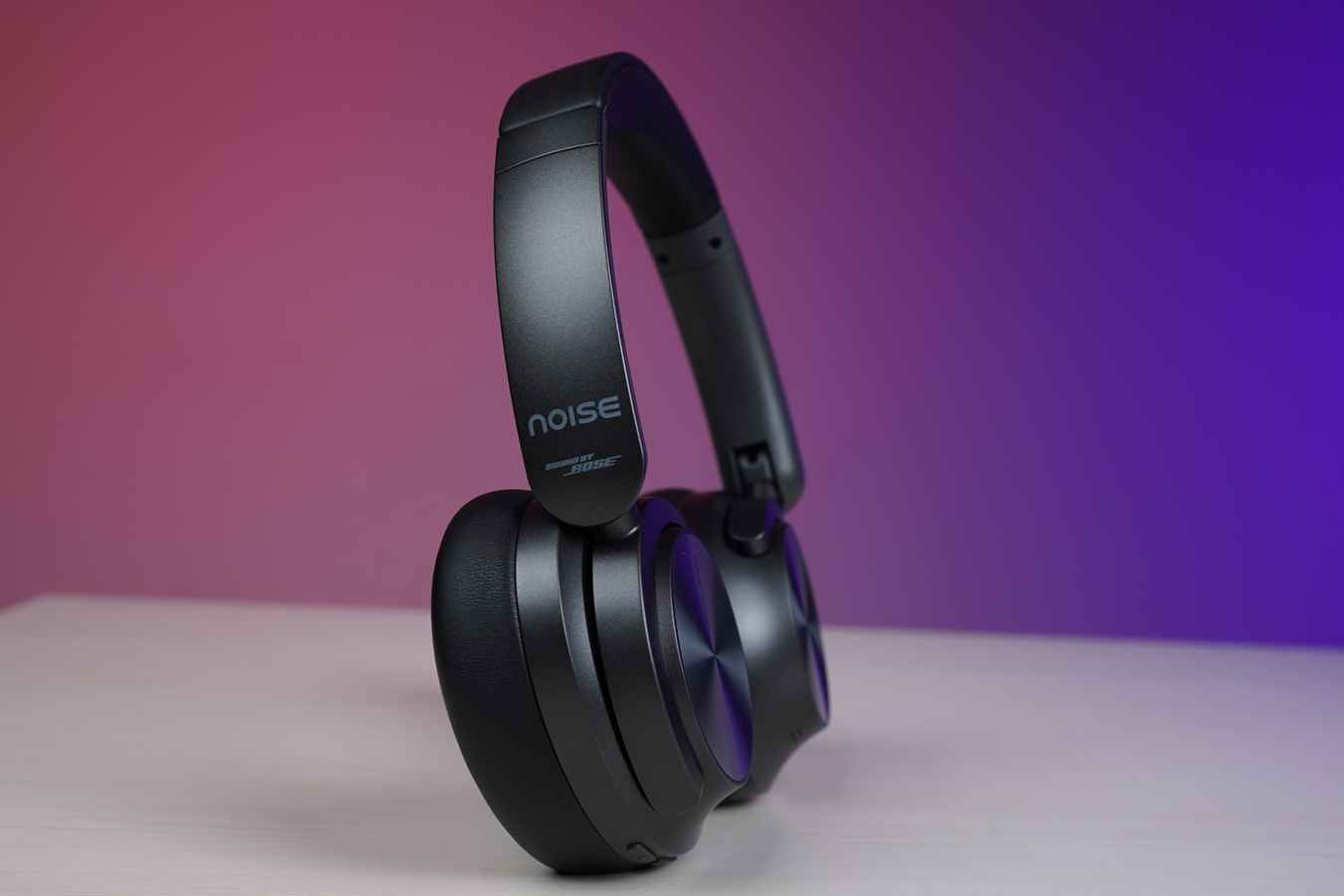
Both the Onyx (black/dark greyish) and Titanium (beige-toned) colours look pleasing. The concentric circle texture, reminiscent of vinyl, offers a striking contrast to the matte finish on the rest of the body. That finish, along with the way the headband sticks out from the temporal region of the head, gives it a slightly chonky headphone look. My Sony WH-1000XM6, on the other hand, sits closer to the head. Of course, this is subjective and can vary depending on the amount of hair on your head. While worn, the 262g Noise headphones feel light enough. Adding to the comfort are the soft cushions on the headband and ear cups, which, interestingly, feel plusher than those on Sony’s flagship headphones.
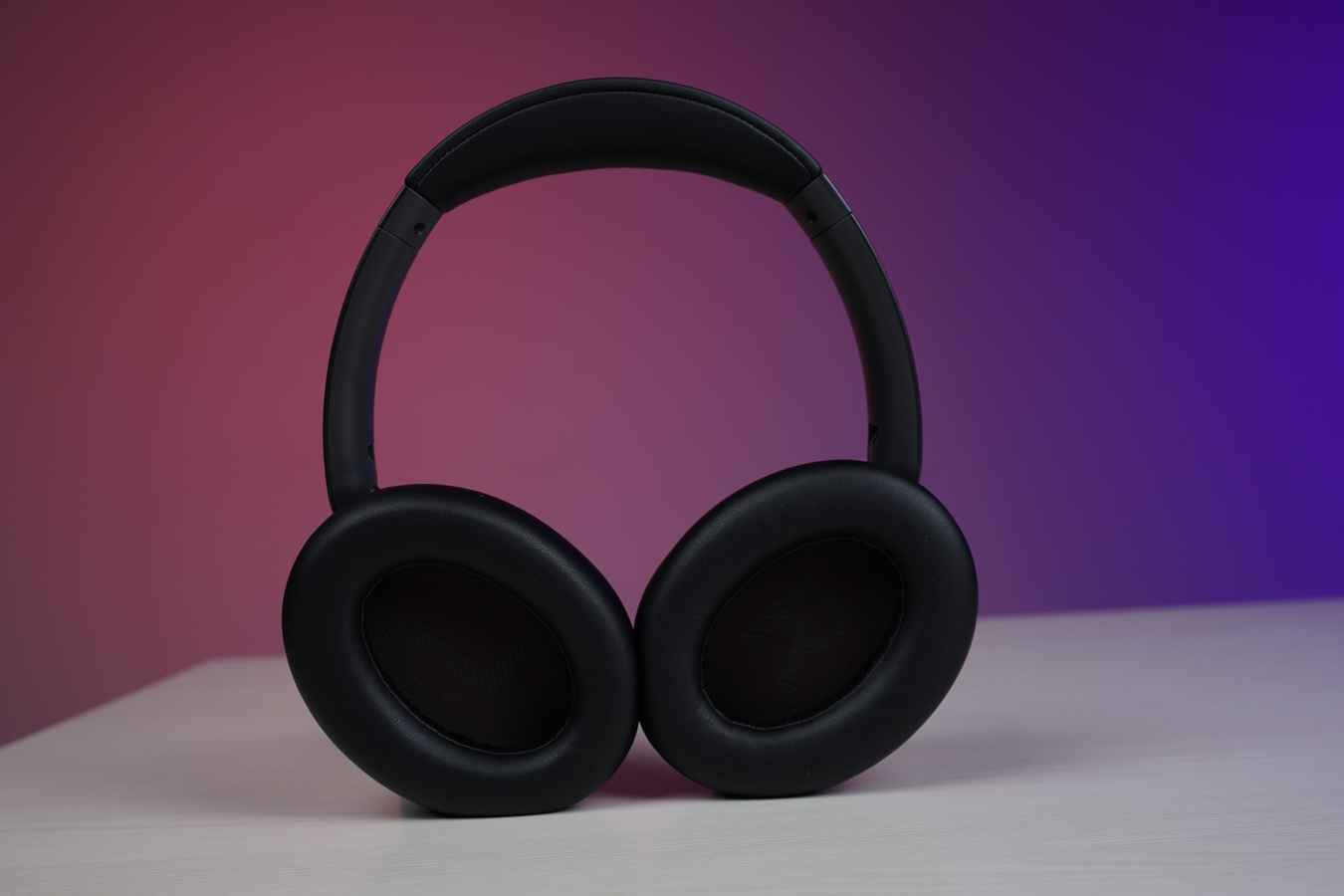
Another neat aspect is the foldable hinges that allow you to fold the earcups inward. Once the earcups collapse in, the headphones become more portable.
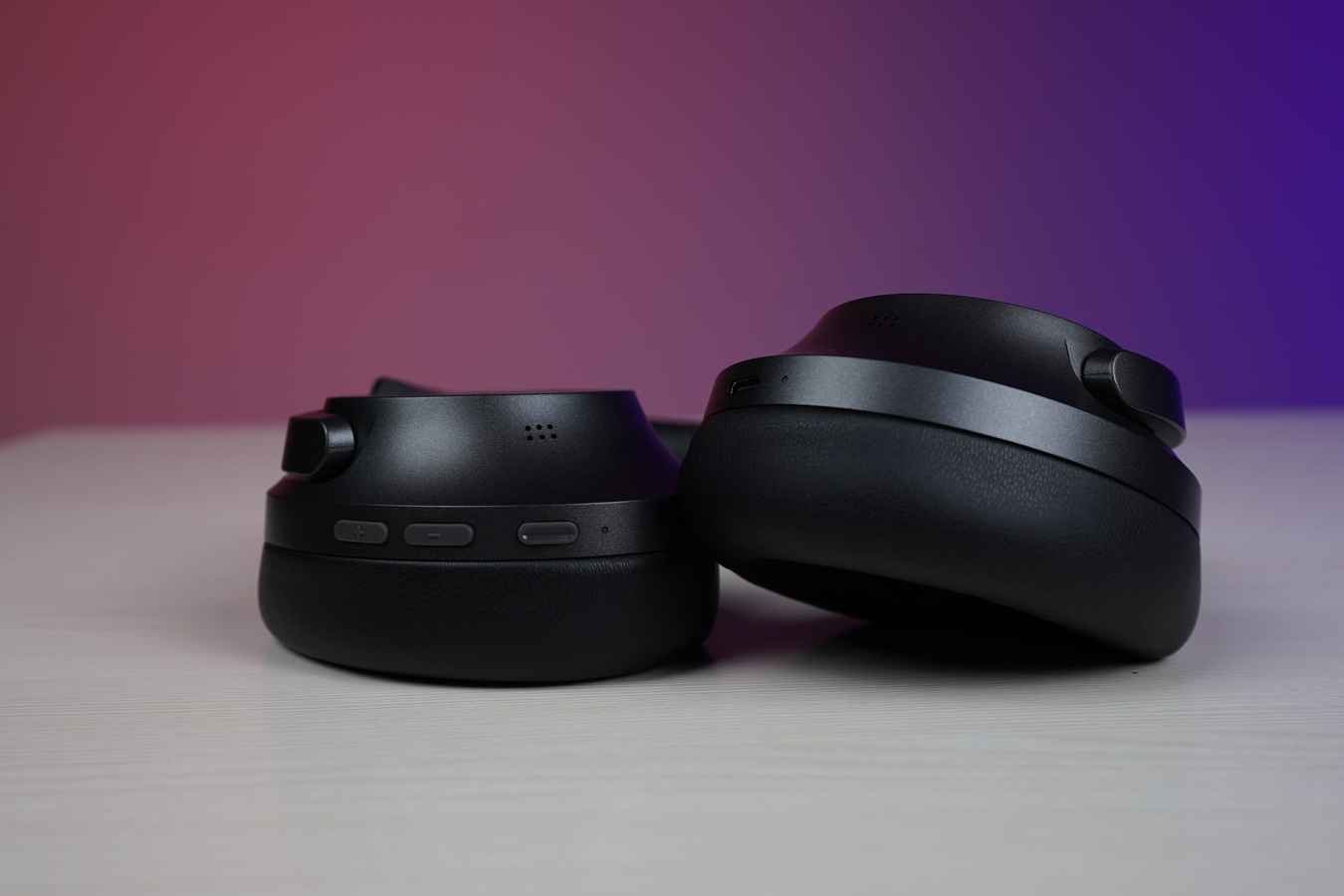
Besides, fit and finish, the Max’s design is functional too, as you get easily reachable and finely clicky buttons. Finding the right button may take some time getting used to. On the right cup, there are the volume buttons with plus and minus engravings, and the power button has a slight recess. However, Noise could have added a small text label for the power button, as it can be confusing to identify at first.
Another potentially useful but finicky feature, in my experience, is the in-ear wear detection. It mostly works as it should, but one time I placed the headphones in the pouch, and later, when I checked, the headphones were still playing. This could have been a one-off instance, but something you should know.
Moving to my listening experience. The headphones came fully charged out of the box. It may not always be the case, but a 100% charge meant I could use the product right away. I just had to press the power button two times, and the device went into pairing. Then it was just a matter of tethering through the Bluetooth settings of a phone or PC. Straightforward! By the way, you can simultaneously connect with two devices. Sweet! Now, I will have to check if the battery life claim of 48-hour playtime with ANC (or 60-hour without ANC) holds up.
Anyway, once I played the first song, I was impressed right away. The bass response felt tight and enjoyable. Some songs I heard include Breathe Into Me by Marian Hill and Tied Up Right Now by Parcels (for testing bass). Noise has tuned the device for softer highs, which could mean more comfortable on the ear. But this may not be ideal for someone who prefers crisp detail and sparkle in vocals or instruments. Still, my experience was fine listening to my go-to test tracks like Carol of the Bells by John Williams (for treble), Time by Pink Floyd (for movement and space), and Feels Like Going Home by Muddy Waters (for mids).
Turning on Spatial Mode in the Noise Audio app added a more spacious feel to the Muddy Waters track. The lead singer’s voice sounds centred but closer with the instruments playing in the background. However, the feature feels inconsistent: it enhances some songs but has little effect on others. It’s something that will need further testing.
Coming to the Noise app’s UI, it has a simple UI and right at the top, there is the battery life status followed by options to toggle between ANC, Transparency Mode and the Off state. You get options to choose between Low, Mid, Max and Adaptive. I liked the Max mode, which is said to block up to 40db noise. I tried it in my office, but I need to use it for a longer period to see how effective the Adaptive mode works in different environments. Similarly, I will have to listen to more music to see if the EQ Control automatically picks the best settings.
Speaking of settings, you get a few more options to tweak, like Swift Call Mode, which claims to auto-answer incoming calls as soon as you wear the headphones, Focus Mode, which locks controls for uninterrupted listening and Find My Device to locate your lost headphones in seconds.
Well, that’s pretty much it. We’ll need more time to judge how well it plays overall and how the rest of the repertoire works. You will have our complete thoughts in the Noise Master Buds Max review, which should be live on Digit.in soon.
Also Read: Sony WH-1000XM6 first impressions: notable upgrades right away
 Follow Us
G. S. Vasan
G.S. Vasan is the chief copy editor at Digit, where he leads coverage of TVs and audio. His work spans reviews, news, features, and maintaining key content pages. Before joining Digit, he worked with publications like Smartprix and 91mobiles, bringing over six years of experience in tech journalism. His articles reflect both his expertise and passion for technology. View Full Profile


