On a rainy Sunday evening, I reached the Royal Opera House in Mumbai with pretty mixed feelings. I’ve always believed films are meant to move you – to make you feel something real – and honestly, I’ve never felt that from AI visuals. They look perfect, sure, but there’s something cold about them.
So, when I walked in, I was curious, a bit skeptical, and very ready to be proven wrong.
The crowd, though, was instantly intriguing. This wasn’t your usual film festival audience. There were people talking about “prompt engineering,” filmmakers swapping notes about workflows, and a few who had just come because “AI” sounded cool. Some were there to network, some to support friends, and a few like me were just there to see if machines could really tell stories that feel human.
Also read: Best AI audio and music making tools
What surprised me most was how international it felt. Even though this was the first-ever AI film festival in India, it wasn’t limited to Indian participation. There was a team with members from Morocco, Dubai, and Greece. For something so new, that’s pretty remarkable.
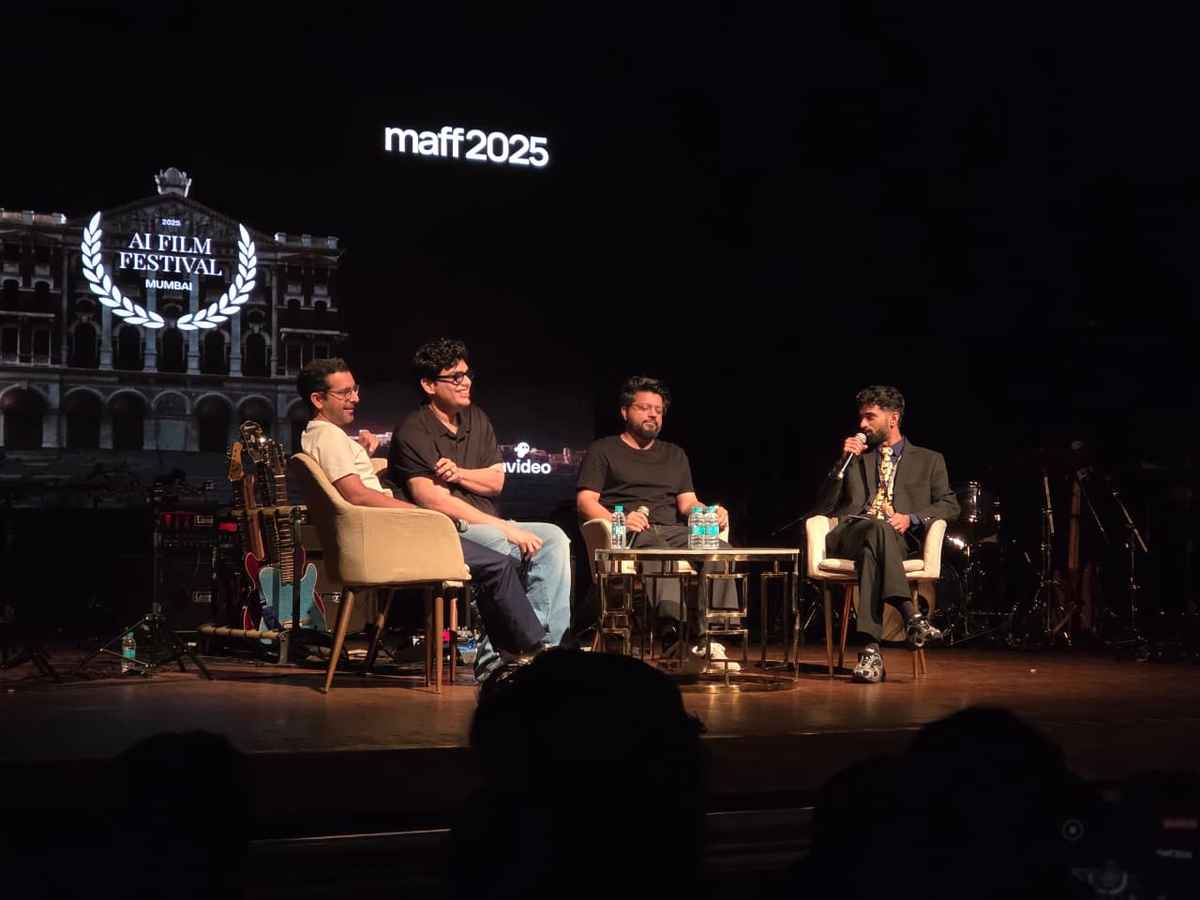
You could sense everyone was figuring this out together in real time. Before the screenings began, a panel took the stage. The lineup had everyone’s attention: Shakun Batra, the director of Kapoor & Sons and one of the first Indian filmmakers to experiment seriously with AI; Karan Anshuman, creator of Mirzapur; and Tanmay Bhat, the comedian and digital creator who’s built an entire persona around understanding online culture.
Their conversation felt refreshingly candid. They spoke about AI as a collaborator rather than a competitor, a creative partner that could open new ways of visualising ideas. But the question that lingered was philosophical: can AI really understand emotion, or is it just good at faking it?
There weren’t clear answers, but that didn’t seem to matter. Everyone in that room was just excited to find out what happens next.
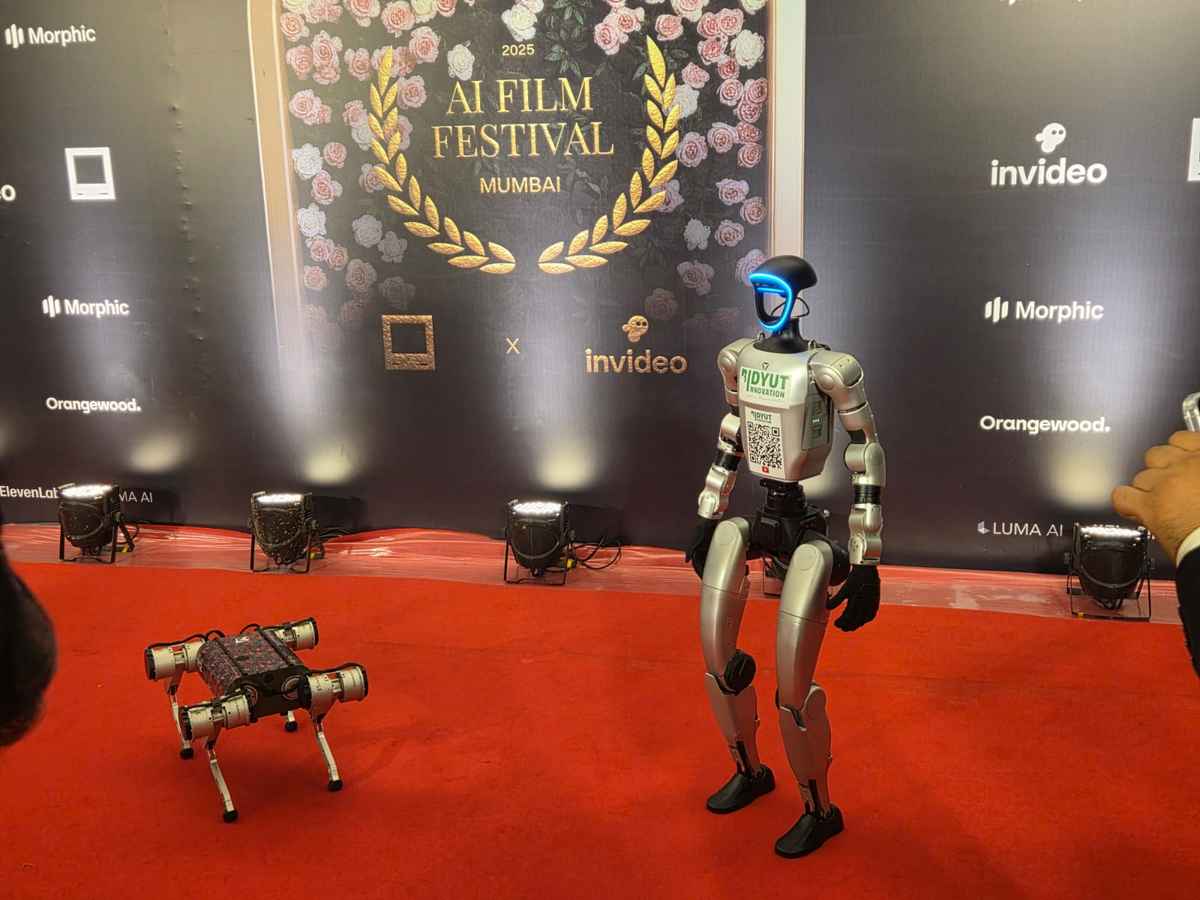
The festival premiere itself felt like something out of science fiction. A humanoid robot greeted celebrities as they entered, while robotic dogs walked around interacting with guests.
Also read: AI chips: How Google, Amazon, Microsoft, Meta and OpenAI are challenging NVIDIA
The jury that evening was as impressive as the crowd – Ram Madhvani, Shakun Batra, Kunal Kapoor, and Mukul Deora (Oscar-nominated producer of The White Tiger), all evaluating the films for creativity, innovation, and narrative finesse.
Then came the screenings. Fourteen films in total, each different in tone and ambition. Most were stunning to look at, cinematic lighting, smooth camera moves, impossibly detailed frames. But the human touch was often missing. Lip-syncs were off, sound was clearly done in post, and some scenes felt emotionally flat despite the visual perfection.
Still, I found myself impressed. Beneath all the uncanny imperfections, there was something genuinely creative happening. AI had given these filmmakers tools to experiment without massive budgets, to make the kind of visuals that, a few years ago, only studios could afford.
It reminded me of early VFX – a little weird at first, but you could see where it was headed.
By the end of the night, the energy in the hall was contagious. People were buzzing about collaborations, tools, and new ideas for next year’s festival. It was clear that, for many, AI wasn’t replacing human creativity, it was expanding it.
As I stepped out into the damp Mumbai air, I realised my own thoughts had shifted a little. I still think AI films can’t quite capture emotion, at least not yet. But I also see their potential, not as a substitute for human storytelling, but as an extension of it.
Maybe AI doesn’t need to make us feel human. Maybe it just needs to remind us what makes us human.
Also read: Mustafa Suleyman’s AI plan for Microsoft beyond OpenAI: What it means