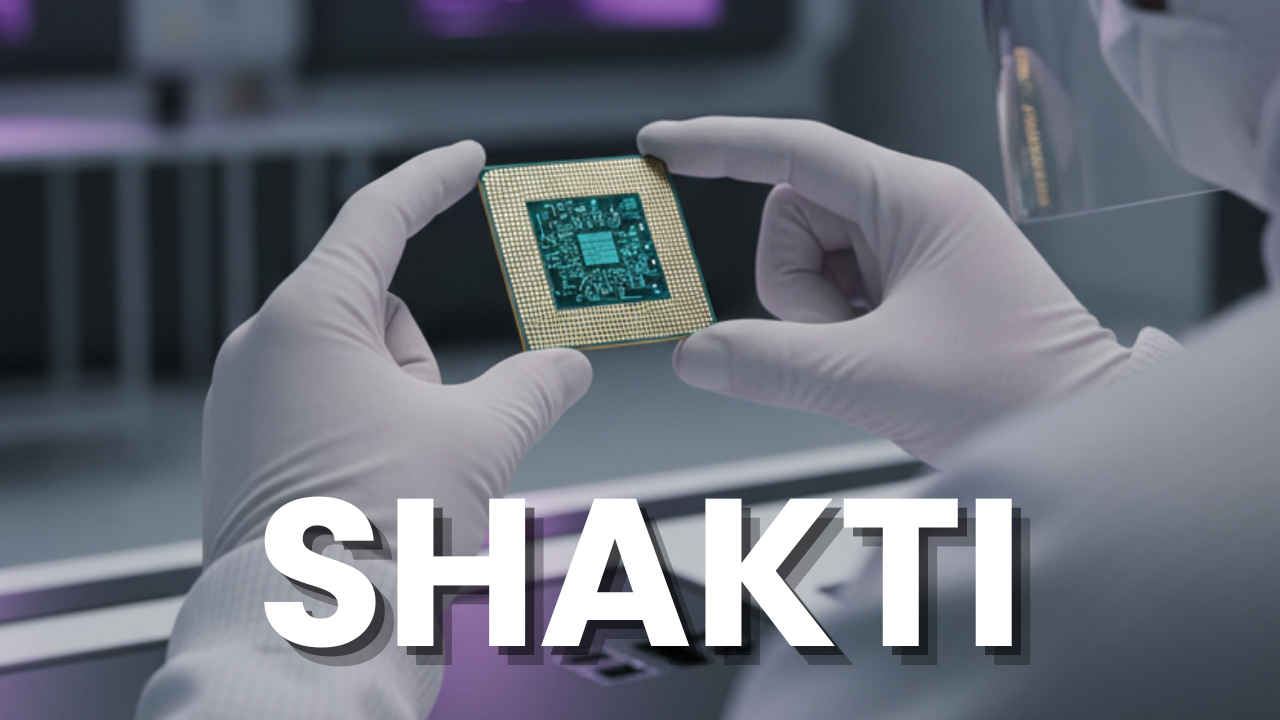
When Union Minister Ashwini Vaishnaw was pictured with the research team at IIT Madras earlier this month, it signalled the beginning of the next milestone being written in India’s indigenous tech journey – Shakti chip being developed by IIT Madras.
The goal, now formalised (at least in front of cameras), is as follows: to design the country’s first 7-nanometre processor, entirely indigenous, ready for fabrication by 2028.
The announcement builds on years of quiet, determined work behind the scenes, specifically at the Prathap Subrahmanyam Centre for Digital Intelligence and Secure Hardware Architecture (PSCDISHA) at IIT Madras. This is where the Shakti processor family first took root under the guidance of Prof. V. Kamakoti, back in 2018.
What started as a university-led exploration into RISC-V architecture has evolved into a high-stakes national initiative. The October 2025 development marks a pivot – away from academic proofs-of-concept and towards globally competitive, server-grade silicon designed for financial systems, defence, and core infrastructure.
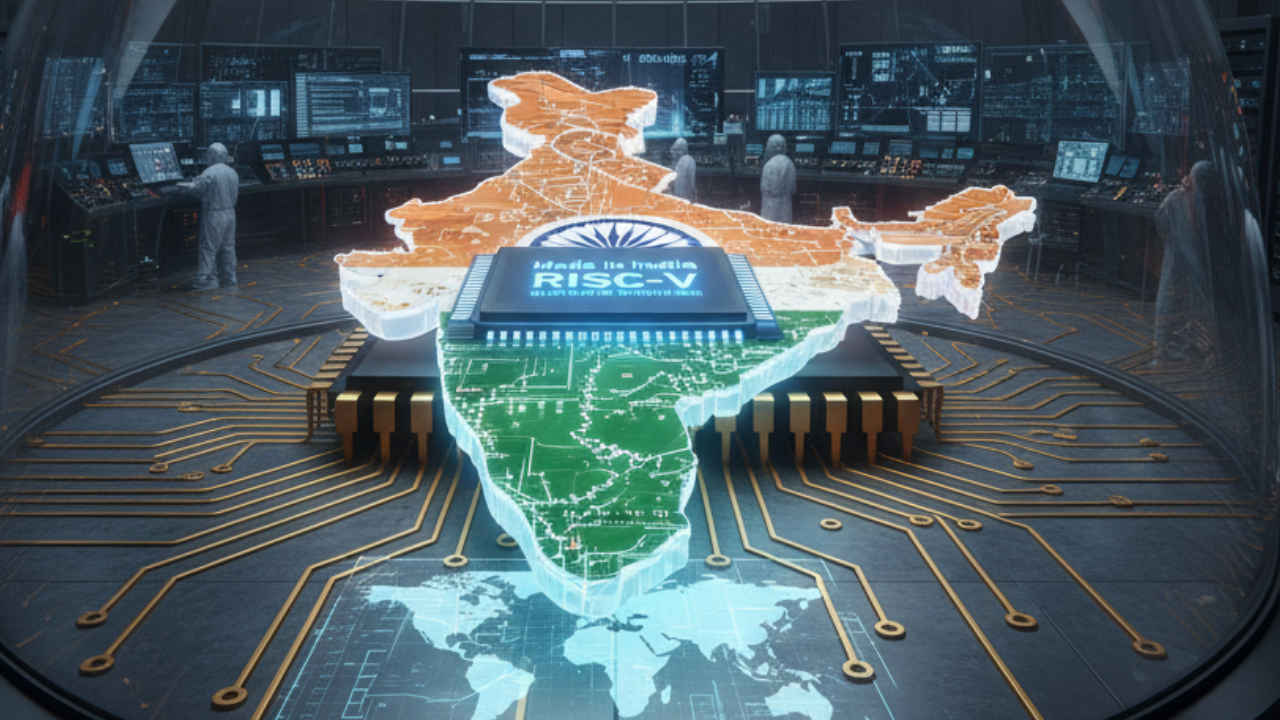
Shakti’s foundation is RISC-V, an open-source instruction set architecture – other popular architectures like ARM by Arm Holdings (used in almost all smartphones currently), x86 by Intel/AMD require licensing fees and restrict deep customization. While commercial alternatives remain tied up in foreign patents and licensing, RISC-V allows India to control chip design at the instruction level. For a nation thinking about long-term digital sovereignty, that’s crucial.
And the design team at IIT Madras has done more than theorise. They’ve taped out and tested actual silicon. RIMO, the project’s first chip in 2018, served as a general-purpose prototype. Then came Moushik in 2020 – an IoT-focused system-on-chip designed and booted within Indian borders. Most recently, IRIS in 2025 – a radiation-hardened chip built in collaboration with ISRO – went public as an aerospace-grade breakthrough.
The IRIS unveiling earlier this year wasn’t just a technical milestone—it was a national proof point. From SCL Chandigarh’s 180-nm fab line to PCB manufacturing in Gujarat and packaging in Karnataka, the entire semiconductor pipeline operated domestically. “That the chip design, fabrication, packaging, motherboard, assembly, software and boot – all happened inside India – is yet another validation that the complete semiconductor ecosystem and expertise exists within our country,” Prof. Kamakoti said.
But 7-nm changes the game. It’s a quantum leap in complexity, performance, and global relevance. And the minister made the intent clear.
“We will be designing a 7-nanometre processor which is optimised for performance and energy efficiency… for financial services, communications, defence, and strategic sectors… By 2028, this will be ready… and by that time our fab will also be up and running.”
That statement by Union minister Vaishaw locks in two critical targets: a 7-nm chip and a domestic fab line capable of manufacturing at that node. While India currently operates older-generation facilities like SCL, the ₹76,000 crore Semicon India Programme is catalysing next-gen projects involving the likes of Tata Electronics, Micron, and IGSS Ventures. A 7-nm capable fab implies ongoing conversations with global leaders such as TSMC, Samsung, or Intel Foundry Services.
Why does 7-nm matter? Because that’s the neighbourhood where global giants live. Chips fabricated at this scale power modern smartphones, high-performance computing systems, AI accelerators, and cloud data centres. For India to get there, with a homegrown design and a local fab, would be a first. It would mean less dependence on foreign silicon for critical infrastructure. Not only would it boost data security, but it would also allow India to shape next-gen computing platforms that align with its digital priorities.
Also read: Shakti SDK will enable app development for India’s first processor
The server-grade ambitions of Shakti are clear. Drawing from the fault-tolerant DNA of the IRIS aerospace chip, the upcoming 7-nm design is meant to go beyond experimental boards. Think real-world applications like secure government clouds, indigenous AI/ML platforms, and strategic computing in defence networks.
“We will be designing a 7 nanometre processor… by 2028,” said Vaishnaw. The timeline is aggressive. The intention is unmistakable.
It’s not just academia pushing this forward. The full semiconductor pipeline now includes government support, space agency collaboration, and industry-scale deployment. Design by IIT Madras. Fabrication at SCL (for now). Packaging by players like Tata Advanced Systems and Syrma SGS. Deployment across ISRO and beyond.
The next three years are critical. If India aligns chip and fab readiness by 2028, it won’t just be unveiling a piece of hardware, but a whole new geopolitical stance. One where the chips powering the nation’s networks, servers, and systems are made in India, for India, and by India.
Also read: Semicon India 2025: Indigenous chip manufacturing with “Made in India Chips”