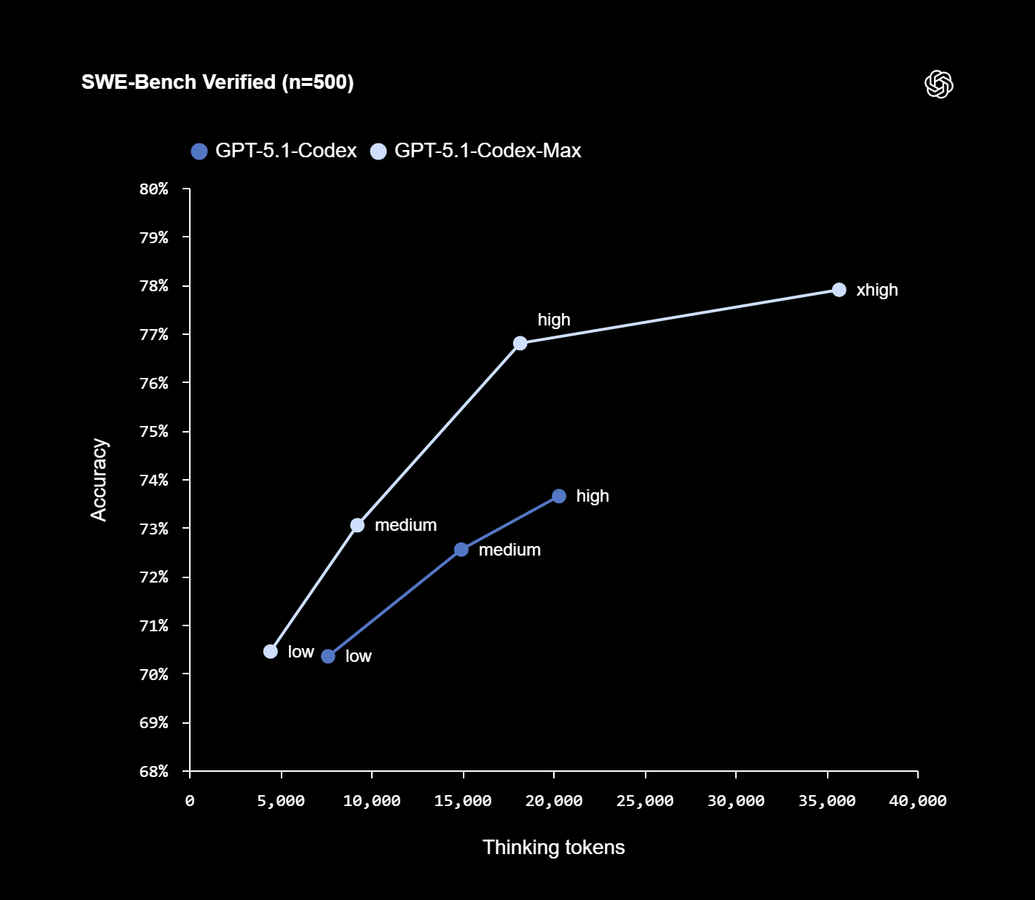
If you’ve been watching the AI world this week, you probably noticed something interesting: OpenAI dropped GPT-5.1 Codex Max almost immediately after Google unveiled Antigravity, its agentic, developer-focused AI platform. It feels like the two biggest players in AI are now openly battling for the future of software development, and Codex Max is OpenAI’s answer to Google’s big swing.
So let’s walk through what this new model actually is, what makes it different, and why developers are already paying attention.
Also read: Google Antigravity IDE explained: Free tool for code development
Codex Max is OpenAI’s newest and most advanced coding model, built on top of the GPT-5.1 architecture. Earlier Codex versions could write functions, generate boilerplate, or help with debugging. But Codex Max works at an entirely different scale. It can understand whole repositories, reason about architecture, and keep track of relationships across dozens of files at once.
In simple terms: older models felt like autocomplete on steroids. Codex Max feels like pairing with a senior engineer who never loses context, even in a huge codebase.
Google’s Antigravity showed a future where AI agents manage development tasks across workspaces: editing code, generating components, running tests, and iterating like a teammate.
Releasing Codex Max right after that is no coincidence.
OpenAI clearly wants to show that it can match and in some cases exceed Google’s agentic capabilities. Codex Max is designed to be the model behind OpenAI’s own agent-driven development workflows, offering deep context, better reasoning, and more reliable code generation.
So yes, this is absolutely part of an escalating AI race.
The name is earned. Here’s what stands out:
Also read: Inside Snapdragon X2 Elite’s Oryon: The CPU challenging Intel, AMD and Apple
Instead of writing disconnected blocks of code, it produces work that looks like it was written by the same person. This is the part that feels most like OpenAI’s counterpunch to Google Antigravity.
Codex Max can work across your project like an intelligent teammate. You can say:
“Refactor the authentication system, add 2FA support, and make sure it doesn’t break existing sessions.”
And the model can navigate the repo, update the right files, create new modules where necessary, preserve logic and dependencies and explain everything it changed
It’s not just answering prompts, it’s acting with a plan.
This is the same direction Antigravity is pushing in, but Codex Max feels more like a model built for deep reasoning across code rather than task orchestration alone.
Codex Max is noticeably better at analyzing long logs, finding root causes, suggesting minimal patches and avoiding overconfident but incorrect fixes
It behaves less like a chatbot and more like a methodical engineer.The model understands practical constraints: deployment issues, API limits, performance bottlenecks, and security needs. So its answers feel more grounded, more production-oriented, and more like something a real dev team would implement.
Codex Max won’t replace you. But it will absolutely change your workflow. You’ll likely find that you:
Beginners get a patient tutor. Seniors get a force multiplier.
Codex Max isn’t just “another model.” It’s OpenAI stepping firmly into the agentic development race, right alongside Google’s Antigravity.
If GPT-4 Codex felt like an assistant, GPT-5.1 Codex Max feels like the first version of a true AI co-developer. And with Google and OpenAI now going head-to-head in real time, this space is about to accelerate faster than anyone expected.
Also read: Snapdragon X2 Elite chip: Qualcomm is serious about AI PC domination!