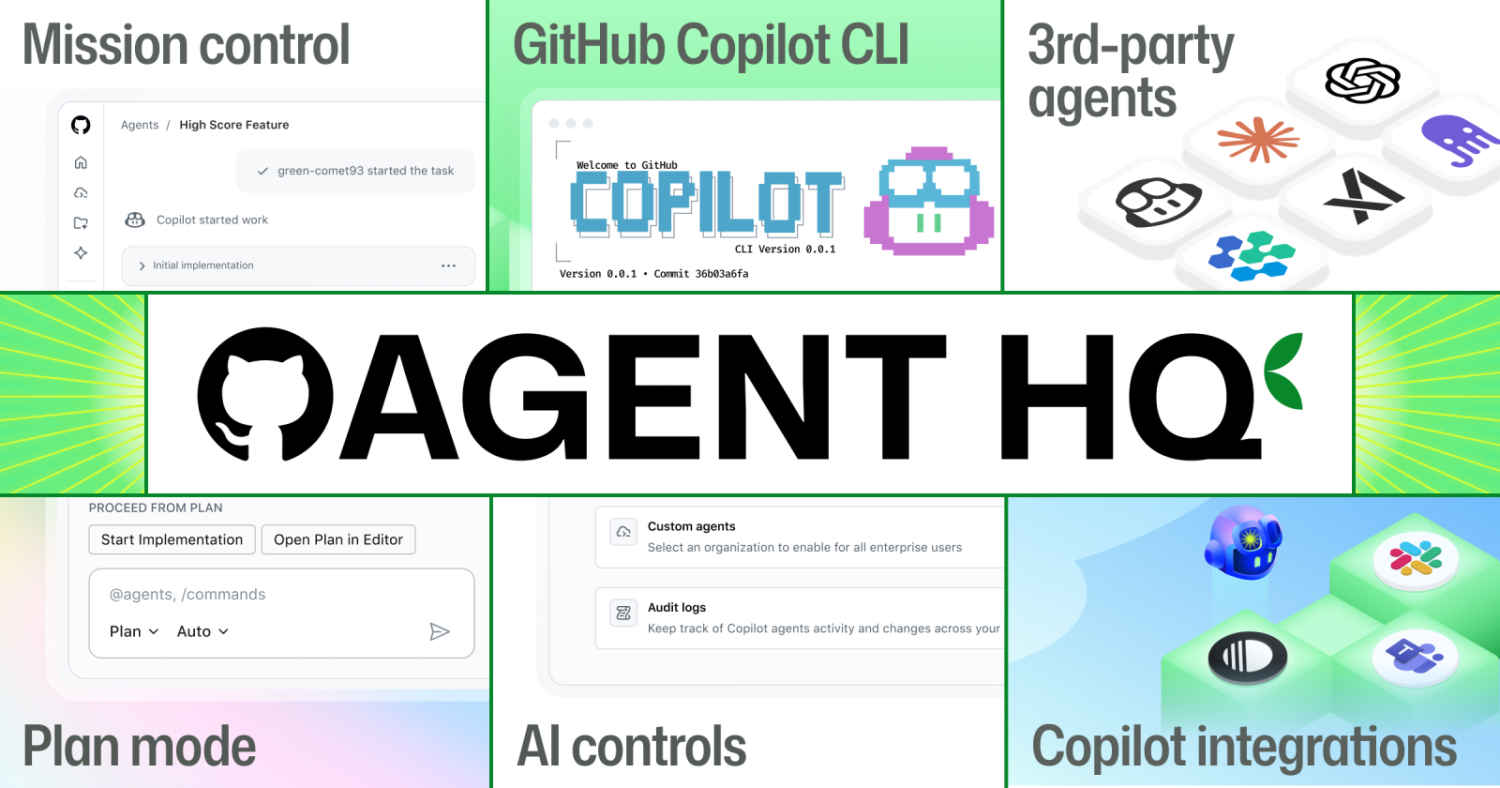
When GitHub Copilot first landed on developers’ screens in 2021, it felt like a quiet revolution – a coding partner that could autocomplete lines, write functions, and even refactor snippets on command. Fast-forward to 2025, and GitHub has now taken a much bigger leap: Agent HQ, a command-center built not just for Copilot, but for a whole ecosystem of AI coding agents.
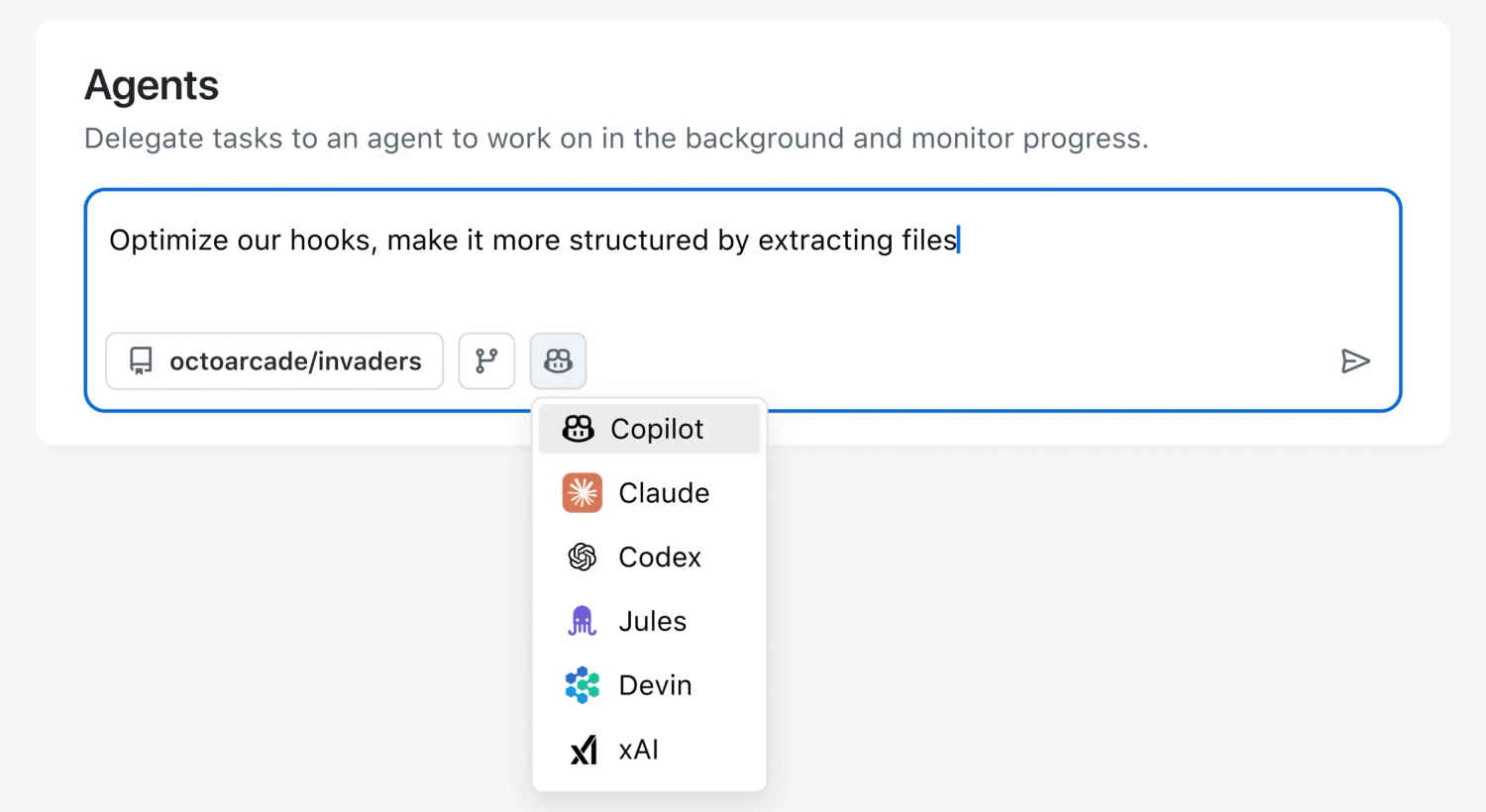
Think of it as the developer’s “mission control,” where OpenAI’s models, Anthropic’s Claude, Google’s Gemini, and even xAI’s Grok can all sit side by side, each one specialized for a different kind of coding task.
Also read: Meet NEO: Humanoid robot designed as your home assistant for ₹18 lakh
At its core, Agent HQ is GitHub’s answer to a growing reality in software development: no single AI model can do it all. Developers increasingly switch between tools – Copilot for boilerplate, Claude for reasoning, Gemini for data structuring – and that friction adds up.
Agent HQ promises to eliminate that problem by offering a unified dashboard where multiple AI agents can be connected, deployed, and managed within the same GitHub environment.
Developers can select which agent to assign to a task, compare outputs from different models, and even run them collaboratively on the same repository. The interface acts like a real-time control tower, you can plan, test, and review AI-generated code without leaving your GitHub workflow.
GitHub calls Agent HQ a “home for any agent, any way you work.” But the deeper ambition here isn’t just unifying vendors, it’s about specialization.
Where Copilot is a general assistant, the next wave of AI tools is moving toward task-oriented agents: one that writes documentation, another that reviews pull requests, a third that generates test cases. GitHub’s new “Plan Mode” in Visual Studio Code, for instance, allows an agent to generate a full step-by-step plan before writing any code – an early sign of more structured autonomy.
This shift from “prompt-based” to “mission-based” interaction is what makes Agent HQ so consequential. It marks the beginning of agents that don’t just respond, they manage, delegate, and collaborate.
Also read: Can ChatGPT really care? OpenAI wants to make AI more emotionally aware, here’s how.
For years, developers have been confined to whichever AI tool was integrated into their IDE. Now, they can choose the right agent for the right job. A Python backend? Use Claude. A front-end prototype? Maybe Copilot. A system design discussion? Gemini’s multi-modal reasoning might help.
That kind of modularity gives developers real agency and forces model makers to compete not on marketing, but on performance and reliability.
Agent HQ isn’t just a plug-and-play switchboard; it’s an environment designed for orchestration. GitHub envisions teams where multiple agents work together, one writes, one reviews, another tests, supervised by a human developer.
It’s a step toward software projects that feel more like managing a digital team than typing alone in an IDE.
Because Agent HQ is embedded within the GitHub ecosystem, it inherits the platform’s strengths, version control, security audits, and collaborative review. This means AI agents can operate within the same pull-request flow as human contributors, making their output transparent and traceable.
But Agent HQ also surfaces new questions that GitHub and the broader AI community will need to answer.
There’s also the issue of platform lock-in. GitHub’s “hub of agents” could centralize developer workflows, but in doing so, it may tighten Microsoft’s already dominant grip on the AI-coding landscape.
Agent HQ represents a philosophical shift: AI isn’t just assisting developers anymore, it’s joining their teams. As specialized agents evolve, the act of coding could become more about orchestration than execution, where human developers act as creative directors managing a fleet of digital coworkers.
For now, Agent HQ is still in its early stages. But if GitHub succeeds, it might redefine what it means to “build software” – turning repositories into collaborative ecosystems where humans and AI agents build, test, and ship side by side.
Also read: Grokipedia vs Wikipedia: Is Elon Musk’s Free Encyclopedia Better?