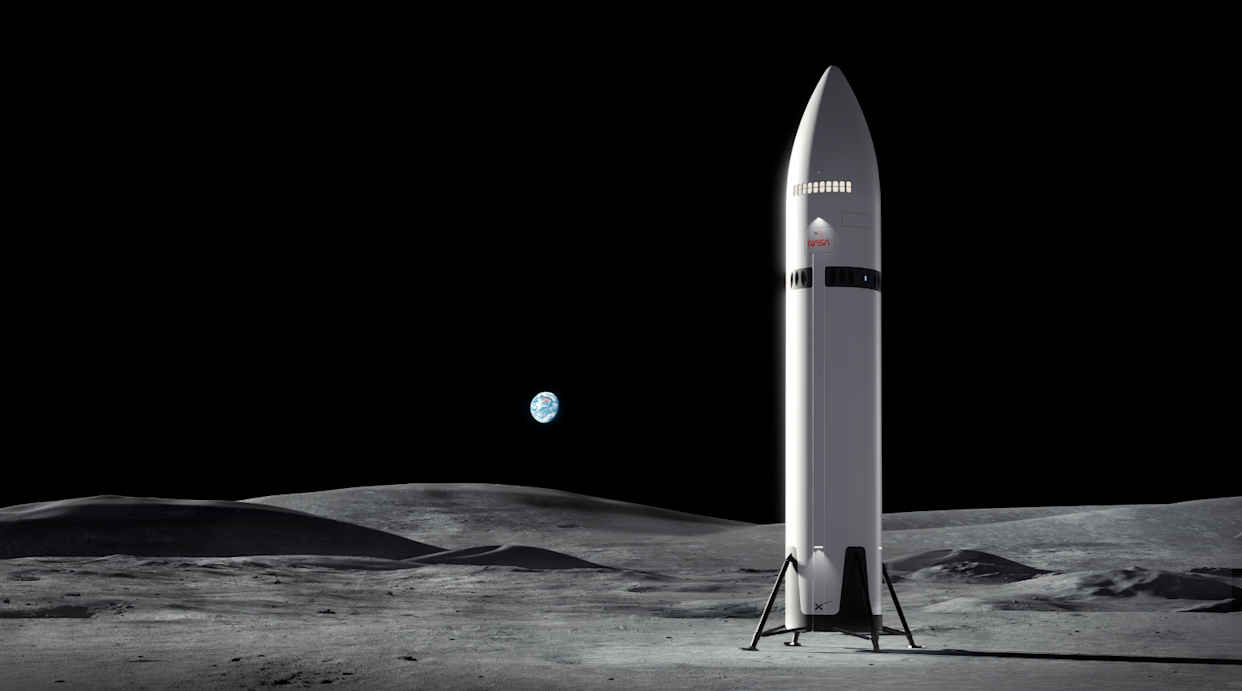
Following a major strategic shift confirmed on February 8, 2026, Elon Musk has announced that SpaceX is officially pivoting its immediate focus toward the lunar surface. While the long-term vision of a Martian colony remains, Musk revealed that the company’s “overriding priority” is now the establishment of a “self-growing city” on the Moon. This move marks a significant recalibration for a company that has, for nearly two decades, treated Mars as the ultimate “North Star” for human survival.
Also read: MacBook Pro M3 gets Rs 50,000 discount: Should you buy it now?
The logic behind this pivot is as much about orbital mechanics as it is about engineering speed. Musk highlighted the stark logistical advantages of the Moon over Mars, specifically noting the frequency of launch opportunities. Because of the way the planets align, travel to Mars is only possible every 26 months, with a grueling six-month transit time each way. In contrast, SpaceX can launch missions to the Moon every 10 days, with a journey time of just 48 hours.
Also read: Bulbul to Vision: Sarvam AI challenges global models with Indic stack
This disparity creates an iteration loop that is roughly 80 times faster than anything possible on Mars. For an organization built on the “fail fast, fix fast” philosophy, the Moon serves as the perfect laboratory. By establishing a presence there first, SpaceX can test life-support systems, radiation shielding, and landing protocols in a real-world vacuum while remaining just two days away from terrestrial help. This proximity reduces the risk profile of “securing the future of civilization,” which Musk cited as the primary driver for the change.
The concept of a “self-growing” city points toward a new era of autonomous space construction. Following SpaceX’s recent $1 trillion merger and acquisition of xAI, Musk’s vision now integrates advanced robotics and artificial intelligence to minimize human labor on the lunar surface. The plan involves utilizing lunar regolith, the Moon’s soil, to 3D-print habitats and infrastructure.
By leveraging local resources, SpaceX aims to build a city that expands its own footprint modularly. Reports indicate that the company has already informed investors of a revised roadmap targeting March 2027 for the first uncrewed Starship landing on the Moon to begin this groundwork. This strategy aligns with Musk’s broader goal of creating space-based data centers, which he claims will be more energy-efficient than those on Earth as AI compute demands continue to skyrocket.
While the Moon is the current focus, Musk insists that Mars has not been abandoned. He projects that SpaceX will begin striving toward a Martian city in about five to seven years, using the lunar base as a critical stepping stone. However, the shift reflects a growing pragmatism. With the U.S. facing intense competition from China to return humans to the lunar surface this decade, SpaceX is positioning itself as the primary architect of a permanent, self-sustaining presence on the Moon by 2035, effectively ensuring that the light of consciousness has a backup drive closer to home.
Also read: Interview with Nithya Rajagopalan on how LinkedIn’s humanising AI recruitment