The digital landscape has fundamentally shifted with the arrival of the “AI-native browser,” a tool designed not merely to display the web, but to actively work on it. This paradigm change is being fiercely driven by two major contenders: OpenAI’s ChatGPT Atlas and Perplexity’s Comet. While both promise to revolutionize our online experience, they do so with deeply distinct philosophies, born from the core strengths of their parent companies. Understanding these differences is crucial to navigating the next era of the internet.
OpenAI’s entry, ChatGPT Atlas, has generated significant buzz, having just launched for macOS with Windows and mobile versions slated for release soon. Atlas is built around the concept of a powerful, semi-autonomous digital Agent. It views the web as a series of tasks to be completed, and its primary function is delegation. In contrast, Perplexity’s Comet approaches the browser as a Knowledge Synthesis Engine, focusing on organizing, analyzing, and delivering cited information for research and deep work. This difference – action versus intelligence – is the fault line in the burgeoning AI browser wars.
Also read: OpenAI launches ChatGPT backed Atlas browser to rival Google Chrome: Features, how to use and more
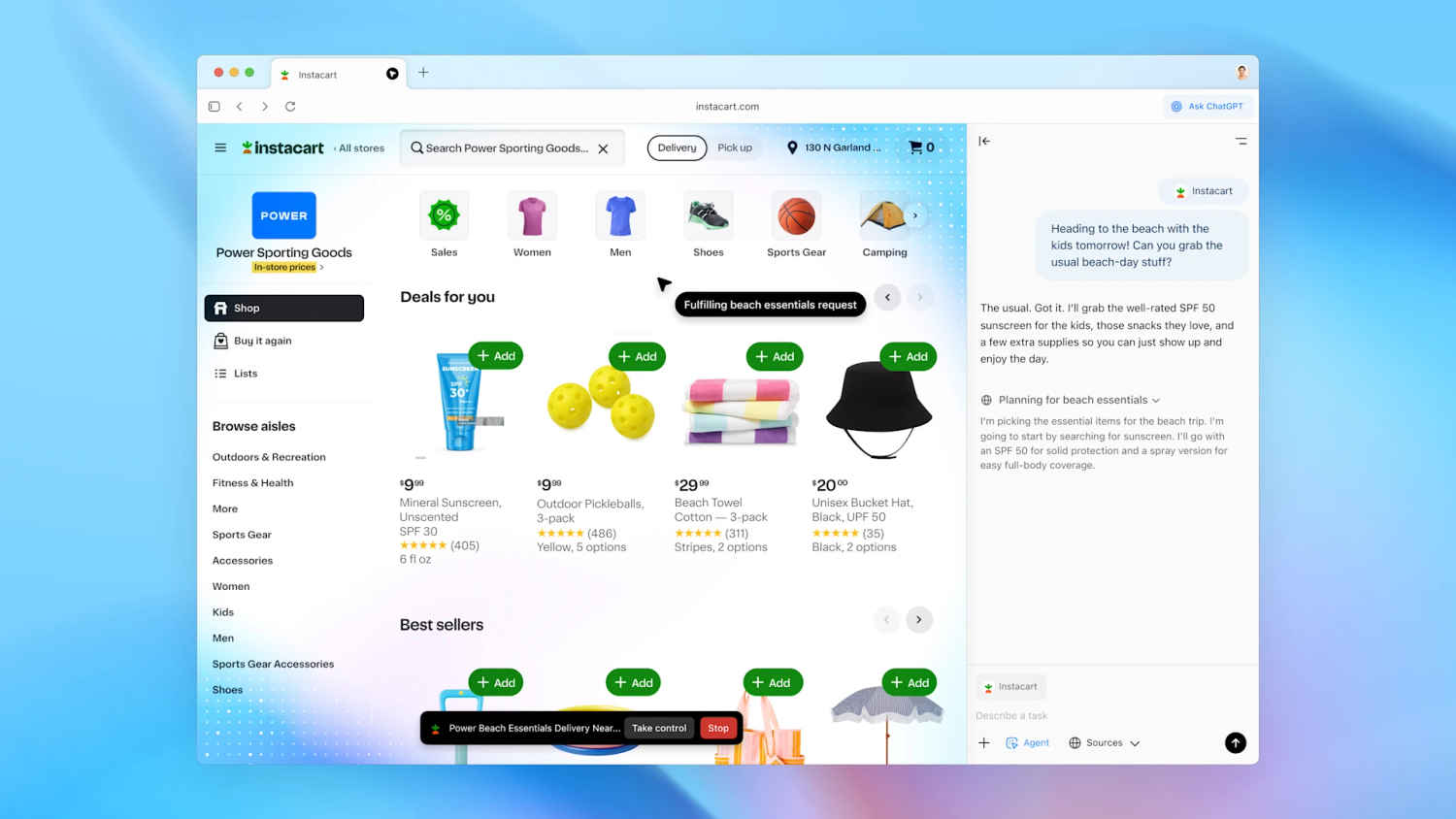
The most striking divergence between the two is their headline feature. For Atlas, it is the Agent Mode, available to paid ChatGPT users. This feature is a leap beyond simple summarization; it allows the AI to execute complex, multi-step actions on the user’s behalf. Imagine asking Atlas to “find me the top three best-reviewed hiking boots on sale, compare their waterproof ratings, and purchase the most durable one in my size.” The Agent will autonomously navigate multiple e-commerce sites, read reviews, fill out comparative tables, select the product, and initiate the checkout process. This capability turns the browser into a high-level command center, drastically reducing the repetitive clicking and manual data entry that defines today’s web use.
Comet, meanwhile, prioritizes Contextual Research and Knowledge Synthesis. Leveraging the core power of Perplexity’s answer engine, Comet specializes in taking messy, disparate information, across multiple open tabs, documents, and web pages, and delivering a unified, cited, and summarized answer. Rather than focusing on filling out forms, Comet focuses on building understanding. Its assistant can synthesize findings from a dozen different sources on a given topic, analyze a complex report for key takeaways, and answer questions using the collective knowledge of your current browsing session. This makes Comet the superior tool for academics, analysts, and anyone whose primary online goal is to efficiently process complex information.
The difference in core purpose translates directly to the user experience and interface design. Atlas features an ever-present ChatGPT Sidebar that acts as a conversational co-pilot. The interface is designed to keep the page and the AI conversation side-by-side, allowing users to ask questions, request summaries, or compare items based on the page they are currently viewing. The search bar itself defaults to a query box that yields a conversational response alongside traditional search results. Atlas also includes Cursor Chat, a subtle but powerful feature that allows the user to click a text field (like an email draft) and instantly get AI suggestions for rewriting, editing, or expanding the content inline.
Comet adopts a different philosophy with its Workspace Model. Instead of a chaotic array of tabs, Comet allows users to create dedicated, named Workspaces (e.g., “Q4 Marketing Strategy”). Within these spaces, the AI assistant utilizes Persistent Intent Memory, meaning it maintains a continuous understanding of the user’s goals, budget constraints, and project context across all open tabs and searches. This organizational structure ensures that all research and tasks are logically grouped, effectively transforming the browser from a viewing tool into a digital project notebook where the AI is the central organizing force.
Also read: AI and LLMs can get dumb with brain rot, thanks to the internet
Both browsers use memory to enhance personalization, but they apply it differently. Atlas uses general Browser Memories (an optional feature) to recall user preferences, browsing habits, and past interactions, making future suggestions and agent actions more tailored. Its memory function is focused on improving the utility of the ChatGPT agent across the entire web. Comet’s memory, however, is context-focused. By utilizing Persistent Intent Memory, the AI remembers the specific goals and constraints of a current project within a defined Workspace. If you are comparing vacation packages and specify a budget in one tab, the Comet assistant remembers that budget when you search for restaurants in a different tab hours later.
| Feature | OpenAI ChatGPT Atlas (Agent) | Perplexity Comet (Synthesizer) |
| Core Function | Task Automation and Action Delegation (The AI acts). | Knowledge Synthesis and Contextual Research (The AI informs). |
| Key Premium Feature | Agent Mode (Autonomous multi-step actions like purchasing, filling forms). | Workspace Model & Advanced Research (Organizing projects, deep synthesis). |
| Search Experience | Conversational prompt box yields ChatGPT answer + traditional search verticals. | Answer-First: Provides instant, concise, and highly cited answers from the web. |
| Interface Design | Side-by-side ChatGPT Sidebar and inline Cursor Chat for editing. | Workspace Model for project organization; persistent UI for context. |
| Memory Focus | General Browser Memories for personalized web-wide assistance. | Persistent Intent Memory maintains project goals across entire sessions/workspaces. |
| Availability | Just Launched on macOS; Windows/mobile versions coming soon. | Available on Mac, Windows, and Android; iOS version expected. |
The decision between Atlas and Comet is less about which one is technically superior and more about which one aligns with your core online habits.
If your primary goal is productivity through automation – you hate filling out forms, frequently shop online, or need help managing your digital to-do list – then ChatGPT Atlas is designed to be your ideal digital deputy. Its Agent Mode promises to save you clicks and time by doing the routine work for you.
If your primary goal is clarity through research, you are a student, an analyst, a journalist, or someone who deals with vast amounts of information, then Perplexity Comet is the clear choice. Its architecture is built for organizing complexity, synthesizing diverse sources, and delivering answers with the confidence of transparent citation.
The launch of Atlas signals that the age of the passive browser is over. Both OpenAI and Perplexity are compellingly forcing us to rethink how we work, learn, and live online, offering a thrilling glimpse into a future where our browser is truly our most intelligent digital partner.
Also read: Samsung Galaxy S26 Ultra may ditch Snapdragon chip for Exynos 2600: Report