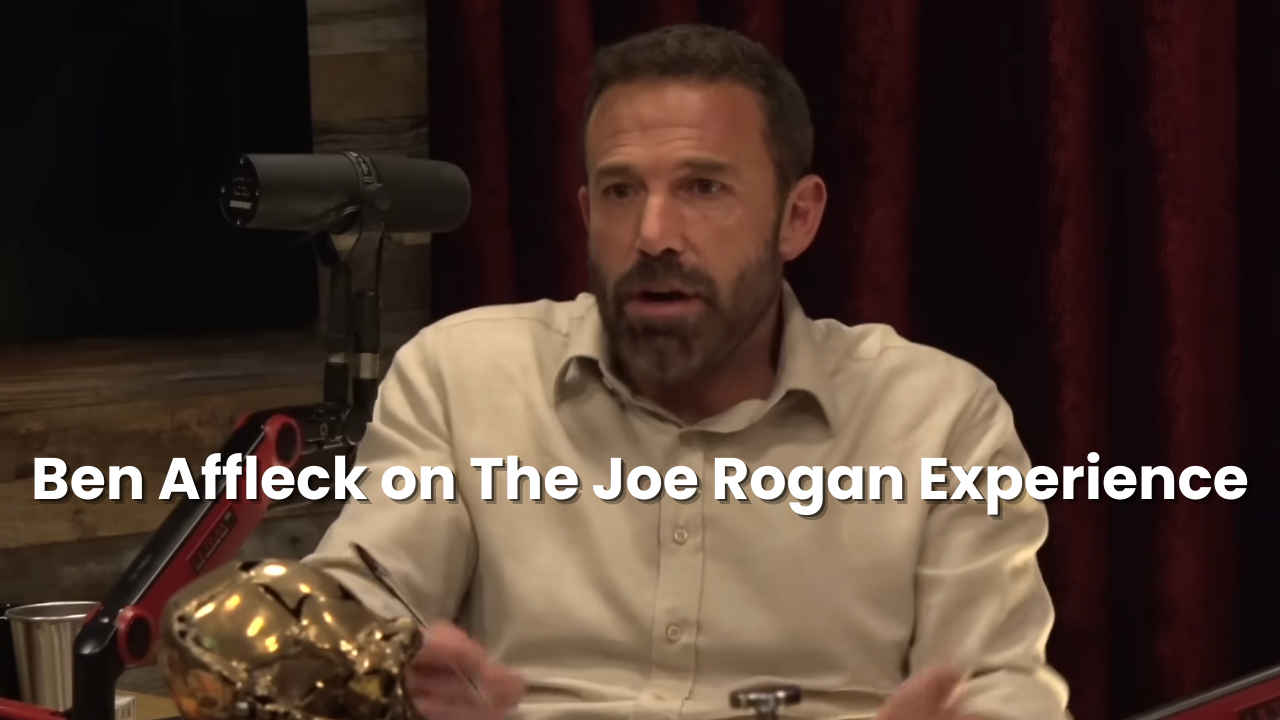
Calling Ben Affleck anti-AI would be wrong. He’s just profoundly unimpressed by it, as per latest evidence. In a recent, refreshingly unfiltered appearance on The Joe Rogan Experience podcast (along with good friend and fellow actor Matt Damon), Ben Affleck did something rare – at least as far as tech commentary goes.
The Hollywood actor-director stripped AI of its mystical robes and pointed at what’s underneath. Mostly, it’s a very expensive autocomplete machine, argued Affleck.
Ben Affleck’s first and most brutal observation is also the one Silicon Valley least wants to hear. That LLMs are fundamentally incapable of writing anything meaningful. Not “useful,” not “technically competent,” but meaningful in the way movies, stories, and human expression are meant to be.
Ask ChatGPT, Claude, or Gemini to write something, Affleck says, and what you get is something “really shitty.” That’s because these systems regress to the mean. They average out taste, smooth out risk, so that nothing original remains – only generalised offerings. Meh!
And if you’ve ever read an AI-generated screenplay synopsis that feels like it was assembled by a committee of LinkedIn posts, you know exactly what Ben Affleck means.
Also read: Anthropic’s data shows AI will be a teammate, not replace humans at work
Affleck is especially dismissive of the idea that AI will one day “prompt-generate” movies from thin air. The fantasy of typing a carefully crafted prompted and watching cinema emerge is, in his words, bullshit. Not because machines won’t improve, but because the core of storytelling isn’t pattern replication – it’s intention, taste, flair, meaningful but also contradictory to the lived human context. AI can suggest how a delayed letter might work in a scene. It can’t decide why that letter matters is Ben Affleck’s bone of contention.
And this is where Ben Affleck drives his point home, where the real problem seems to be that AI isn’t unfolding along the magical curve it was sold on. The exponential rocket ship narrative has quietly turned into something flatter, slower, and much more expensive. Affleck casually called out ChatGPT-5 as an example, arguing newer models are only incrementally better than their predecessors while costing multiples more to run. That’s not disruption, but diminishing returns wrapped in PR spin.
Ben Affleck’s most sobering point about AI is that the hype exists because it has to. AI isn’t being framed as “a useful tool” because that doesn’t justify trillion-dollar valuations or continent-sized capex spends. So instead, we’re told it will replace everything. All jobs. All art. All meaning, just replaced.
In reality, Affleck argues, AI will end up where most technologies do – as infrastructure. Like visual effects, for example. A tool that fills in the expensive, boring gaps – but still depends entirely on human judgement to decide what matters.
His parting shot in this AI debate is the most unsettling. If the dominant use case for AI turns out to be companionship – chatbots that flatter you, listen endlessly, and never push back – then we should question its social value altogether, argues Ben Affleck. A sycophantic digital friend might feel good at night, but it doesn’t build anything. It doesn’t challenge you. And it certainly doesn’t make better movies.
For a man whose career depends on creative risk, Affleck’s verdict is loud and clear. While AI can definitely help around the edges, but the soul of all creative endeavour is still stubbornly human.
Also read: OpenAI, Anthropic IPO race: But what about all the AI risks?