For the last three years, the handheld PC market has effectively been a fortress guarded by AMD. From the Steam Deck to the ASUS ROG Ally, the “Red Team’s” Ryzen Z-series silicon has been the default engine for portable gaming. But at CES 2026, the status quo didn’t just shift – it was shattered.
During a keynote that Intel CEO Lip Bu Tan characterised as “overdelivering,” the semiconductor giant unveiled a dedicated strategy to conquer the handheld market. The centerpiece of this offensive is a new hardware-specific variant of the Panther Lake CPU die, branded as the Intel Core G3. Unlike previous attempts where laptop chips were shoehorned into handheld chassis, the Core G3 is custom-built for the form factor, prioritising graphical throughput and thermal efficiency on Intel’s proprietary 18A process node.
Also read: CES 2026: AMD Ryzen AI 400 chip revealed, 5 key features explained
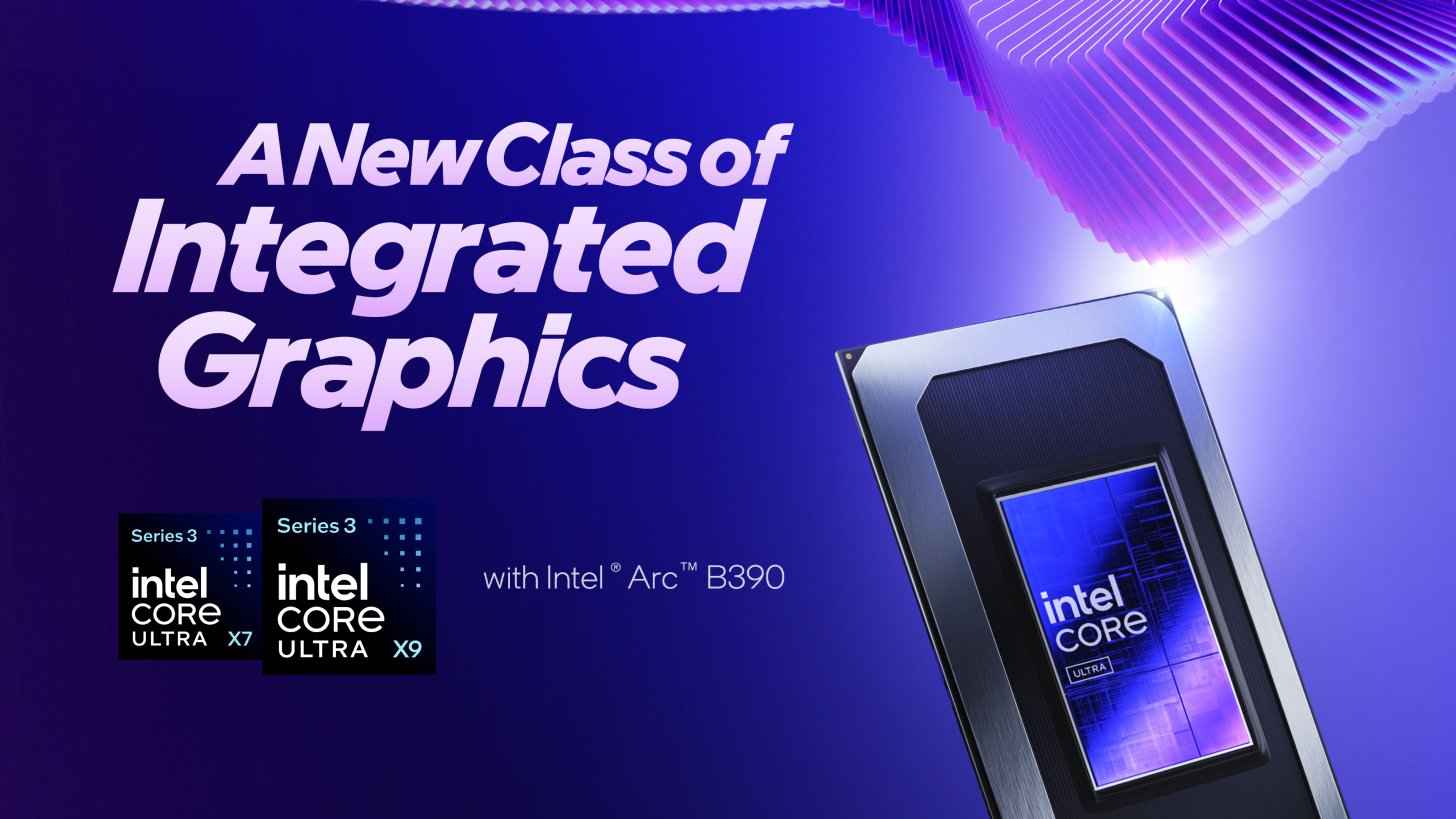
The headline feature of the Core G3 is its integrated graphics unit: the Intel Arc B390. The performance claims dropped in Las Vegas were nothing short of aggressive. Intel promises a massive 77% leap in gaming performance over its previous Lunar Lake architecture. More pointedly, they claim the chip sits 73% higher in average performance than AMD’s RDNA 3.5 iGPU, the current standard-bearer for handhelds.
Perhaps the most startling metric was the comparison to discrete graphics. Intel demonstrated that the Arc B390 outperforms the Nvidia RTX 4050 mobile GPU by roughly 10%. If validated in independent testing, this marks a watershed moment where integrated graphics can finally rival entry-level discrete laptop GPUs, blurring the line between a “handheld” and a full-fledged gaming laptop.
Also read: CES 2026: Intel revealed Core Ultra 3 AI PC chips, laptops coming soon
Raw silicon power means little without hardware to house it. Acknowledging the stumbling blocks of the first-generation MSI Claw, Intel announced a comprehensive “handheld ecosystem.” This initiative includes partnerships with major manufacturers like MSI, Acer, and Microsoft, ensuring that the Core G3 will power a diverse wave of devices hitting shelves later this year.
To support high-fidelity gaming on these small screens, the hardware is paired with the newly announced XeSS 3 software. This updated upscaling technology features 4x multi-frame generation. By artificially generating intermediate frames, XeSS 3 aims to deliver smooth, high-refresh-rate experiences on demanding AAA titles that would typically drain batteries and stutter on native resolution.
The reveal of the Core G3 suggests Intel is done treating handhelds as a novelty. By customising the silicon specifically for this market, they are finally offering a legitimate alternative to AMD’s dominance. For gamers, this competition is the best possible news; it drives innovation, lowers prices, and ensures that the next generation of portable PCs will be faster and more efficient than ever before.
Also read: Snapdragon X2 Plus chip explained: Qualcomm’s more affordable AI laptop chip