After cameras, batteries seem to be the next big battleground in smartphones. Bigger battery cells are no longer limited to expensive phones, with even mid-range devices now offering massive capacities, faster charging and the kind of backup that was once unheard of. Xiaomi is taking this trend to another level with its fan favourite Redmi Note series.
The Redmi Note 17 gets an 8,000mAh battery, the Note 17 Pro packs an 8,340mAh cell, while the Redmi Note 17 Pro Max goes all the way to a whopping 10,000mAh battery. That is a number we are more used to seeing on a power bank than a smartphone. The brand also promises improved durability, a refreshed design, a bright display and decent performance, which obviously feels like a change.
But the conversation is also about the price. The Redmi Note 17 Pro Max costs Rs 13,000 more than the Redmi Note 15 Pro Plus. There are also some camera downgrades and changes in the performance section. So, does that massive battery and refreshed package justify the premium? After spending time with the phone and putting it through our tests, here’s what the Redmi Note 17 Pro Max gets right and where it falls short.
This has to be the starter since we do not get to see a 10,000 mAh battery pack in many smartphones. On paper, the 10,000 mAh and 100W fast charging looks like a premium upgrade and our benchmarks also support this claim.
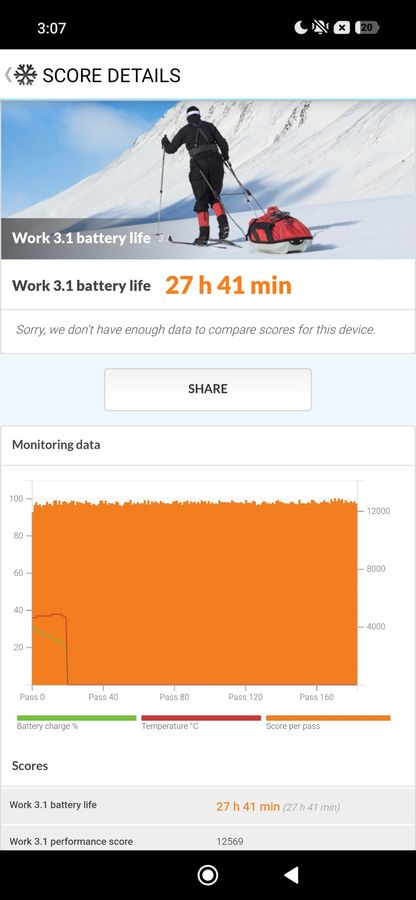
Our PCMark Work 3.1 battery test gave 27 hours and 41 minutes of screen-on time, probably the highest I have seen in my career. In real-world use, the 10,000mAh cell backs that up comfortably. After a full day of heavy use, streaming, social media, calls, browsing, and gaming, it still had plenty of battery left. And if you would ask me, you can easily get around 3 days of backup on single charge on moderate usage.
In terms of charging, it supports 100W, and the adapter is included in the box. Despite the battery’s size, a full charge from 0 to 100% took 1 hour and 36 minutes, which is fair. There’s also 27W reverse wired charging, useful for topping up earbuds or you can also charge your other phone when you need to.
At 8.57mm, the Redmi Note 17 Pro Max is surprisingly slim for a phone packing a massive 10,000mAh battery. Despite the battery capacity, it doesn’t feel anywhere near as bulky as you might expect from the numbers on paper. That said, it is still a big phone. For my hands, one-handed use can get a little uncomfortable, especially when reaching for the top corners.
The back panel is made of plastic, and this is one of the few places where I expected a little more. Overall, the back panel looks interesting- the squarish camera module and the camera sensors do add value to the look and the colour also steals the show. However, the in-hand feel could have been better.
Coming to durability, the Redmi Note 17 Pro Max is among the strongest contenders in the segment. The display is protected by Corning Gorilla Glass Victus 2, and the phone comes with IP68 and even IP69K ratings for dust and water resistance. At the launch event, the company had dedicated demo zones where we saw the phone take bumps from a football, stay submerged in a glass of water for over half an hour, and go through more durability tests. You also get an optical in-display fingerprint scanner, stereo speakers and an IR Blaster, making it a complete package.
The Redmi Note 17 Pro Max features a 6.83-inch 1.5K AMOLED display running at 120Hz, and on the whole it’s a vibrant display to use, colours look rich and scrolling feels smooth. Redmi claims 3,500 nits of peak brightness and somewhere the number justifies it. On our Lux meter at Digit Test Labs, the display measures 2,700 nits. In daily usage the panel is still bright enough that I never struggled to read the screen under direct sunlight during testing.
Colour accuracy is also reasonable. In our Calman Colour Test, the Redmi Note 17 Pro Max returned an average Delta E of 3.17, a reasonable if not exceptional result. And in the Colour Gamut test, it measured 99.61%, which is a strong number.
The display also supports Dolby Vision+ and HDR 10+ so the HDR content on Netflix and YouTube looks sharp, contrast remains strong and the overall viewing experience feels consistent. I binge watched a few movies and YouTube videos and it would not be wrong to say that I enjoyed it.
The Redmi Note 17 Pro Max comes powered with the 4nm fabricated Qualcomm’s Snapdragon 6 Gen 5 chipset. The device also comes in two variants- 8 GB + 256 GB and 12 GB + 256 GB, and both come with LPDDR5X RAM and UFS 4.1 storage. While this is a newly launched processor and can easily handle your daily tasks- scrolling, multi-tasking, streaming and much more, I expected better here. Competitors like the OnePlus Nord 6, Oppo K13 Turbo are offering a Snapdragon 8 series chipset that is actually way better at the similar price point.
Speaking of the numbers, Antutu returned a score of 995983. Geekbench recorded 960 in the single-core and 3002 in the multi-core. The 3DMark Wildlife Extreme test gave an overall score of 1165.
However, in an exclusive interview with Digit, Xiaomi said it is not chasing benchmark numbers or specifications for the sake of it. Instead, the company says its focus is on delivering a better overall user experience, particularly at a challenging time for the smartphone industry. And to be honest, that shows. The device held 76% of its peak performance under sustained load.
And if you are a gamer, the Redmi Note 17 Pro Max will offer decent experience. Both BGMI and Call of Duty Mobile ran up to 90fps without any major frame drops and the thermals did not become a problem even during the extended sessions.
Coming to the software, it runs on HyperOS 3 based on Android 16, and if you’ve used a recent Xiaomi, Redmi or Poco device, the interface will feel familiar. There’s a good amount of customisation on offer, especially around the lock screen. At the same time, you get bloatware in the UI but that can be uninstalled. Also, Redmi is promising four years of OS updates and six years of security patches, and that’s a strong commitment.
On the camera front, the Redmi Note 17 Pro Max keeps things fairly straightforward with a dual-camera setup, featuring a 50MP primary sensor with OIS and an f/1.5 aperture, paired with an 8MP ultrawide camera, while selfies are handled by a 32MP front camera. But I really missed the 200MP primary sensor from the Redmi Note 15 Pro Plus, and the lack of a telephoto camera also felt like a compromise, especially when competitors such as the Phone 4a Pro offer one at a similar price.
Anyway, the 50MP primary camera handles most of the work, and the wide aperture gives you natural background separation even when it is not in Portrait mode. Daylight photography is where the phone performs best. Photos come out detailed, colours look balanced, and dynamic range remains good enough for everyday use.
Portraits also come out good. If you have found a good lighting spot, portraits come out looking clean with good subject separation and balanced colours. The phone generally does a decent job of identifying the edges around the subject.
The 8MP ultrawide is more ordinary but useful when you need the extra field of view for landscapes, building or group shots. Colours stay close to the main camera. However it lacks details.
Coming to the selfies, the 32MP selfie camera is good for everyday use. Daylight selfies come out detailed enough for social meda and video calls, while colours remain mostly natural. Portrait selfies are usable as well, although the bokeh effect isn’t as clean as what you’ll find on other phones.
The Redmi Note 17 Pro Max is a phone that gets the basics right, but it is also clear that Xiaomi has picked its priorities. The 10,000mAh battery is the biggest highlight here, and the excellent battery life, fast charging, bright display and strong durability make it a compelling everyday phone. Performance is capable for regular use and casual gaming, although the chipset feels less impressive when you consider what some competitors offer at a similar price. The camera setup is another area where I expected more, especially after the 200MP sensor on the previous generation and the absence of a telephoto camera.
At the same time, Xiaomi’s approach is understandable. The company has focused on delivering a phone that can last for days, survive more heavy loads and offer a consistent everyday experience rather than simply chasing specifications. The Redmi Note 17 Pro Max is therefore an interesting proposition for someone who prioritises battery life, durability and a good display, but those looking for the strongest cameras or performance hardware at this price will have some reasons to look elsewhere.