The iQOO 15 is the most expensive iQOO phone to date, and without a doubt, the most complete one I have used so far. Starting at Rs 72,999 for the 12 GB RAM and 256 GB storage variant and going up to Rs 79,999 for the 16 GB and 512 GB version, this is no longer the ‘more affordable than OnePlus’ kind of flagship iQOO was once known for. And yet, after using this phone as my primary device: taking it everywhere, shooting content, gaming, using navigation and binge-watching content late into the night, I can say this much with confidence: iQOO isn’t trying to play the underdog anymore. This feels like the year the brand has decided to stand shoulder to shoulder with the big players, rather than nip at their heels.
Trust me when I say this, the iQOO 15 is fast in every sense of the word. It is bold in its approach, loaded to the brim with top-tier hardware, and for the first time in a long while, it truly feels like a no-compromise Android flagship from iQOO. There are no obvious weak links here, no corners that feel clearly cut just to hit a price point. I walked into this review curious and slightly sceptical because of the price hike, but after living with the phone, the picture is far more interesting than just numbers on a spec sheet. Here’s my full experience with the iQOO 15. Let’s dive in.
Also read: Vivo X300 review: New generation, fresh energy
Let’s address the obvious first. The iQOO 13 launched at Rs 54,999 and topped out at Rs 59,999, and the iQOO 15 now comfortably sits north of Rs 70,000. No matter how you cut it, that leap does sting. Yes, component costs have risen across the industry, and you can see that reflected in phones like the latest Vivo X and Oppo Find X flagships too, but for long-time iQOO buyers, this is still the first time the brand has felt truly expensive. The saving grace is the fairly generous bank offers, up to Rs 7,000 off, which do soften the blow and make the pricing easier to digest. At that effective price, the iQOO 15 starts to feel more like a value-heavy flagship again rather than an aspirational one.
What’s interesting, though, is how this price shift changes iQOO’s position in the market. For years, iQOO lived in that space just below OnePlus. That buffer is now gone. The iQOO 15 and OnePlus 15 sit in the same price bracket, which means iQOO is no longer selling you a ‘more affordable alternative’, but asking to be judged as an equal. Having used both, I do feel the iQOO 15 has a few meaningful edges, especially with its absurdly bright display, dependable battery life and slightly more consistent sustained performance. At the same time, this also means iQOO gets held to a higher standard now. At this price, people will nit-pick software polish, camera tuning and long-term reliability far more than they ever did before. The iQOO 15 mostly rises to that challenge, but the shift in expectations is as big a change as the phone itself.
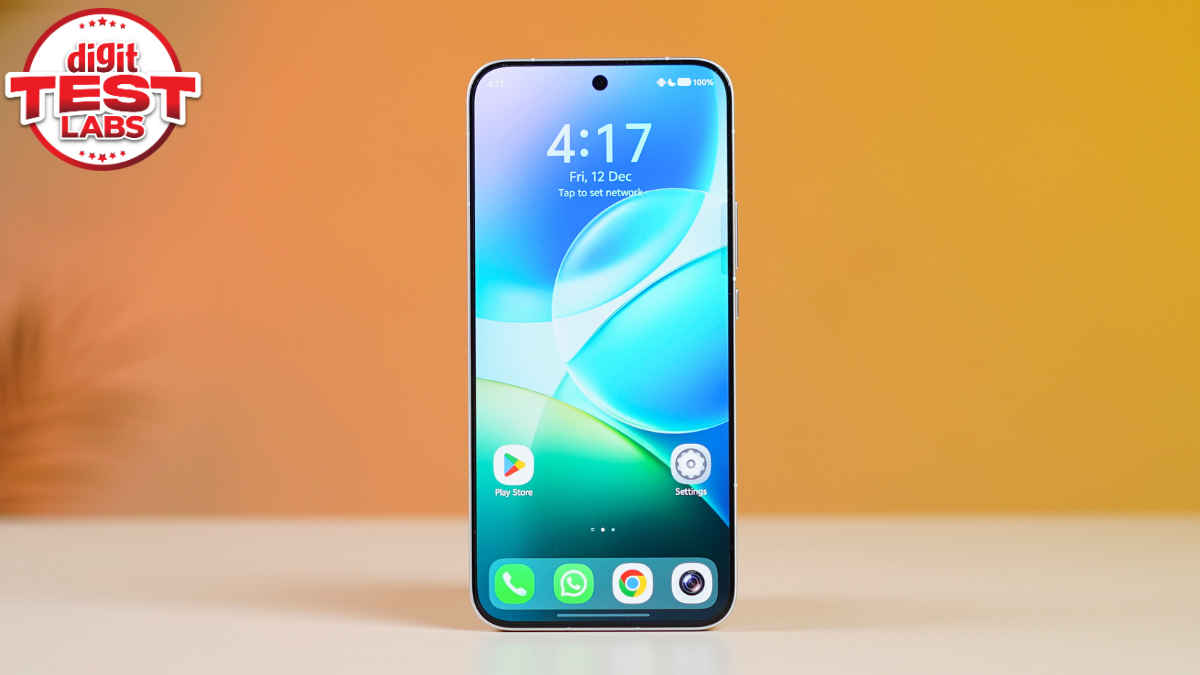
This is hands down the brightest display on a phone I have ever used. And I may be wrong on this, but I am just speaking out of personal experience. On paper, it’s a massive 6.85-inch LTPO OLED panel with a 1440 x 3168 resolution, 1-144Hz refresh rate, Schott Xensation protection, and a claimed brightness of 2,600 nits (HBM) along with a crazy 6,000 nits peak brightness. During my actual testing, I achieved approximately 1,975 nits in auto brightness and around 1,470 nits manually. That’s still absurdly bright.
And this isn’t just lab talk. To recall, I was shooting a quick reel at my best friend’s haldi ceremony on a sunny terrace, and instead of getting ready, my friend walked out just to ask which phone this was because the screen was still perfectly visible in harsh sunlight. I’ve even compared it side by side with my iPhone 17 Pro Max, and yes, the iQOO 15 looks brighter. Add HDR playback, 2K resolution and that buttery smooth 144Hz refresh rate, and this becomes one of the finest displays you can get today on a phone: for content, gaming, or simply just gawking at the screen endlessly.
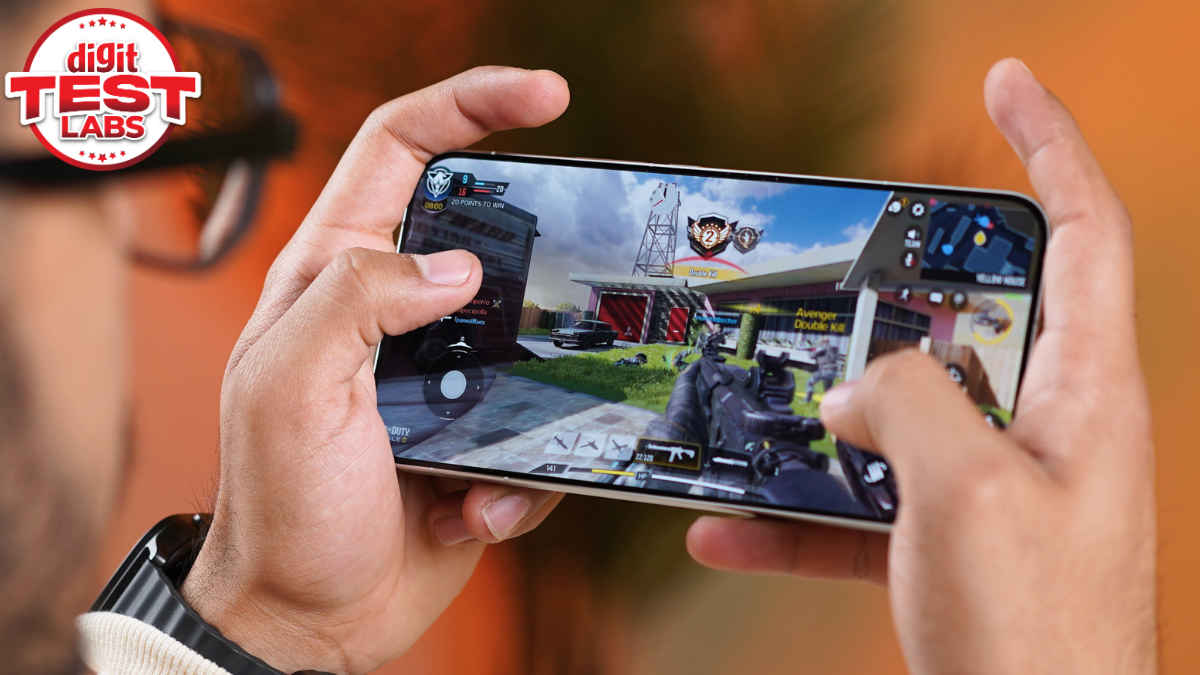
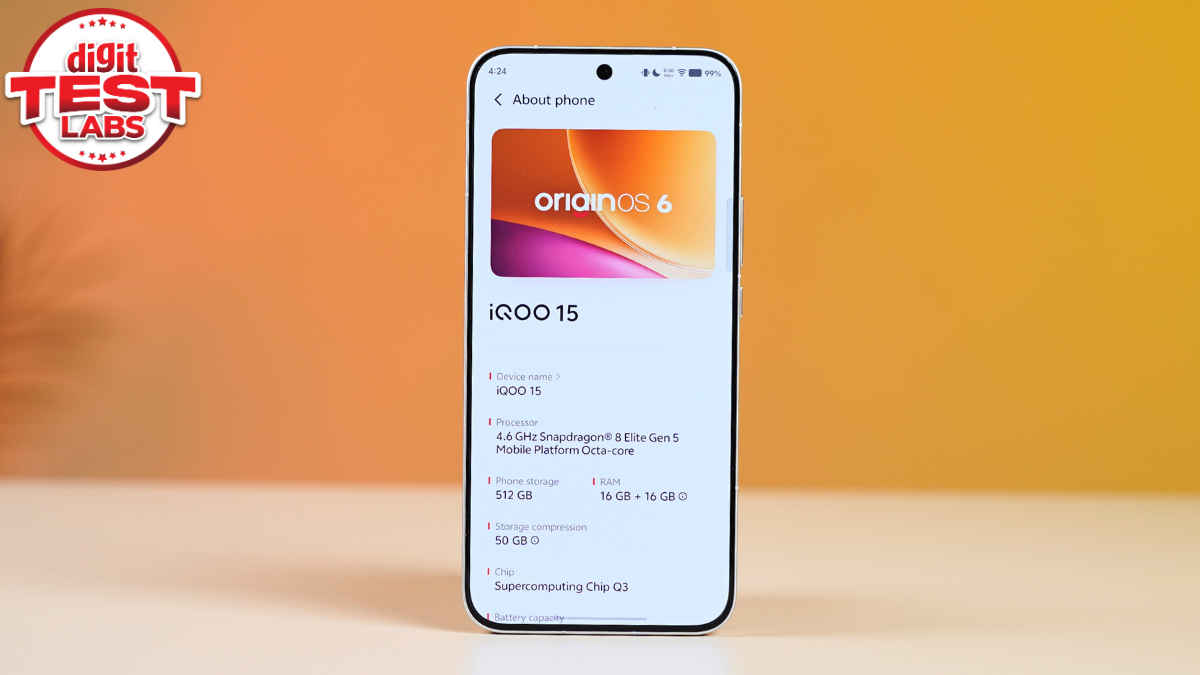
Powering the iQOO 15 is the Snapdragon 8 Elite Gen 5, a name Qualcomm really needs to simplify, but a chip that absolutely flies. Paired with up to 16 GB LPDDR5X RAM and 512 GB UFS 4.1 storage, everything on this phone feels instant. I can barely think of a moment when I felt the phone was lagging or if there was even a minor stutter. App launches are fast, multitasking is fluid, and the touch response is precise while gaming. I would point out that there was a bit of shutter lag while taking photos at night, but that seems to have sorted with the latest software build (PD2505F_EX_A_16.0.18.6.W30) of OriginOS 6. More on this in a bit.
Benchmark numbers also back the performance. Geekbench 6 scores stand at 3,563 for single-core and 10,029 for multi-core. Antutu pushed past 3.73 million with 1.08 million on CPU and 1.38 million on GPU. The 3D Mark Stress Test delivered a best loop of 19,582, a lowest loop of 15,654 and stability of 79.9%. The CPU throttle test averaged 330K GIPS with 76% stability. Long story short, this phone is brutally fast.
But does it heat up? Well, during benchmarking, yes, it did get warm. But so do other smartphones too, that are powered by the Snapdragon 8 Elite Gen 5. What’s worth noting is that in real-world use, I’ve never felt it become uncomfortably hot. I’ve been using it daily for navigation on Android Auto, watching videos late into the night, shooting loads of photos and even gaming, and the phone at most becomes lukewarm. Compared to how some Snapdragon 8 Elite Gen 5 phones struggled this year, the iQOO 15 actually manages thermals fairly well.
The iQOO 15 runs OriginOS 6 based on Android 16, and this is probably the most confident software experience iQOO has ever shipped. It no longer feels like a skin trying too hard. It feels mature. Animations are smooth, the interface feels clean, and the overall experience is genuinely pleasant.
You get all the expected AI features: Google’s Gemini, summary tools, AI notes, photo enhancements, and whatnot. But what really stood out for me, as part of the software package, is Office Kit. It lets you connect your phone to your PC seamlessly for file sharing, screen mirroring, note syncing and general productivity. Those who use an iPhone with a Mac would understand where I am coming from. It actually works without drama, and that alone makes it a value-add feature rather than just a checklist item.
iQOO is also promising five years of software updates and seven years of security patches, which is finally in line with what premium smartphone buyers expect.
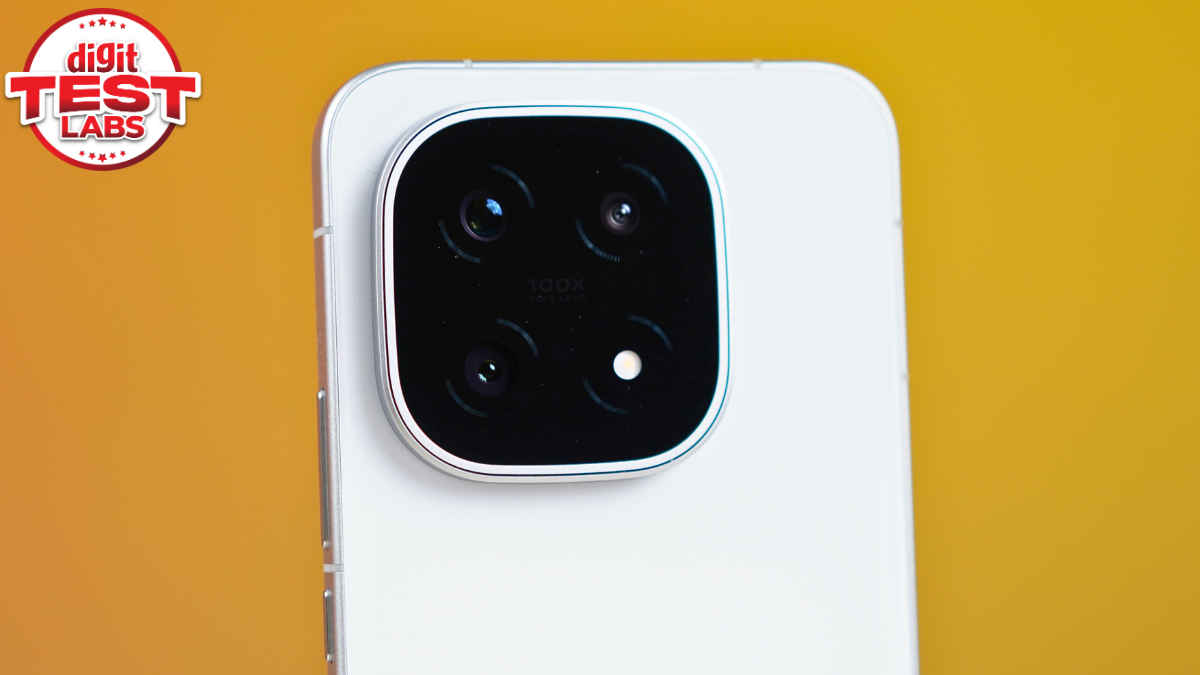
For the first time, iQOO’s camera system feels properly flagship-ready. You get three 50MP sensors at the back: a primary camera, an ultra-wide, and a 3x periscope telephoto. That periscope lens alone is a massive upgrade over previous iQOO flagships.
Daylight photos or generally images shot in good light are excellent with high detail, natural colours and well-managed dynamic range. Now, there is a bit of processing going on in photos, but it is something that I personally prefer, as the photos shot on this phone look quite vibrant and stand out. Portraits are a proper highlight, especially using the 3x lens. Edge detection is clean, background blur looks natural, and skin tones are pleasing.
Low-light performance is solid too, thanks to the software’s ability to control highlights and keep noise in check. The main camera performs best here, while the ultra-wide and telephoto do show some noise in very dark scenes, but nothing alarming.
The 32MP selfie camera delivers sharp, bright photos with good HDR in daylight. Occasionally, colours can look slightly off or overly sharpened indoors, but most people will be more than happy with it.
Video support goes all the way up to 8K at 30fps and 4K at 60fps on the rear cameras, with good stabilisation and dynamic range. Even the front camera can do 4K at 60fps, which content creators will appreciate.
Is it better than camera-focused phones like the Vivo X300 Pro? Not quite. But as part of a performance-first flagship and for its asking price, the iQOO 15’s camera system holds its own.
The iQOO 15 packs a massive 7,000 mAh silicon-carbon battery, and it shows in daily life. With my usage, I charge the phone every other night. Overnight battery drop sits at just 2-3%. On work days, Android Auto keeps topping it up during commutes, and I still manage to end the day with around 40% battery left without trying too hard. The PC Mark battery life test clocked in at 25 hours and 42 minutes, which tells you just how strong the endurance really is.
When I finally do plug it in, the 100W wired charging is ridiculously fast. Even a near-full top-up rarely takes around 30 minutes, since the phone’s battery never really gets fully drained. For those who care, there’s also 40W wireless charging, but since the brand does not sell an official wireless charger to take advantage of the 40W speeds, you’ll have to rely on third-party options.
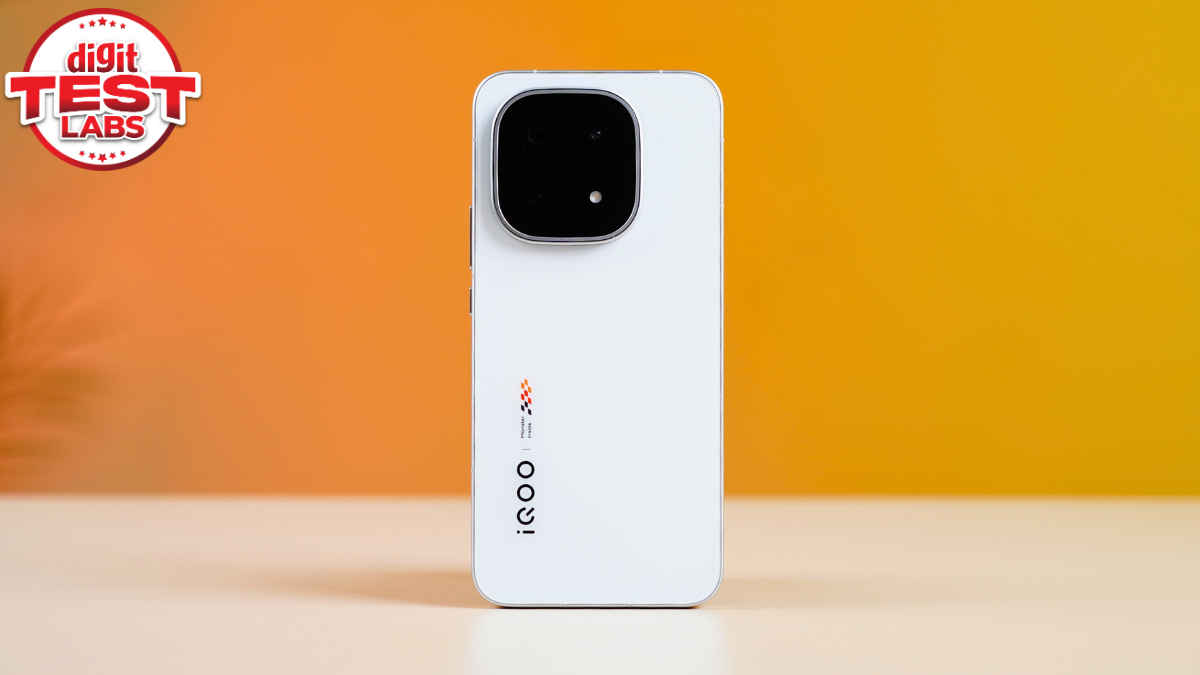
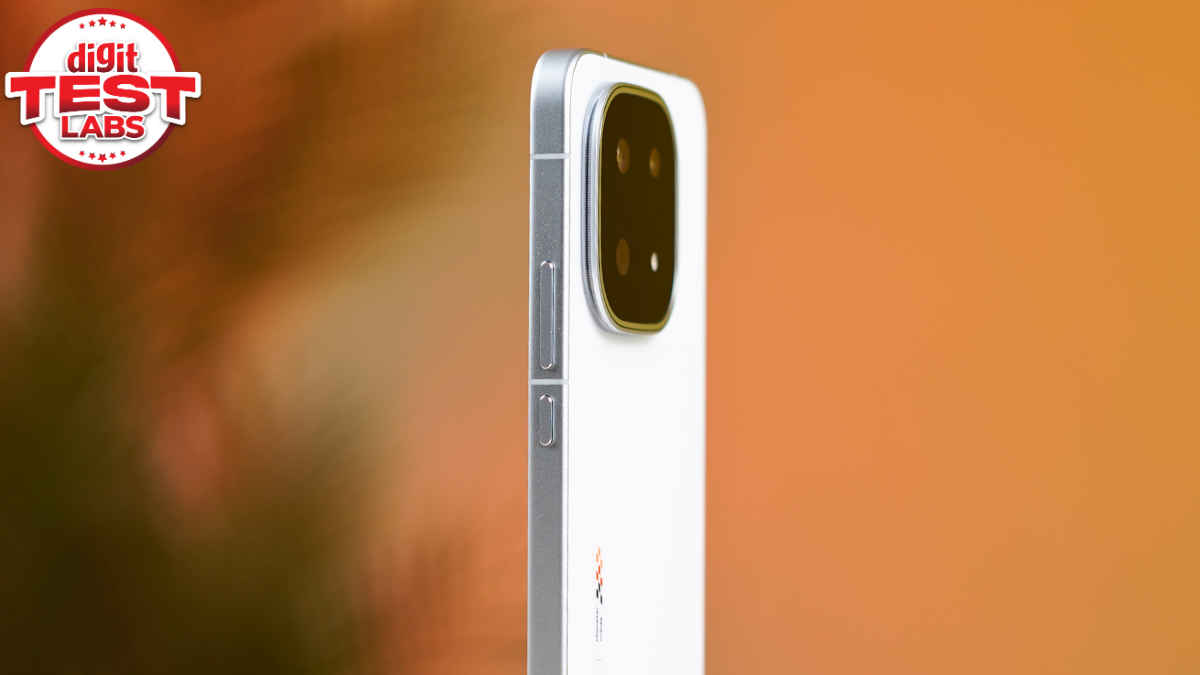
For those wondering if I forgot about the design and build, well, truth be told, this is actually the very first impression you form of any phone. How it looks, and more importantly, how it feels in the hand. I have the iQOO 15 in the Legend colourway, which has been the brand’s flagship finish for years now, and it still looks clean, confident and premium. Compared to the iQOO 13 Legend, which weighed 213g, this one is heavier at about 220g. And yet, when I first picked it up, I genuinely thought it was lighter. That’s down to the improved weight distribution and those softer corners, which stop the boxy frame from digging into your fingers.
What’s even more impressive is that the thickness has barely changed. The iQOO 13 was 8.13mm, while this one is just 8.17mm, despite packing a much larger 7,000 mAh battery. The matte-finish back feels soft to the touch and doesn’t attract fingerprints easily. Add to that the solid aluminium frame, well-placed buttons with satisfying clicks, an IR blaster, and the IP68/IP69 rating for dust and water resistance, and you have a phone that doesn’t cut corners. In-hand feel, quite simply, is excellent.
The iQOO 15 feels like a defining moment for the brand. It is no longer just chasing performance numbers or trying to undercut rivals on price. Instead, it is finally trying to stand confidently among the top Android flagships. There’s the absurdly bright 2K display, the performance is rock-solid, the battery life is dependable, and the camera system is surprisingly capable. Basically, what I am trying to imply is that the phone delivers where it truly matters in daily use. It feels refined, powerful, and, for the most part, well thought through.
Recalling my conversation with iQOO’s CEO, Nipun Marya, he made it clear that pricing this year was driven not just by rising component costs, but by the sheer number of upgrades packed into the iQOO 15. The new chipset, the periscope camera, wireless charging, the larger silicon-carbon battery, and the list goes on. That explanation reflects in real-world usage too. This phone genuinely feels like a meaningful step-up over the iQOO 13.
Of course, there’s no denying that the price hike is real, and at this level, expectations rise sharply. But with bank offers applied, the iQOO 15 becomes a well-rounded, no-compromise flagship smartphone that finally feels confident playing in the big leagues.
Also read: Oppo Find X9 Pro Review: A Flagship That Finally Feels Complete