Apple has unveiled the next-generation AirTag, its object-tracking accessory designed for users who want a simple way to keep track of everyday items such as keys, bags, and luggage. Compared to the original model launched in 2021, this one claims to offer a wider tracking range, a louder speaker, and tighter integration with the Find My network across iPhone, Apple Watch, and third-party partners. The update focuses on improving real-world findability rather than changing the design, while keeping pricing unchanged.
The new AirTag is available to order today on apple.com and through the Apple Store app, with in-store availability starting later this week. It will also be sold via Apple Authorised Resellers.
Free personalised engraving is available when ordering through Apple’s online channels. The new AirTag requires an iPhone running iOS 26 or later, or an iPad running iPadOS 26 or later.
Also Read: Samsung India teases upgraded Bespoke AI WindFree air conditioners with smart cooling features
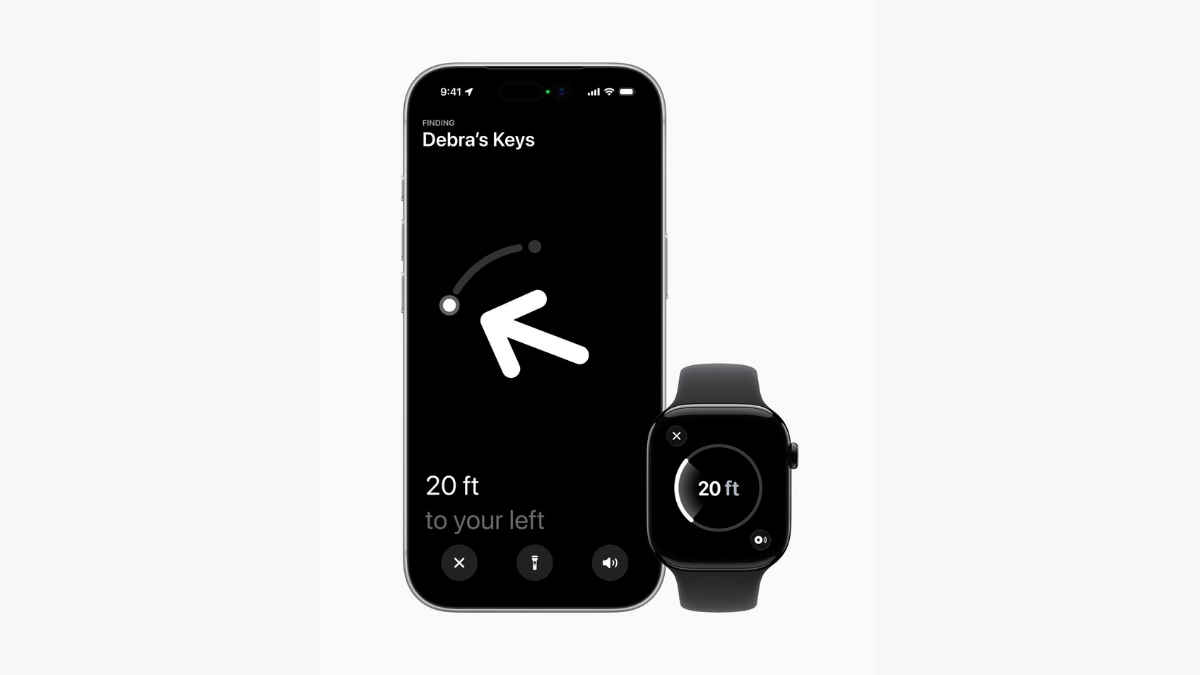
The new AirTag is powered by Apple’s second-generation Ultra Wideband chip, the same platform used in the iPhone 17 lineup and newer Apple Watch models. In practical terms, this allows Precision Finding to guide users to misplaced items from up to 50% farther away than before, using a mix of on-screen directions, haptic feedback, and sound cues.
Bluetooth performance has also been upgraded, increasing the range at which an AirTag can be detected by nearby Apple devices on the Find My network. Apple has also redesigned the internal speaker, making it 50% louder, which helps when items are buried under cushions, inside bags, or in noisy environments. Apple says the sound can now be heard from up to twice the distance compared to the previous generation.
Notably, for the first time, Precision Finding also works directly on Apple Watch. Users with Apple Watch Series 9 or later, or Apple Watch Ultra 2 or later, can locate their AirTag without needing to pull out their iPhone.
Another major addition is Share Item Location. This feature allows users to temporarily share the location of a lost AirTag with trusted third parties, including airlines. Apple has partnered with more than 50 airlines to support this feature within their baggage recovery processes.
Apple continues to position AirTag as an object-only tracker. So, for privacy, location data is end-to-end encrypted, and no location history is stored on the AirTag itself. Bluetooth identifiers rotate frequently to prevent misuse. Cross-platform alerts notify users if an unknown AirTag appears to be moving with them.
In India and globally, AirTag mainly competes with Bluetooth trackers such as Samsung Galaxy SmartTag2 and Tile Pro. Samsung’s tracker works best within the Galaxy ecosystem, while Tile offers broader platform compatibility but lacks the scale and passive tracking reach of Apple’s Find My network. For iPhone users, AirTag remains the most tightly integrated option, especially with airline-backed recovery support now built in.
Keep reading Digit.in for similar stories.
Also Read: Google brings Personal Intelligence to AI Mode in Search: How it works and why it matters