Dolby Vision was launched in 2014 and, over the years, has earned a reputation as the gold standard for HDR. As a TV reviewer, I have seen the tech at its best but also know how the experience can differ between TVs and room conditions. In 2020, Dolby introduced the Dolby Vision IQ with the promise of dynamically optimising content quality based on light sensing. But again, light sensors could only react to the environment, not the content itself. So, the inconsistent results between TVs continued. So, to fix it, Dolby Vision 2 was launched in the fall of last year. Instead of just reacting to the room light, Dolby Vision 2 also uses richer metadata and improved tone mapping to understand better what is being displayed and how it should look on a given screen.
However, Dolby Vision 2 is yet to make its way to India. In a recent visit to LG’s corporate office in Noida, where Dolby and LG were jointly showcasing Dolby Vision and Dolby Atmos across a range of TVs and soundbars, I had conversations with Dolby representatives and Dolby Vision 2 inevitably came up. But…
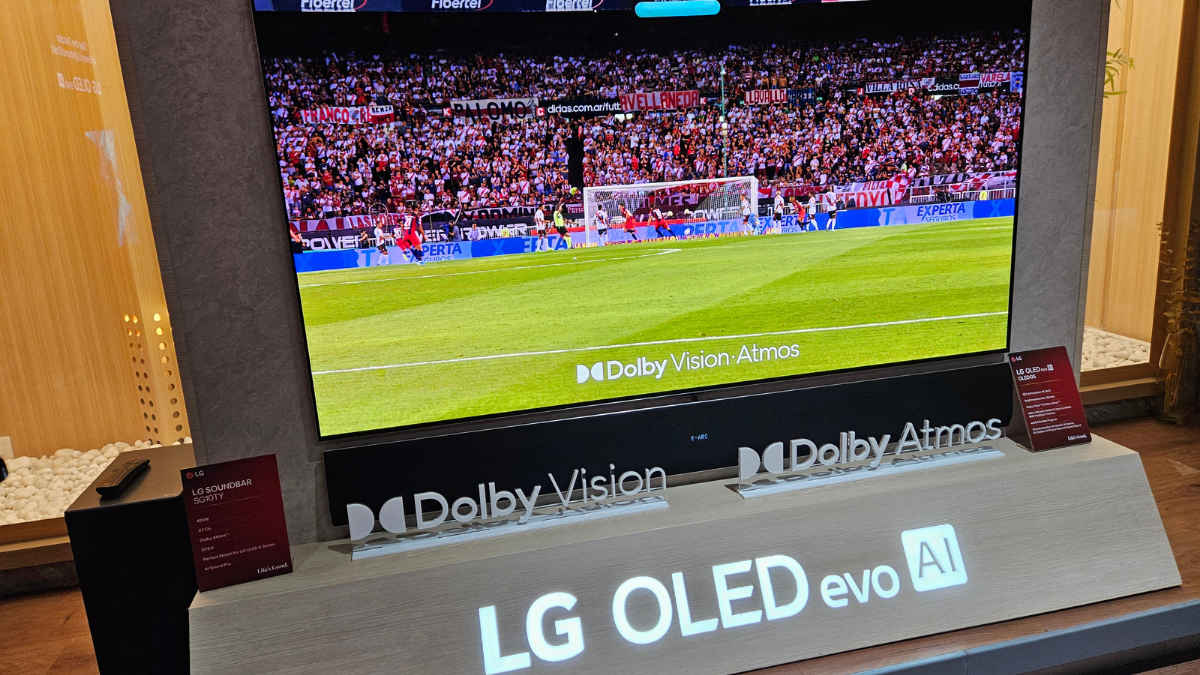
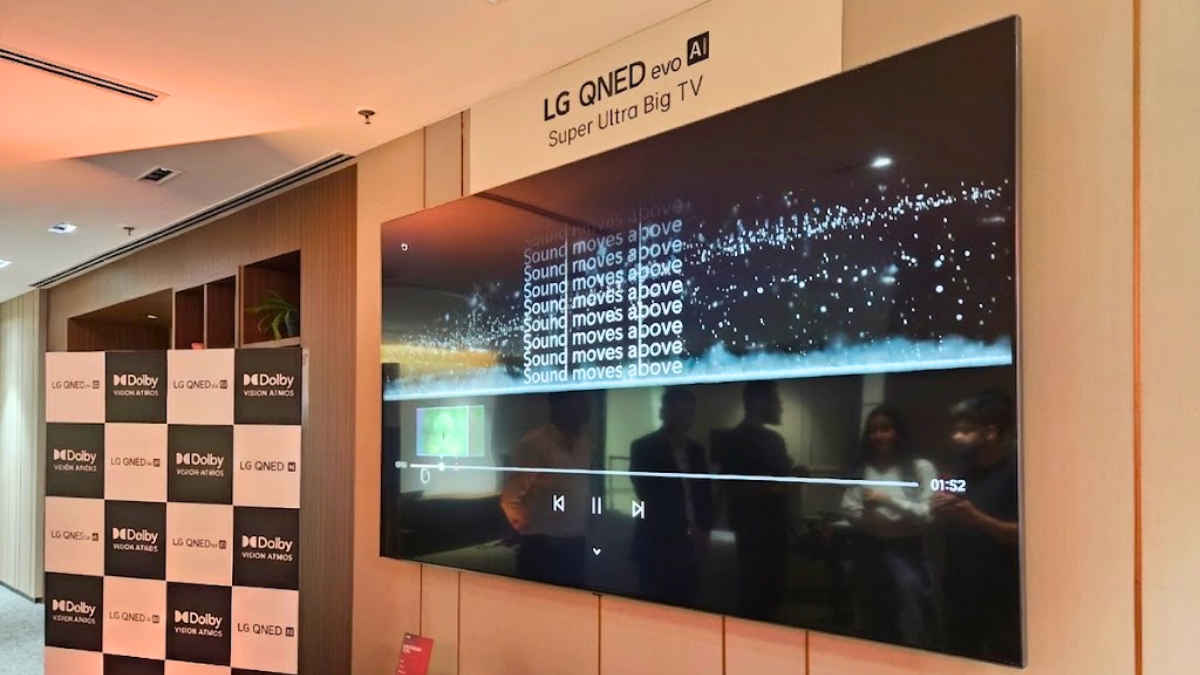
The demos shown during my visit involved LG’s premium OLED and LED TVs, along with soundbars available in India. On these TVs, like LG QNED86, LG OLED G5 and LG OLED C5, the Dolby Vision content looks impressive with controlled highlights, vibrant, life-like colours, and preserved shadow details. This, coupled with Dolby Atmos soundbars like the extremely slim SG10TY, SC9S and S95TR, working in cohesion, sounded splendid.
But they were performing in controlled setups. And in the real world, we may have different TVs working in different lighting conditions, and the experience would begin to vary. Well, that’s the gap Dolby Vision 2 is attempting to address.
Dolby Vision 2 is moving beyond hardware-based adjustments like ambient light sensors. The newer implementation relies on content metadata from streaming platforms to optimise brightness and tone mapping scene by scene. Dolby also emphasises that the playback will be as the creator intended.
The catch, however, is that Dolby hasn’t yet revealed a clear timeline for when this upgrade will arrive in India. And that leaves a gap between what Dolby Vision 2 promises and what we Indian users can actually experience.
Standard HDR performance depends heavily on the display hardware. Premium OLED and Mini LED TVs can deliver high peak brightness and precise contrast. But that is not what most people in India own. The more affordable and mid-range TVs often support HDR formats on paper, including Dolby Vision in some cases, but lack the brightness and processing needed to deliver a convincing experience.
There are two key issues.
That’s where Dolby Vision 2 enters the picture. With it, new compatible TVs should be able to better interpret and display HDR content.
As mentioned in the intro, creators or streaming platforms can provide detailed information about the content, including scene type, brightness levels, colours, contrast, and motion control required on a scene-by-scene basis. The TV then uses this data, along with ambient light information, when available, to adjust tone mapping more precisely.
What Dolby Vision 2 actually changes include:
Also Read: Dolby Vision 2 vs Dolby Vision: specs and feature upgrades compared
Most of our TVs are in bright living rooms. There will be natural daylight, tube lights, curtains not fully drawn, and sometimes TVs will be placed opposite windows. In such conditions, Dolby Vision 2 could come in handy.
Also, even if the content on OTT platforms is mastered differently for your room conditions, Dolby Vision 2 could analyse and adjust the content while playing it. So, we could expect consistent HDR across different types of content, from Hollywood films to regional movies and shows.
Still, some hurdles are there.
Some of the aforementioned Dolby Vision 2 features are available in the higher Dolby Vision 2 Max tier only. And there are some hardware gatekeeping you should know. For the best Dolby Vision 2 experience, TVs with supported chips like MediaTek Pentonic 800 and an ambient light sensor are required.
There is also the fact that TV makers are investing heavily in their own TV technologies, both hardware and software-wise. They could save on licensing costs and control the updates and entire pipeline.
The new-gen in-house processors are said to dynamically improve brightness, enhance contrast, and reduce artefacts. They may use AI for this, and the result could sometimes be similar to the promises made by Dolby.
Meanwhile, Dolby’s approach is ecosystem-driven. It relies on collaboration between content creators, streaming platforms, and TV manufacturers. Such inconsistencies and fragmentation across brands can therefore be a concern.
Let’s see how Dolby brings together all these stakeholders. Dolby Vision 2 addresses a real and visible problem, and we would all love to have better HDR performance. So, now it is only a matter of how quickly it gets adopted. Until then, Dolby Vision 2 remains a promising upgrade that aligns well with real-world usage, but one that is still out of reach for us Indians.
Is Dolby Vision 2 backward-compatible with older TVs?
Yes. Dolby Vision 2 content can be played on existing Dolby Vision TVs. However, older TVs will ignore the additional metadata and fall back to standard Dolby Vision processing. So, the newer enhancements will not be applied.
Does Dolby Vision 2 use AI for image processing?
Dolby Vision 2 uses rich metadata and AI to optimise content, and the promise is that you get consistent and predictable results aligning with the creator’s intent.
Which brands have adopted Dolby Vision 2?
Hisense, TCL and Philips have announced Dolby Vision 2 support for their 2026 TVs. And streaming platforms like Peacock in the US and Canal+ in Europe have confirmed to adopt it.
Keep reading Digit.in for similar stories.
Also Read: LG and Dolby announce world’s first FlexConnect soundbar with 13.1.7 channel audio