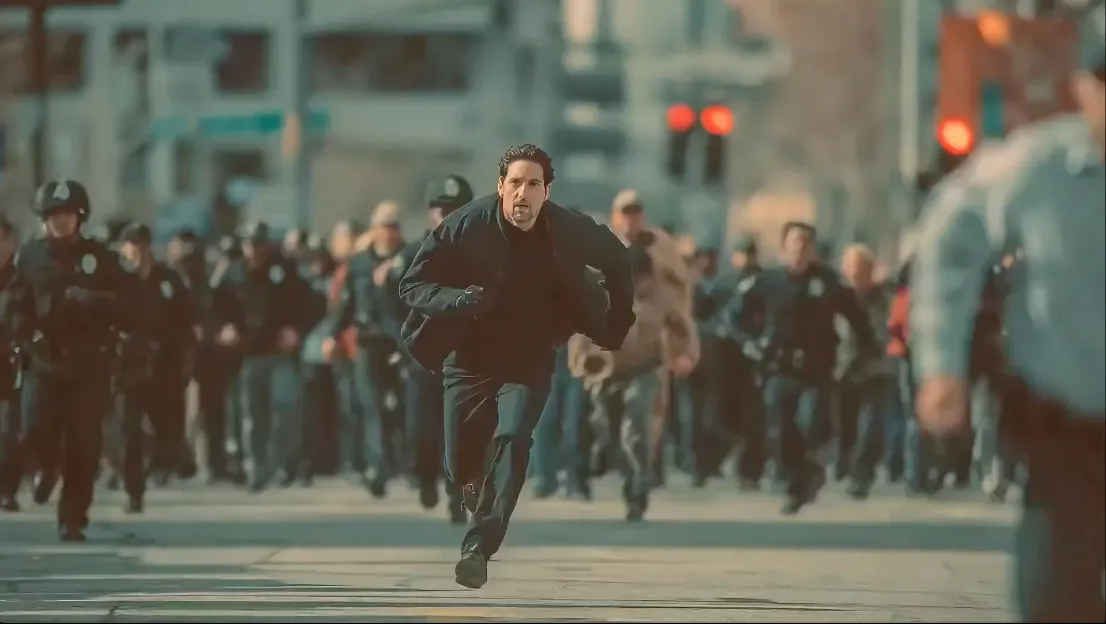
The landscape of generative video has shifted rapidly in early 2026, and the “Sora-killer” narrative has found a new protagonist in ByteDance’s Seedance 2.0. While Western giants like OpenAI and Google have focused on increasing clip duration and perfecting lighting physics, ByteDance has taken a different route by prioritizing surgical control and production reliability. Launched in early February, Seedance 2.0 is quickly becoming the preferred tool for creators who need predictable results rather than “luck-based” generations. The model represents a fundamental move toward an industrial-grade workflow, offering features that directly address the most common frustrations in AI filmmaking: character drift, lack of audio synchronization, and the inability to follow complex directorial cues.
Also read: AI is being brainwashed to favor specific brands, Microsoft report shows
The most significant technical leap in Seedance 2.0 is its “quad-modal” input system, which supports up to 12 reference files in a single generation task. While Sora 2 and Veo 3.1 generally rely on a single text prompt and perhaps one reference image, Seedance allows users to upload a mix of up to nine images, three video clips, and three audio files. This creates a “Universal Reference” ecosystem where a creator can use a specific @mention system to direct the AI. For instance, a user can tag a specific image to lock in a character’s face, a video clip to mirror a complex camera pan like a Hitchcock zoom, and an audio file to dictate the rhythmic pacing of the cuts. This level of granularity effectively turns the AI from a creative partner into a digital production crew that follows exact specifications rather than vague descriptions.
Also read: Saaras V3 explained: How 1 million hours of audio taught AI to speak “Hinglish”
This reference-heavy approach has led to a reported “usability rate” of over 90 percent. In professional environments where time is money, the ability to get a usable 15-second clip on the first or second try is a massive competitive advantage. By contrast, even the most advanced Western models often require multiple “re-rolls” to fix artifacts or unintended character morphing. By allowing creators to provide a comprehensive “mood board” of inputs, Seedance 2.0 has essentially solved the consistency problem that has plagued AI video since its inception.
Beyond its control stack, Seedance 2.0 is outperforming its rivals in raw output specifications and integrated features. It is currently one of the few flagship models to offer native 2K resolution, providing a level of detail and texture that surpasses the 1080p cap currently seen in Sora 2 and Veo 3.1. This higher resolution is matched by a sophisticated audio-visual joint generation architecture. Unlike other tools that add sound as a post-production layer, Seedance generates synchronized dialogue, environmental sound effects, and background music simultaneously with the video. This results in far more accurate lip-syncing across multiple languages, including English, Mandarin, and Cantonese, making it an indispensable tool for global marketing and localized content.
While Sora 2 still holds a slight edge in pure physical simulation – handling complex object collisions and fluid dynamics with unmatched realism – Seedance 2.0 has closed the gap significantly. Its retrained physics engine manages momentum and gravity with a natural fluidity that avoids the “floaty” look of earlier versions. For the modern creator, the trade-off is clear: while other models might offer longer clips or slightly better water physics, Seedance 2.0 provides the most comprehensive and controllable production suite available today. It is no longer just a toy for generating viral clips; it is a serious piece of infrastructure for the future of digital cinema.
Also read: Lenovo Yoga Book 9i hands-on: Are dual-screen laptops the future of work?