Satya Nadella didn’t mince his words. “I’ve got GPUs sitting in inventory that I can’t plug in,” he said – calmly, matter-of-factly – in a recent podcast. Let that sink in for a moment. This is the world’s second-largest cloud company with a $3.86 trillion market cap, that has thousands of state-of-the-art AI processors ready to crunch intelligence into existence, and the thing stopping them from doing that is… electricity. Yes, electricity, and yes this is a tech titan from the US – not Ulhasnagar, which is prone to routine power cuts thanks to “load shedding.”
That’s a humbling admission by the Microsoft CEO on behalf of an industry built on excess and abundance. For years, big tech’s most urgent constraint was compute – how many NVIDIA H100s you could buy, rent, or smuggle through a supply chain bottleneck.
But as Nadella and Sam Altman both hinted, the new scarcity isn’t hardware. It’s power – the simple, invisible current that keeps the datacenters humming, the water pumps spinning, the air conditioners cooling, and, by extension, the future of artificial intelligence alive and running.
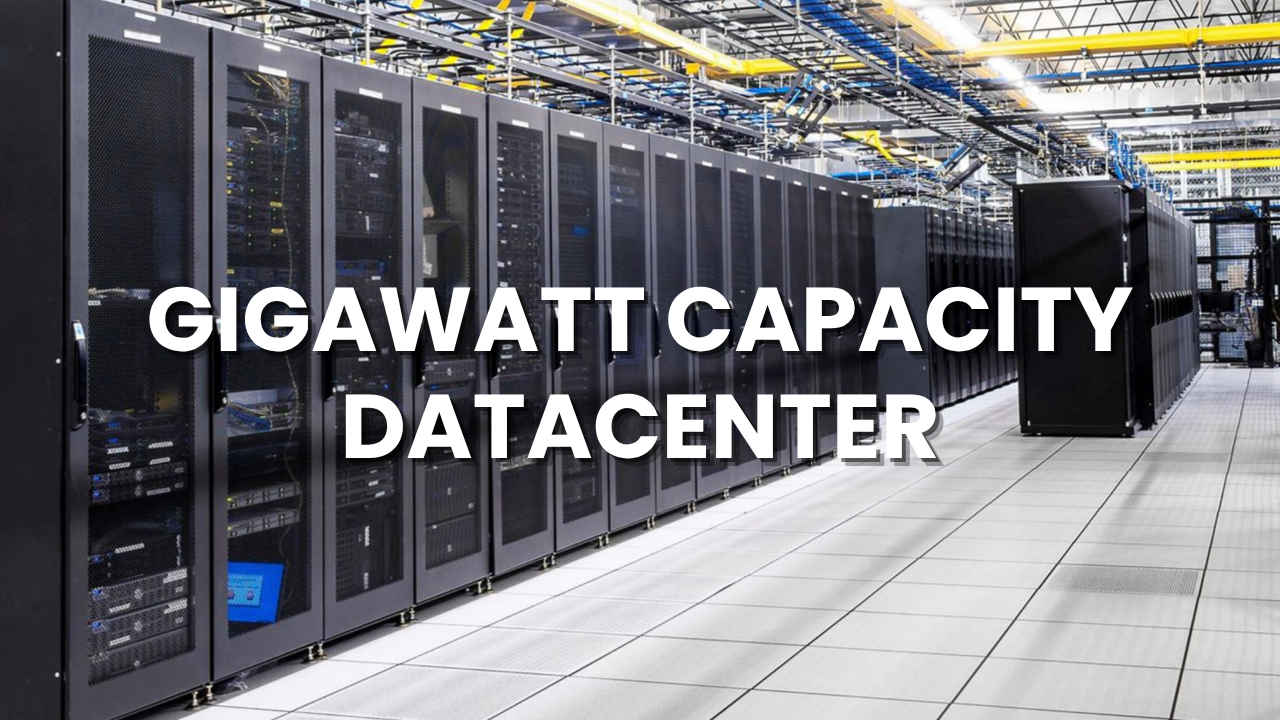
A large AI datacenter today gulps between 2-19 million liters of water every day – a small city’s thirst to keep racks cool enough not to melt. Each rack of servers can draw 130 kilowatts or more, and the largest campuses have deployed 100 megawatts on average and are planning / building for gigawatts of capacity.
To put that into perspective, that’s enough electricity to light up hundreds of thousands of homes – for one facility, according to a September 2025 study. By 2028, AI datacenters are projected to consume over 1 trillion liters of water a year, according to Morgan Stanley. That’s before you factor in the indirect water cost of generating all that power in the first place.
Also read: NVIDIA’s Kari Briski believes open models will define the next era of AI
What we’re watching now is the industrialization of AI at an unprecedented scale. And as ironical as it may sound, Silicon Valley, once defined by its clean abstractions, is suddenly constrained by the same dirty physics as a coal plant.
The Great AI Age that big tech is sprinting to manifest (at the cost of humans laid off in the process), brought to a grinding halt not by moral panic or regulatory overreach, but by the wall socket. Datacenters that can’t plug in. CEOs that can’t turn on their GPUs because the grid would groan under the load. The term “data center shell,” which Nadella used so casually, now sounds faintly apocalyptic – gleaming buildings full of idle hardware, waiting for power that may not come soon enough.
And this is where the story stops being funny. Because when companies with trillion-dollar valuations start competing for finite megawatts, the problem starts to appear infrastructural. Every new AI cluster must now negotiate not just with regulators but with rivers and reservoirs, with transmission lines and the people who depend on them. The race to build smarter machines is bumping up against the literal limits of the planet’s water and electricity plumbing.
The next frontier of artificial intelligence isn’t abstract at all – it’s geographic, environmental, political. Maybe that’s the real revelation in Nadella’s comment. That AI’s future will be written not in code, but depend on unlocking kilowatts.
Also read: Elon Musk’s crazy idea: Turn parked Tesla cars into a connected AI datacenter