The internet is an ever-changing entity, reflecting societal shifts, technological advancements, and emerging challenges. As India continues to embrace AI, the conversation around online safety has never been more crucial. On the occasion of Safer Internet Day 2025, the musings from Microsoft and Google provide an opportunity to examine how India is balancing the benefits of AI adoption with the need for stringent cybersecurity measures, ensuring a safer and more informed digital ecosystem.
India’s AI adoption rate has surged at an exceptional pace, as highlighted in Microsoft’s Global Online Safety Survey 2025. The report underscores that 65% of Indian respondents have used generative AI—more than double the 31% global average. A demographic breakdown reveals that millennials (aged 25–44) are at the forefront, with 84% actively engaging with AI tools—an increase of 15% from the previous year.
The integration of AI in daily life is multifaceted. The survey identifies key use cases driving AI enthusiasm: translation services (69%), answering questions (67%), enhancing workplace efficiency (66%), and assisting students with academic work (64%). These statistics reflect a deep-rooted optimism about AI’s potential to streamline communication, bridge linguistic gaps, and enhance productivity.
However, with rapid adoption comes an array of challenges. The survey reveals growing unease about AI’s darker implications: online abuse (76%), deepfakes (74%), AI-generated scams (73%), and AI hallucinations (70%). More than 80% of respondents also expressed concerns about AI’s impact on children under 18, underscoring the need for age-appropriate AI literacy initiatives.
Also Read: Sam Altman’s AI vision: 5 key takeaways from ChatGPT maker’s blog post
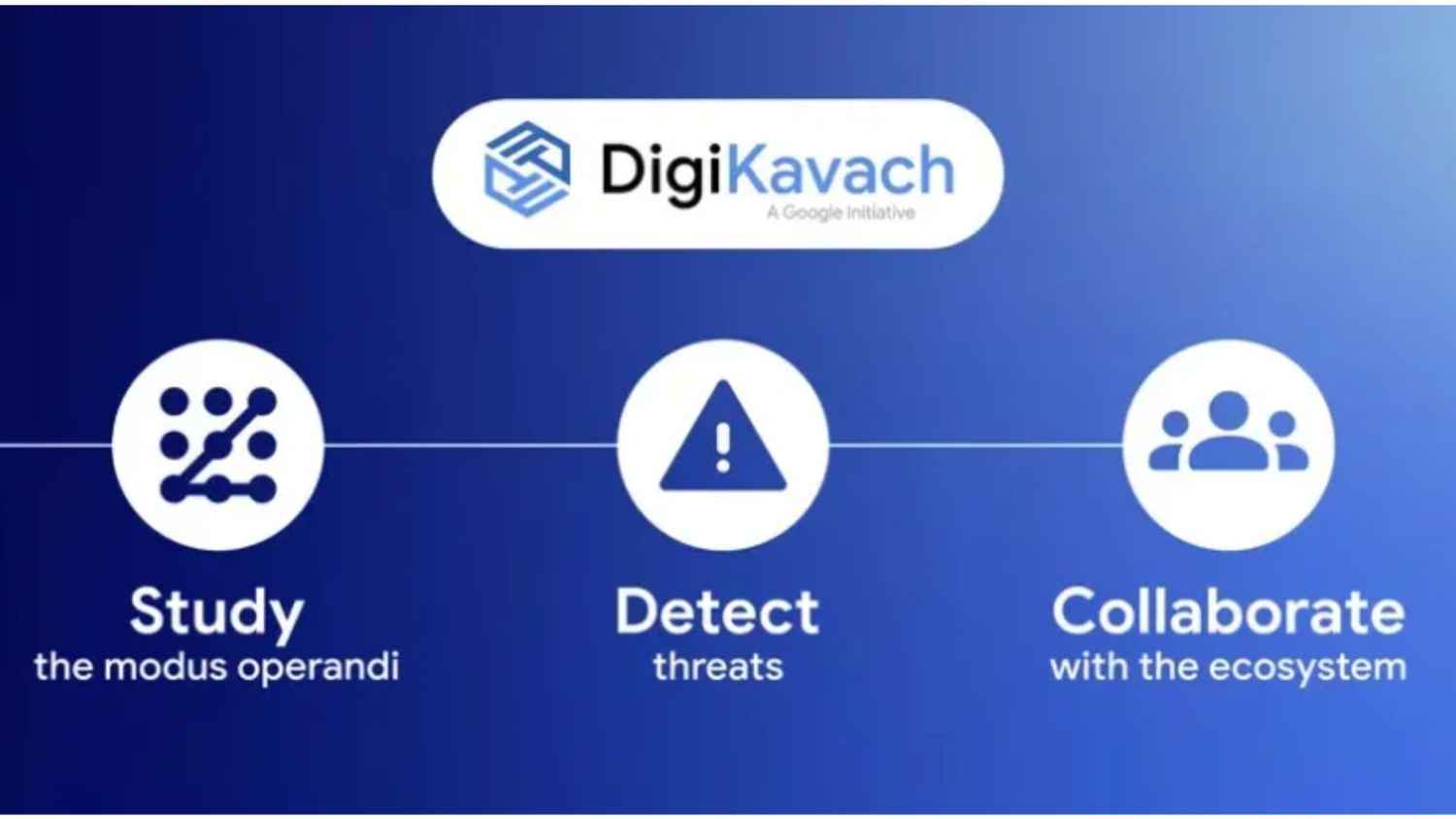
Recognizing the evolving nature of cyber threats, Google has intensified its commitment to digital safety through its initiative, DigiKavach. Designed to counter financial fraud and online scams, DigiKavach has led to the ‘Mauka Gawao’ campaign—an awareness drive exposing scams related to deceptive job offers, investment schemes, and loan frauds. The campaign has already reached 177 million Indians, signaling the urgent need for digital awareness at scale.
Google’s strategy revolves around three key pillars – fortifying its platforms, fostering industry-wide collaboration, and empowering partners to enhance digital literacy.
To combat the proliferation of harmful apps, Google launched the Enhanced Play Protect program. Since its pilot introduction in India in November 2024, the program has achieved notable milestones:
On a global scale, the initiative has demonstrated significant efficacy:
Google Pay has also emerged as a key player in fraud prevention. Over the past year, the platform intercepted fraudulent transactions worth over ₹13,000 crores, issuing 41 million warnings to Indian users to help them avoid scams.
Also Read: Quantum computing’s next leap: How distributed systems are breaking scalability barriers
Misinformation remains one of the most insidious digital threats. To address this, YouTube has ramped up content moderation efforts, removing 4.1 million channels and 85,000 videos in Q3 2024 for violating policies on spam, deceptive practices, and scams. Further, YouTube has tightened its stance on clickbait, particularly in sensitive domains like news and current events, ensuring that viewers are not misled by manipulative content.
Recognizing the power of digital literacy in combating scams, Google has introduced innovative educational tools. ShieldUp!, a mobile game designed to help users recognize common scam tactics, has shown promising results. A pilot study in India indicated that playing ShieldUp! significantly improved users’ ability to detect scams, with the effect persisting even 21 days after the intervention.
A collaborative approach is integral to tackling cyber threats. Google’s DigiKavach initiative has established partnerships with the Indian Cyber Crime Coordination Centre, integrating Google Pay into the National Cybercrime Reporting Portal. This integration enhances the ability of law enforcement agencies to identify and respond to fraudulent financial activities more effectively.
Additionally, Google has joined the Safer Internet India Coalition, an alliance comprising digital service providers, telecom companies, banks, fintech firms, and organizations dedicated to online safety. The coalition aims to create a unified front against cyber threats, fostering a more secure digital ecosystem.
Also Read: Anthropic Economic Index: How is AI impacting jobs and what it means for us
Education remains a cornerstone of digital security. Google.org, Google’s philanthropic division, has been actively supporting initiatives that promote digital literacy. The CyberPeace Foundation, backed by Google, has trained over 197,000 individuals in fact-checking and responsible online behavior. Meanwhile, The Asia Foundation, in collaboration with local partners, is equipping 45,000 MSMEs with the knowledge needed to counter cyber threats.
Microsoft, too, has been proactive in this space. Its Family Safety Toolkit serves as a crucial resource for parents, fostering discussions around online safety. Encouragingly, the survey data suggests that Indian parents are becoming more engaged in their children’s digital experiences—78% estimated that their teens face online risks, and 61% felt well-prepared to address these challenges, compared to just 41% globally.
Indian teens, for their part, are demonstrating resilience. The survey shows that 85% of them turn to a trusted person when facing online threats, while 84% resort to blocking, muting, or unfriending perpetrators. Crucially, a majority of teens rely on their parents for support, reinforcing the importance of open family discussions about internet safety.
As cyber threats evolve, AI itself is being leveraged as a countermeasure. Google’s SynthID technology, which embeds metadata into AI-generated content, is a major step toward identifying manipulated media. YouTube now mandates creators to disclose AI-generated content, ensuring greater transparency for viewers.
Regulatory frameworks are also playing a pivotal role. Microsoft has been advocating for legislative reforms to safeguard users from AI misuse, while Google continues to refine its policies to address emerging risks. The overarching goal remains clear: ensuring that AI-driven innovation aligns with ethical and safety considerations.
Also Read: AI Action Summit 2025 in Paris: 5 things you need to know
The internet’s rapid transformation necessitates a proactive and collaborative approach to digital safety. India’s swift AI adoption, coupled with robust cybersecurity measures and growing digital awareness, lays the foundation for a safer online ecosystem.
Users themselves are vital participants in this endeavor. By reporting scams, enhancing their knowledge of AI risks, and engaging in conversations about online safety, individuals can contribute to a more secure digital environment. As technology continues to evolve, staying informed and adopting responsible online habits will be key to navigating the digital landscape safely and effectively.