Diamonds are no longer just prized for their brilliance. In cutting-edge physics labs, synthetic diamonds with carefully engineered flaws are becoming one of the most promising platforms in modern quantum technology.
These so-called quantum diamonds sit at the heart of what scientists describe as the second quantum revolution. Instead of merely observing quantum effects, researchers are now learning how to control them and deploy them in real-world systems.
Also read: Demis Hassabis vs Yann LeCun: Is human intelligence general or specialized?
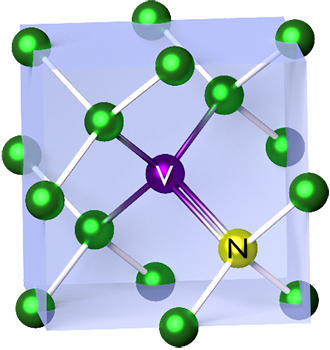
At the centre of this breakthrough is a tiny imperfection known as a nitrogen-vacancy centre. This occurs when one carbon atom in a diamond lattice is replaced by a nitrogen atom and a neighbouring carbon atom is missing. What sounds like a flaw turns out to be the feature.
This defect traps electrons whose quantum spin can be precisely controlled using lasers and microwaves. Even more importantly, those spin states are extremely sensitive to changes in magnetic fields, electric fields, temperature, and pressure. That sensitivity allows quantum diamonds to function as extraordinarily accurate sensors.
Unlike many quantum systems that require near absolute zero temperatures, diamond-based quantum systems work at room temperature. This single advantage makes them far easier to deploy outside research labs.
The rise of lab-grown diamonds has accelerated this shift. Companies such as Element Six are now producing synthetic diamonds not for jewellery, but for technology. These diamonds are grown with atomic-level precision so that defects appear exactly where scientists need them.
The commercial logic is clear. As natural diamonds face pricing pressure from synthetics, technology-grade diamonds open a completely new market, one tied to healthcare, defence, navigation, and advanced manufacturing.
Also read: Head of Preparedness: OpenAI’s new critical safety role and why its important
Quantum diamonds are unlikely to power full-scale quantum computers in the near future. Their biggest impact will come through sensing.
In healthcare, diamond quantum sensors could enable contactless monitoring of heart activity or detect tiny magnetic signals produced by neural activity. In diagnostics, they promise detection capabilities far more sensitive than current rapid tests.
In navigation, quantum diamond magnetometers could allow aircraft, submarines, and autonomous vehicles to navigate without relying on GPS, using Earth’s magnetic field instead. This has major implications for security and resilience.
Quantum diamonds represent a rare case where quantum technology is moving from theory to deployment. They are robust, scalable, and compatible with existing industrial systems. As investment flows into quantum research globally, diamond-based sensing is emerging as one of the earliest practical wins.
What once symbolised luxury is now becoming a cornerstone of next-generation technology, proving that in quantum science, imperfections can be more powerful than perfection.
Also read: Cursor CEO thinks vibe coding is the biggest threat to modern software