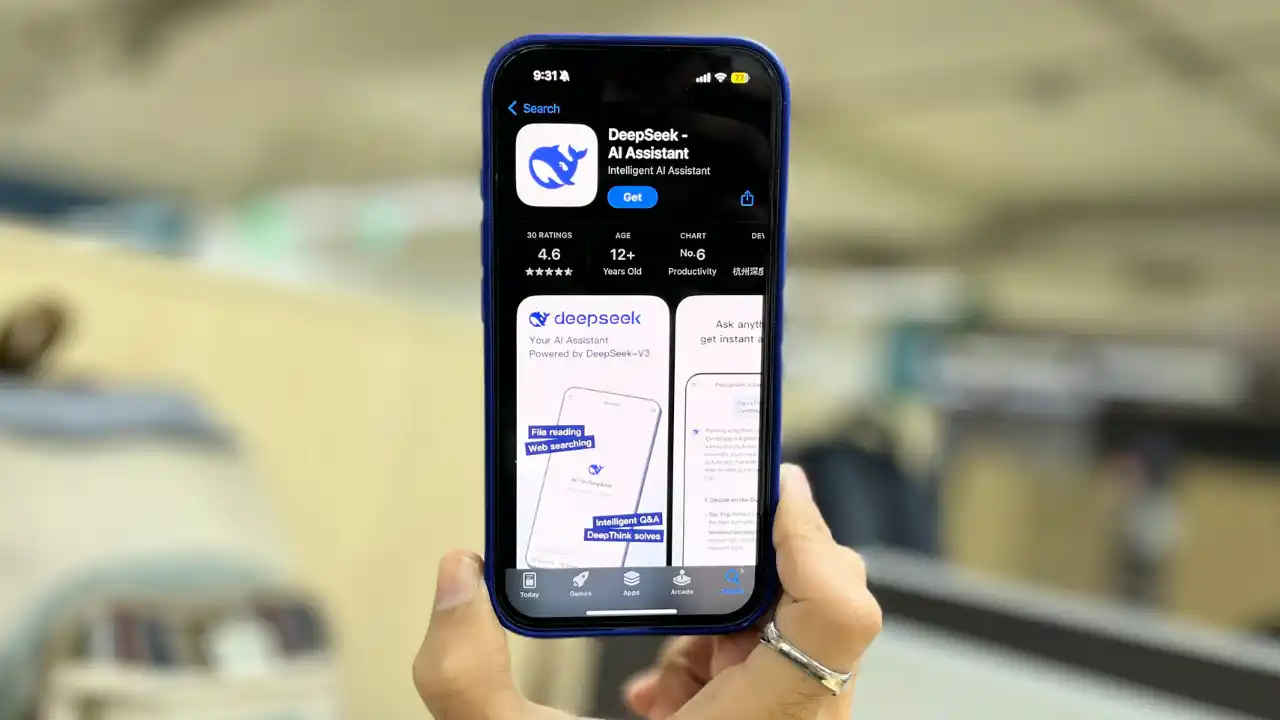
The rapid evolution of large language models has brought two notable contenders to the forefront: OpenAI’s o3-mini and DeepSeek R1. While both target enterprise and developer use cases, their architectures, performance profiles, and cost structures diverge significantly. Below is a detailed analysis based on verified technical specifications and benchmark results.
| Parameter | o3-mini | DeepSeek R1 |
| Total parameters | Estimated 200 billion | 671 billion |
| Active parameters/token | Full dense | 37 billion |
| Context window | 200K tokens | 128K tokens |
| Training tokens | Not disclosed | 14.8 trillion |
| Training compute | Estimated 1.2M A100-hours | 2.664M H800 GPU-hours |
| Architecture | Dense Transformer | Mixture-of-Experts (MoE) |
| Release date | Jan/Feb 2025 | January 2025 |
| API cost (input/output) | $9.50/$38 per M tokens | $0.55/$2.19 per M tokens |
| AIME 2024 score | 83.6% | 79.8% |
| Codeforces percentile | Comparable to o1 | 96.3% |
| GPQA diamond score | Matches o1 | 87.6% |
| SWE-bench verified | Up to 61% | Not disclosed |
| Energy efficiency | 1.2 tokens/J | 1.9 tokens/J |
DeepSeek R1 excels in mathematical reasoning and coding tasks. It scores 97.3% on the MATH-500 benchmark, solving advanced problems with near-perfect accuracy, and ranks in the 96.3rd percentile on Codeforces, a platform for competitive programming. Its general knowledge capabilities, measured by the MMLU benchmark, reach 90.8%, outperforming many industry-leading models.
Also read: Krutrim-2 – Can India’s language-first AI outpace global benchmarks?
The o3-mini focuses on practical applications like software development. It resolves 61% of software engineering tasks on the SWE-bench test, making it suitable for tools like coding assistants. While OpenAI hasn’t disclosed its math scores, the model reduces errors by 24% compared to its predecessor, offering reliability for technical workflows.
The o3-mini uses a dense transformer, a traditional design where all 200 billion parameters process every input. This ensures consistent performance but demands more computational power.
Also read: India’s 8-GPU gambit: Shivaay, a foundational AI model built against the odds
DeepSeek R1 on the other hand uses a Mixture-of-Experts (MoE) architecture. Despite having 671 billion total parameters, only 37 billion are activated per task. This selective approach reduces energy use by 40% compared to dense models, making R1 more efficient for large-scale deployments.
DeepSeek R1 is trained on 14.8 trillion tokens over 2.66 million GPU-hours, this open-source model costs just $6 million per training cycle. Its efficiency stems from techniques like multi-token prediction, which streamlines learning.
o3-mini was built using 1.2 million A100 GPU-hours, its training data remains undisclosed. The model is fine-tuned for science and engineering tasks, prioritising accuracy in fields like data analysis.
DeepSeek R1 is significantly cheaper to operate. At $0.55 per million input tokens, it costs 17x less than the o3-mini’s $9.50 rate. For businesses processing millions of tokens daily, this difference can save thousands monthly.
Also read: Deepseek to Qwen: Top AI models released in 2025
However, the o3-mini offers free access via ChatGPT, appealing to smaller teams or experimental projects. Its integration with tools like GitHub Copilot also simplifies coding workflows.
o3-mini is ideal for analysing lengthy documents (e.g., legal contracts or research papers) due to its 200K-token input capacity. Its structured output support (JSON) suits API automation and data pipelines.
Also read: DeepSeek vs Meta: 5 Things Mark Zuckerberg Teased About Llama 4 and the Future of Open-Source AI
DeepSeek R1 will be better for cost-sensitive tasks like batch data processing or multilingual support. Its open-source MIT license allows custom modifications, though users must manage privacy risks.
Both models push the boundaries of AI capabilities, but their strengths cater to different needs. As they evolve, expect advancements in energy efficiency, coding accuracy, and real-world adaptability.