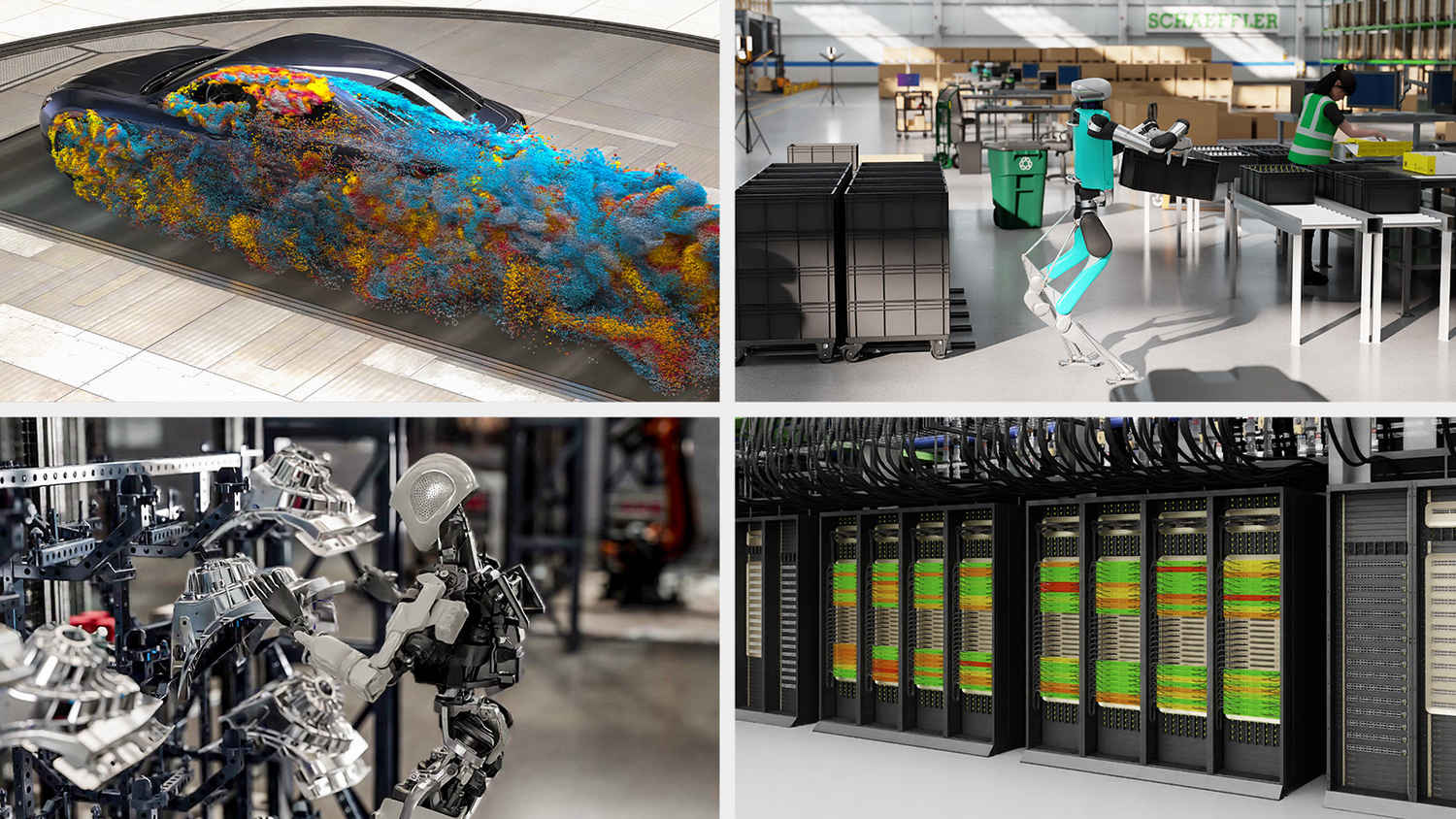
The landscape of global manufacturing is shifting as NVIDIA and Samsung expand their 25-year alliance to construct what they describe as the world’s most intelligent chip factory. This project represents a convergence of high-performance computing and physical production, turning the traditional semiconductor fab into a living, software-driven ecosystem. Rather than simply housing machines that print circuits, this facility functions as a massive AI “brain” that manages every aspect of its own operation in real-time. By integrating accelerated computing directly into advanced chip manufacturing, the partners are setting a global benchmark for AI-driven production at scale.
At the heart of this transformation is a monumental deployment of over 50,000 NVIDIA GPUs. This massive computational cluster provides the raw power necessary to run “Physical AI” at scale, allowing the factory to process staggering amounts of data from thousands of sensors simultaneously. This infrastructure supports the creation of a “Digital Twin” via the NVIDIA Omniverse platform, which is a perfect virtual replica of the physical factory floor. By simulating the entire production environment, engineers can predict mechanical failures before they happen and test new logistical workflows in a risk-free virtual space before implementing them in the real world. This virtual environment allows global fabs to shorten the time from design to operations, enabling predictive maintenance and real-time decision-making that significantly reduces operational downtime.
Also read: India AI Impact Summit 2026: Organisers warn about fake registrations and fees
Efficiency gains within the facility are most evident in the area of computational lithography, which is historically the most time-consuming bottleneck in chipmaking. By integrating the NVIDIA cuLitho library, Samsung has realized a 20x performance increase in the calculations required to etch microscopic patterns onto silicon. This speed allows for rapid iterations on 3nm and 2nm process nodes, significantly shortening the timeline from initial design to mass production. This breakthrough is particularly critical as the industry faces increasing pressure to deliver smaller, more powerful, and more energy-efficient semiconductors for everything from smartphones to data centers.
The intelligence of the factory extends to its workforce of autonomous robots, which are developed using the NVIDIA Isaac Sim and Jetson Thor platforms. These machines do not follow rigid, pre-programmed paths; instead, they use AI to navigate the complex environment of the fab, making independent decisions to optimize the flow of materials. Using NVIDIA Cosmos world foundation models, these robots can connect synthetic and real data to understand and interact with the physical world in real time. To ensure these robots communicate without lag, the partnership has integrated AI-RAN (Radio Access Network) technology, providing a dedicated, high-speed wireless backbone that maintains a constant link between the factory’s central AI and its mobile units.
As the industry moves toward more complex architectures like HBM4 and liquid-cooled data centers, this facility serves as the testing ground for the next generation of hardware. Jensen Huang, CEO of NVIDIA, noted that this era redefines how the world builds and manufactures, positioning Samsung’s AI foundation as the template for future intelligent industries. This collaboration ensures that the chips of tomorrow are not just designed by AI, but are birthed in a facility that understands and optimizes its own existence. Through this deep partnership, Samsung and NVIDIA are not just building a factory; they are architecting the future of the AI industrial revolution.
Also read: India AI Impact Summit 2026: Why US companies are turning up in record numbers