AI is no longer an innovation; rather, it’s a feature that is helping everyone evolve further. That said, one sector that is still lagging in the AI space is businesses. Unfortunately, most don’t know where to start, and as a result, moving into this space becomes almost an impossible task. But among all this, there is one startup that is looking to emerge as the one-stop solution.
In a landscape dominated by global tech giants, Neysa AI is focused on a different mission. They want to build a secure, end-to-end AI ecosystem specifically for the Indian market. Through their flagship platform, Velocis, Neysa is providing the infrastructure that allows everyone from local startups to the country’s largest financial institutions to build and deploy AI without losing control of their data.
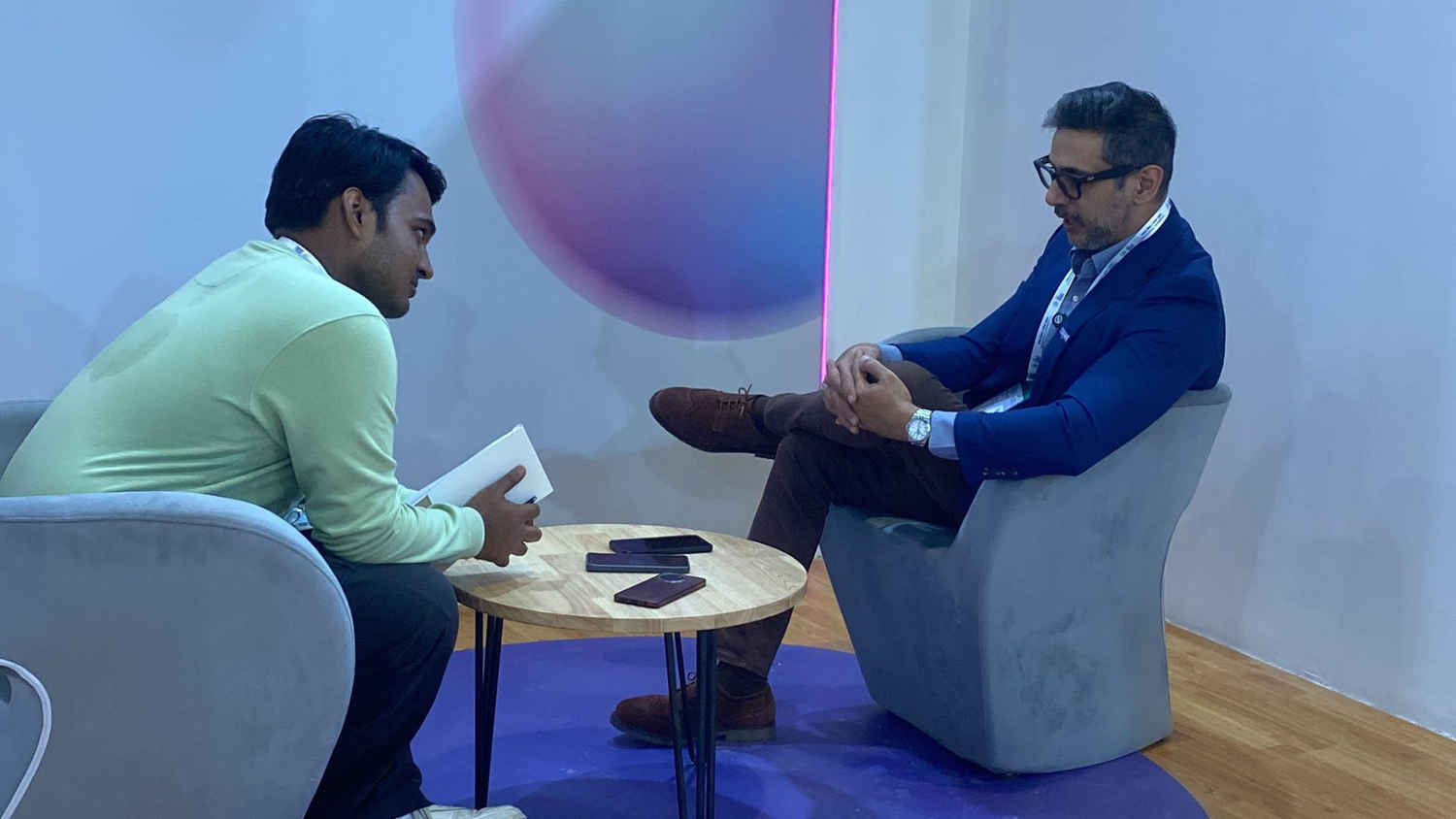
We got the opportunity to speak with Mr Karan Kirpalani, the Chief Product Officer at Neysa AI, at the India AI Impact Summit, and we had a lovely chat with him. Let’s take a deep dive into all we learned about the company and their thoughts on the AI landscape in India.
Also Read: Ahead of India AI Impact Summit 2026, Anthropic launches Bengaluru office, expands India push
First of all, to get a deep dive into what Neysa AI does, we asked Karan a simple question. What are the objectives of Neysa, and what kind of products/services does the company deal in?
To which Karan replied, “Neysa is first and foremost an AI company. Our flagship product is called Velocis.” Speaking more about the tech, he said, “Velocis is an end-to-end AI sovereign cloud that allows a client to fulfil their AI objectives across training, fine-tuning and inferencing. Our objective is to be able to democratise AI for the Indian market, and we work with our clients, enterprises, AI-native startups, AI-native ISVs to be able to help them achieve their AI goals across whatever their use cases are.”
Karan also gave us an understanding of how they integrate AI into their products.
He said, “All clients today that are looking to integrate AI into their business, into their work streams, their applications, their products, their services, they need to be able to do their model building, do their experimentation, finally take those models, put them into inference, and publish it into their products and services for their users to use.”
Given how many companies Neysa deals with and their understanding of the AI space, we felt the need to ask Karan for his perspective on India becoming self-reliant with evolving tech like AI, and also what needs to happen further? Well, let’s just say we got a very interesting answer.
Karan started by suggesting that “India is the second-largest AI market in the world after North America. We have a wealth and abundance of talent.” Furthermore, suggesting that “Development is happening at a frightening pace, and I am so confident, and I’m so bullish about what we’re able to do.”
Speaking on what needs to happen further, he suggests, “I think we need to be able to continue to build on all pillars. We need to be able to continue to build on the infrastructure front. We need to be able to continue to build on the availability of GPUs in India.” Also stating that, “Data centers need to come up. We need to make sure our power supply keeps pace with the rollout of AI data centers as well.”
We also wanted to understand Karan’s thoughts on deploying AI in a place like India, where the scale of measurement is just so large.
He suggested that “AI has to come down to a grassroots level. Everybody needs to be able to use it, which means you really need Indic models to be able to be developed, to be able to be flourished, to be able to reach the man on the street, everybody, the farthest corners of the country. That is a journey for us right now. We’re making progress on that front. But I think we would consider ourselves to be successful once AI is truly democratized down to the grassroots level.”
Also Read: From factories to bazaars, what the India AI Impact Summit’s skilling panel is really arguing for