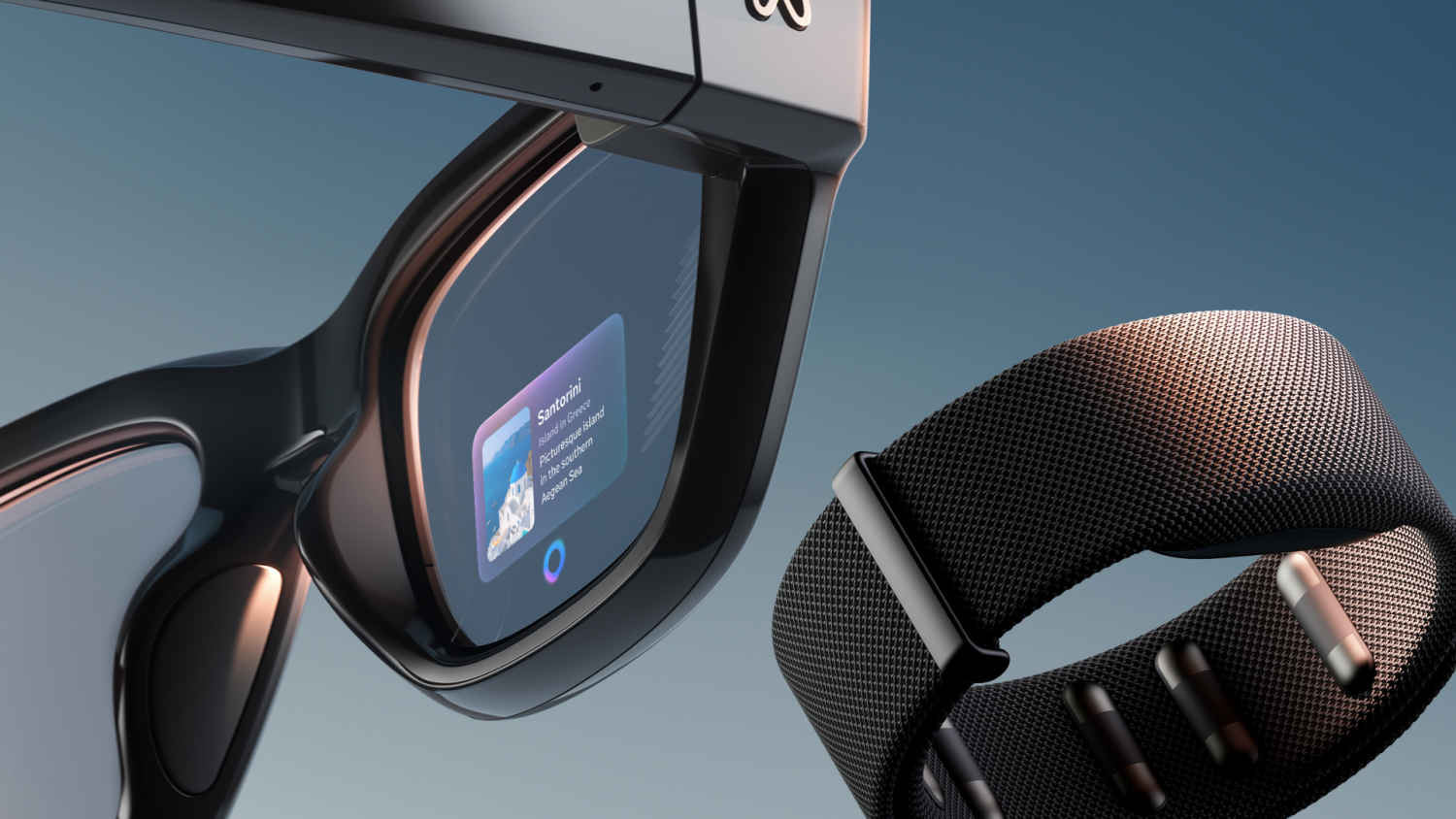
The era of pulling out a phone for every quick reply may be inching toward change. With a new early-access software update, Meta is adding an unusual input method to its Ray-Ban Display smart glasses that lets users write text by tracing letters on a nearby surface, then see that text appear inside the glasses.
The feature, which Meta calls virtual handwriting, is rolling out alongside updates to the Meta Ray-Ban Display and their companion wearable, the Meta Neural Band. The glasses themselves include a 600×600 display embedded in the right lens. Input, however, does not come from touch or cameras. It comes from the wrist.
Also read: On-device AI explained: Why Lenovo and Motorola are building their own assistant
The Neural Band uses electromyography, or EMG, to detect electrical signals generated when hand and finger muscles activate. Instead of watching your hands, the system interprets subtle muscle activity to understand small gestures and movements. In practice, this allows users to rest a finger on a flat surface such as a table or their leg and trace letters as if they were writing on paper.
Those traced motions are decoded in real time and converted into digital text that appears in the glasses’ display. Meta describes this as working on “any flat surface,” though the feature is currently limited to early-access users in the U.S. and supports English input only.
At launch, virtual handwriting is focused on messaging. Users can compose replies in WhatsApp and Messenger without taking out a phone. The appeal is subtlety. Instead of unlocking a screen during a meeting or lighting up a dark room, users can respond with small, almost invisible finger movements.
Meta has positioned this as a more ambient way to interact with notifications, especially in situations where pulling out a phone feels disruptive. It is not marketed as a full keyboard replacement, but as a faster, quieter option for short responses.
Also read: CES 2026: Intel reveals custom chips for handheld gaming PCs of future, key features explained
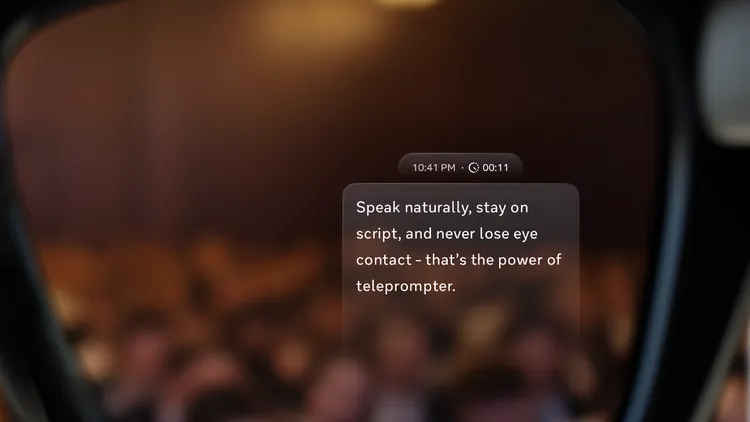
Handwriting is not the only new capability arriving with the update. Meta is also rolling out a teleprompter mode aimed at presenters and creators. Users can copy and paste text from sources like Google Docs or other apps, then view that text as scrolling cards in their peripheral vision.
Scrolling is controlled using small finger gestures detected by the Neural Band, allowing speakers to maintain eye contact with an audience or camera while following a script.
The Ray-Ban Display glasses and Neural Band are sold together for $799 in the U.S., with international availability expanding gradually. While the feature set remains limited and access is still restricted, EMG handwriting offers a preview of how Meta sees smart glasses evolving.
Rather than replacing phones outright, the goal appears to be reducing how often users need to reach for them. In that sense, virtual handwriting is less about futuristic spectacle and more about making everyday interactions quieter, quicker, and easier to ignore when necessary.
Also read: CES 2026: HP put an entire desktop PC inside a keyboard and it somehow makes sense