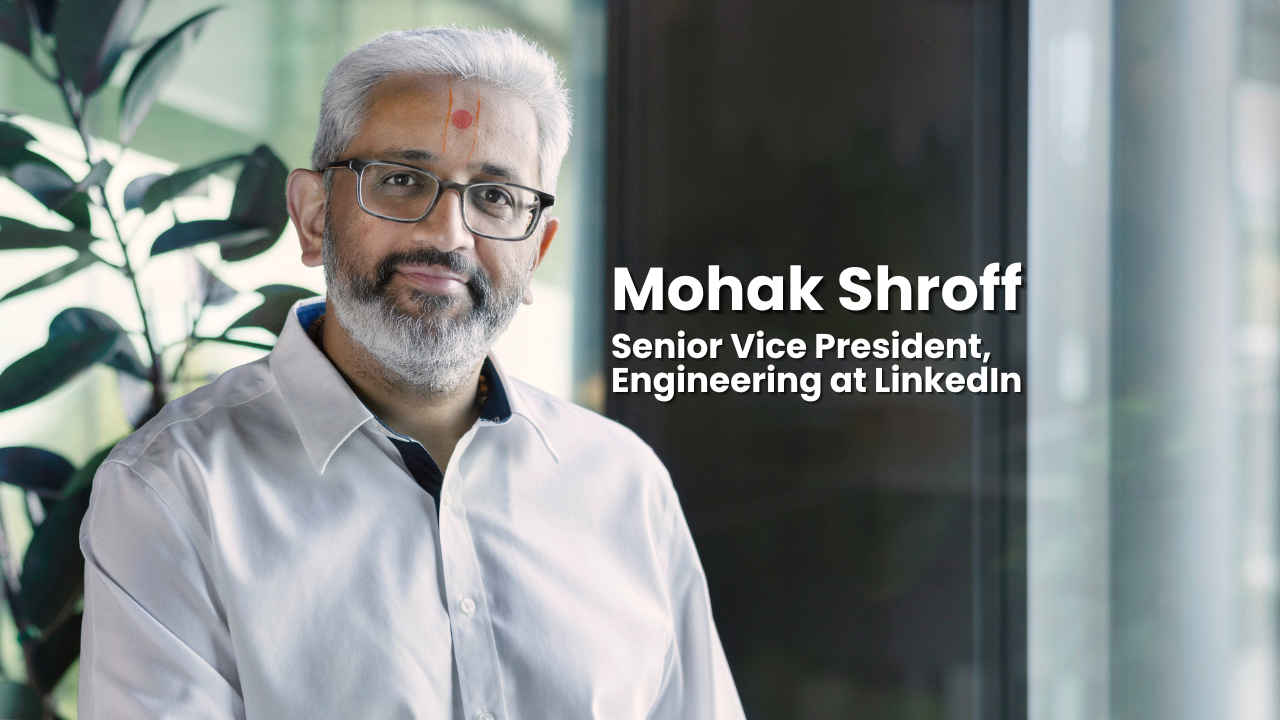
“At its core, LinkedIn has always been essentially a massive at-scale matching engine, helping connect the elements in the economic graph – people, jobs, companies, skills – to each other,” according to Mohak Shroff. Ensuring that happens at a massive scale is essentially what AI is all about. And for as long as it has existed, “LinkedIn has been essentially a massive AI engine to connect people to opportunity.”
Inside a small press roundtable at LinkedIn’s Bengaluru office, Mohak Shroff, Senior Vice President of Engineering, underscored the fact that AI at LinkedIn isn’t a recent pivot but a continuation of what the platform has always been focused on.
For a company that has spent the better part of two decades putting together the myriad pieces of the jigsaw puzzle that is the online professional world, the current AI frenzy almost feels like LinkedIn arriving early to a party everyone else has just discovered.
“We didn’t start with AI for the sake of AI or technology for the sake of technology,” Shroff explained. “We started with the idea that what we seek to do is focus on our members and our customers. Technology is an enabler. It’s what enables us to serve our members and customers better.”
That philosophy – that technology is just an enabler, not the point – has quietly shaped how LinkedIn is building its newest generation of AI systems.
The most visible example of this is the LinkedIn Hiring Assistant, an AI agent designed to change how recruiters work. But this isn’t automation replacing humans, at least that’s not how LinkedIn looks at it.
“Recruiters love the human aspects of the job,” Shroff said. “They love talking to candidates. They love shepherding them through the process.” Ultimately, a recruiter wants to be able to say that their company succeeded because of the extremely high quality talent that they helped bring in.
The problem isn’t recruiting itself, but the grunt work around it, which is what LinkedIn Hiring Assistant is trying to help with. “They don’t say I want to run searches every day or send the same template message out 20 times a day. And we said, if that’s the case, let’s go build an agent that solves that,” explained Shroff.
The result, he said, is already gaining traction. “LinkedIn Hiring Assistant is already one of the most successful SaaS agents in the marketplace – clearly the most successful in the hiring space – and that comes from focusing on the same principles that got us here: delivering member and customer value.”
Of course, the moment AI enters hiring, the conversation inevitably turns to bias. How does the assistant ensure no applicant who submits their CV for a job posting on LinkedIn gets a raw deal? Shroff acknowledged the concern directly.
“Responsible AI shows up at the very beginning of the product ideation process. When we say let’s build something like a LinkedIn Hiring Assistant, responsibility has to be part of that core.”
The approach, Shroff emphasised, involves three layers. “We measure outcomes. We measure for bias. Then we mitigate. The model must perform no worse than the real world. And finally, the model is not the one doing the thing – accountability and judgment still resides with the human.”
Transparency is key in this entire process, it’s the only way to ensure success with accountability built-in. “The recruiter has transparency to see what the agent did, what filters it ran, where candidates were screened, so they can intervene if bias is being introduced.” In other words, according to Shroff, the AI only assists, ultimately the human decides.
As is the wont of all conversations regarding Indian ingenuity, it inevitably drifted to something uniquely Indian – jugaad – and whether the AI era might signal its end. Shroff disagreed with this notion.
“I actually think this is a form of expansion of the idea of jugaad, taking the components that exist in the world and compiling them together into something that creates real value,” said Shroff, believing AI is only going to make jugaad more thoughtful. But the new ingredient, he argued, is something more human.
“It’s not about doing anything you want. A skill that emerges alongside agency is the very human skill of taste and judgment – knowing what to do and why to do it,” he highlighted. And that mindset, according to Shroff, is what has always defined jugaad in the first place.
“The core principle of jugaad was always that there’s a problem and my goal is not to invent technology for its own sake – my goal is to solve that problem.” And AI is only going to make Indian entrepreneurs focus more deeply on the problems they want to solve, here in India and around the world.
Also read: Inside LinkedIn India’s AI engineering the future of hiring and jobs
In Shroff’s view, the defining skill of the AI era isn’t coding. It’s human agency. Something that he kept coming back to throughout the briefing session at LinkedIn’s Bengaluru office.
“I believe quite strongly that the most important skill of this new AI era is agency, recognizing that problems exist in the world and deciding that you have the ability to solve them.” That’s partly because the tools themselves have become dramatically more accessible.
“The barrier to innovation has been massively lowered. Anyone can innovate. The tools exist now to build pretty much anything you can imagine.” Which changes the real challenge at hand. “What matters now is identifying the right problems, prioritizing them, and taking high agency in solving them.”
This shift is already visible in the skills companies are hiring for, according to LinkedIn’s Mohak Shroff.
“One set of skills that are emerging are AI-native skills – prompt engineering, context engineering, managing teams of agents,” Shroff noted. “But the other set of skills that are emerging are innately human skills: communication, collaboration, judgment, taste, context setting.”
Therefore, this is resulting in the dawn of a new normal as far as professional work skills are concerned. “We are going from being doers to being directors,” Shroff underlined. Why? Because AI can build, but it can’t understand people. “The models can build things. They don’t know who you’re building for. Only humans understand what people want.”
And if there’s one market where these changes are unfolding fastest, LinkedIn believes it’s right here in India.
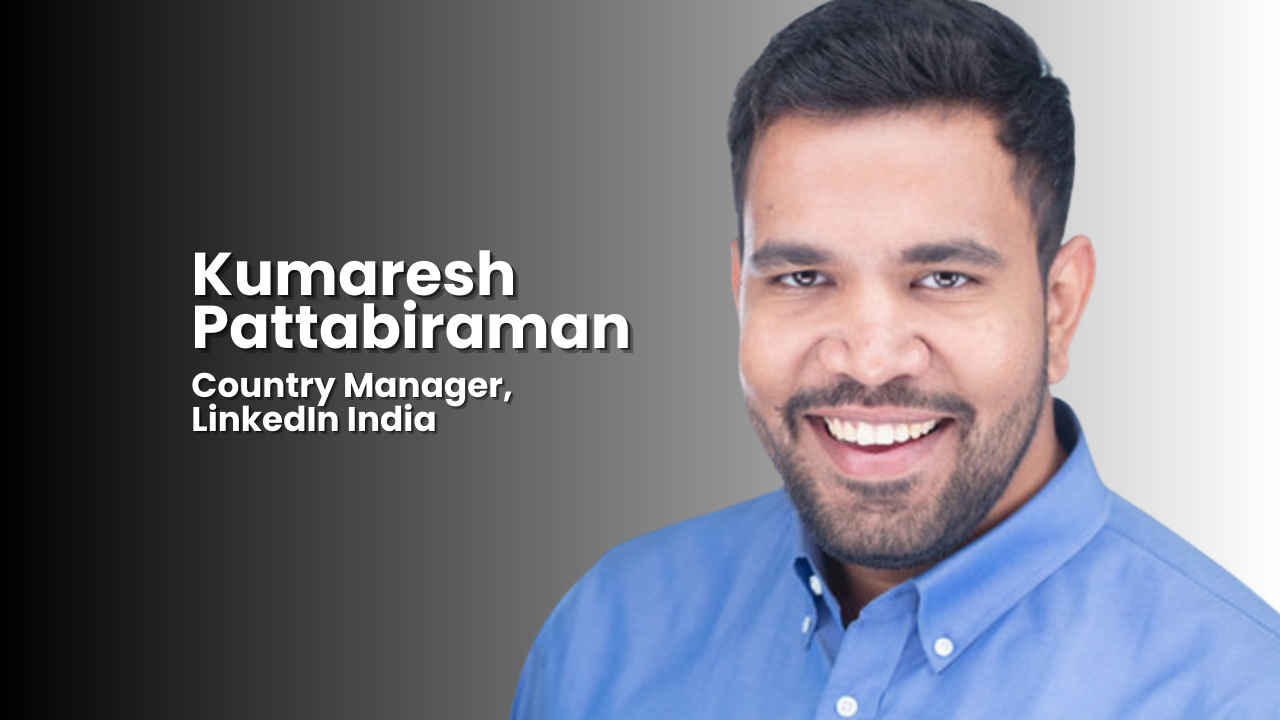
“India is LinkedIn’s second largest market and fastest growing market,” said Kumaresh Pattabiraman, Country Manager for LinkedIn India. “Our membership here is growing at 20 percent year on year.”
More importantly, the country has become a core innovation hub. “India is not just an engineering office for us anymore. It has arrived as a global innovation hub for LinkedIn,” according to Pattabiraman.
Today, LinkedIn’s leaders emphasised, entire global businesses are being run right here from India. “We are running R&D end-to-end out of India – product management, design, engineering and data science – for a business that serves 1.5 million sellers globally.” And that scale is shaping how LinkedIn builds for the world.
AI is already changing how recruiters discover talent for job openings posted online, specifically on LinkedIn. “Recruiters are viewing 62 percent fewer profiles because they are able to find the right candidates faster, and they’re responding 69 percent faster,” Pattabiraman said.
Also read: Nithya Rajagopalan on how LinkedIn’s humanising AI recruitment
But the bigger shift – and the real story – is where talent comes from. “When hiring agents search in a skills-first way, they discover hidden talent pools that recruiters might never have considered before.”
Pattabiraman shared an example that captured how GenZ or digital native youth in India are searching for jobs online. “A student typed: ‘Help me find internships where I can apply my machine learning skills and my interest in music.’ The first job she discovered was an audio engineer internship at Dolby Research in Bangalore,” he said.
The surprising part in all of this was that, “She didn’t know the job title existed. She didn’t know Dolby had a research centre in Bangalore. But AI helped her discover an opportunity she would never have searched for.”
In a world currently obsessed with what AI might replace, LinkedIn wants to refocus the conversation on what AI ushers in, and it feels almost refreshingly pragmatic. AI, in LinkedIn’s version of the story, isn’t about removing humans from work. It’s about removing the parts of work humans never really wanted to do in the first place – and leaving behind something far more interesting.
Concluding with an example about his young daughter, Shroff reflected on what this shift signifies. “She’s going to be a native user of AI in a way that I will never be. But I have the opportunity to sit down with her and teach her judgement, to teach her taste, to teach her what questions to ask.” And perhaps most importantly, the agency to solve problems that machines can’t even see yet.
Also read: Top 10 engineering skills in India 2026: LinkedIn Skills on the Rise report