Launch Pad number 3
India’s space program is preparing for its next giant leap. The Indian Space Research Organisation (ISRO) has officially begun work on its Third Launch Pad (TLP) at the Satish Dhawan Space Centre in Sriharikota. With a targeted completion date of March 2029, this new launch facility is more than just an infrastructure expansion, it’s a strategic platform built to support next-generation rockets, crewed spaceflight, and high-frequency missions as India steps into a new era of space exploration.
Here’s an in-depth look at the key features that make the third launchpad a central piece of ISRO’s future.
Also read: NISAR Earth observation satellite: 5 key features explained
Unlike the existing two launchpads, the Third Launch Pad is being designed from scratch to support ISRO’s future launch vehicles. At the heart of this is the Next Generation Launch Vehicle (NGLV), a modular, heavy-lift rocket family that will serve missions ranging from satellite deployment to human spaceflight. With the capacity to carry payloads of up to 30,000 kilograms to Low Earth Orbit, this rocket requires a more advanced and robust infrastructure than what the older pads can provide. The TLP will also support upgraded versions of the LVM3, particularly those equipped with semi-cryogenic stages. The pad is expected to accommodate rockets that are longer, heavier, and more complex than any India has launched before.
The Third Launch Pad represents a significant leap in launch infrastructure. It will include a redesigned flame deflection system to handle the intense exhaust and vibration from larger engines. New fueling systems are being integrated to manage both cryogenic and semi-cryogenic propellants, which are essential for next-gen rockets. The pad will be equipped with its own vehicle assembly complex, streamlining pre-launch workflows and enabling simultaneous preparations for multiple missions. Automation and enhanced safety systems will also feature prominently, ensuring that even high-risk missions like human spaceflight can be managed reliably.
ISRO’s timeline for the TLP is both ambitious and carefully planned. Following the government’s financial sanction in March 2025, site surveys and ground studies were completed by mid-2025. The civil engineering phase is scheduled to wrap up by May 2028, followed by the installation of fluid and fuel systems by July 2028. The integration of all pad infrastructure is expected by September 2028, paving the way for full commissioning by March 2029. This four-year window includes time for testing, safety validation, and operational readiness, making it one of ISRO’s most complex infrastructure undertakings to date.
Also read: 5 crazy facts about Chile’s Vera Rubin telescope: It has world’s largest digital camera
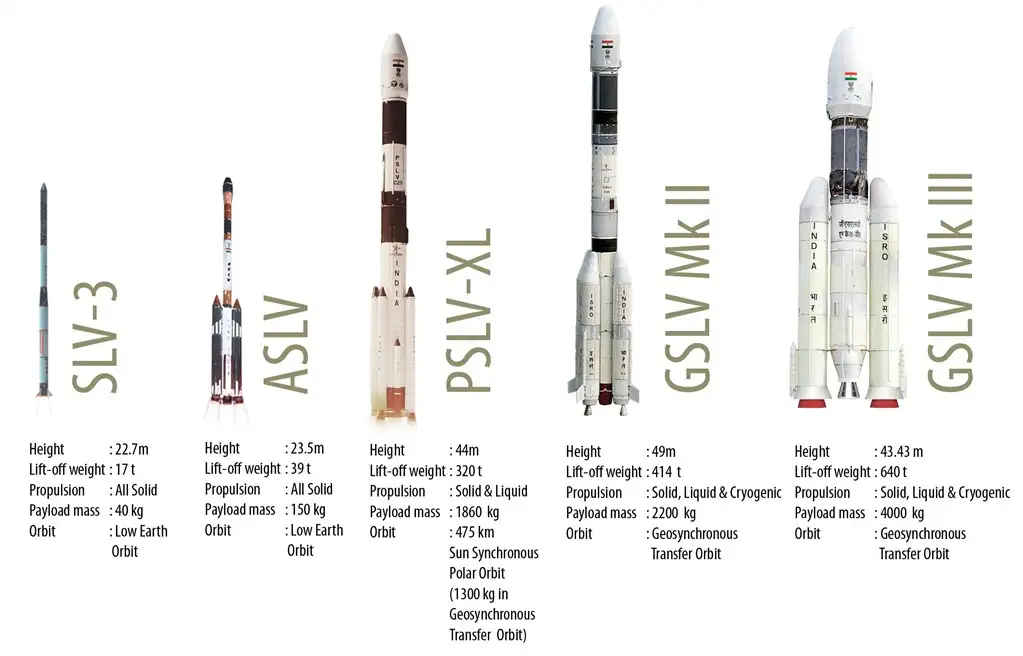
The addition of a third pad isn’t just about accommodating bigger rockets, it’s about launch cadence and flexibility. With two pads already supporting PSLV, GSLV, and LVM3 missions, ISRO has reached a point where mission frequency is constrained by available infrastructure. The Third Launch Pad will enable overlapping launch campaigns, greater scheduling flexibility, and reduced downtime. It also provides critical redundancy; if one pad is undergoing maintenance or recovery after a launch, others can continue operating, ensuring that time-sensitive commercial and national missions are not delayed.
Perhaps the most important aspect of the TLP is its role in enabling India’s human spaceflight ambitions. The pad is being designed to meet the rigorous safety standards required for crewed missions, including the Gaganyaan program and future lunar expeditions. It will support abort systems, escape protocols, and integration processes specific to human-rated rockets. Additionally, as ISRO moves toward establishing a space station by 2035 and sending astronauts to the Moon in the 2040s, the pad will become the gateway for these historic missions.
True to ISRO’s ethos and India’s broader self-reliance goals, the Third Launch Pad is being built with significant private sector involvement. Indian MSMEs and aerospace firms will contribute to everything from structural components to advanced fueling systems. This not only helps lower costs but also strengthens India’s domestic space supply chain. The ₹3,984.86 crore project is part of a broader trend of indigenisation in India’s space sector, reinforcing the country’s position as a rising space power.
The Third Launch Pad is not just about managing present demands, it’s a step toward the future. As global interest in satellite constellations, interplanetary missions, and space tourism grows, ISRO is positioning itself to be a competitive and capable launch provider. The TLP ensures that India can not only launch more missions, but also launch more ambitious ones, from Moon landings to Mars probes, from orbital stations to commercial partnerships.
By 2029, this new pad will stand as a symbol of India’s readiness, not just to reach space, but to lead in it.
Also read: Interstellar Visitor Spotted by Astronomers: What Is It?