As the gates of Bharat Mandapam prepare to open on February 16, 2026, for the India AI Impact Summit, the atmosphere in New Delhi is electric. This isn’t just another tech conference; it is a declaration of intent from the Global South. While previous summits in London and Seoul focused on the theoretical risks of “superintelligence,” New Delhi is grounding the conversation in “People, Planet, and Progress.”
With over 100 countries participating and a registration count crossing 250,000, here are the five major developments and high-profile addresses you should keep on your radar.
Also read: India AI Impact Summit 2026: What the India AI Stack means for you
The crown jewel of the IndiaAI Mission, a ₹10,370 crore initiative, will be the official unveiling of eight indigenous foundational models. These models are not just rivals to GPT; they are engineered for India’s linguistic complexity. Led by the Bharat Gen consortium (spearheaded by IIT Bombay), this project aims to provide generative AI capabilities across all 22 scheduled Indian languages. Look for the launch of Yukti (reasoning), Varta (conversation), and Kavach (safety) models, which are designed to run on leaner compute infrastructure, ensuring that even local startups can build on top of them without needing multi-billion dollar server farms.
The government is set to announce the winners of its two flagship innovation programs: AI for ALL and AI by HER. With a total incentive pool of roughly ₹250 crore ($30 million), these challenges have spent the last few months scouting for AI solutions that solve “unsolvable” social problems. The final stage will showcase the top 10 winners in each category, with each potentially walking away with up to ₹2.50 crore in prize money plus massive cloud and compute credits. The focus here is strictly on “last-mile” impact – think AI that detects crop diseases via a $100 smartphone or tools that help informal workers navigate legal documents.
Also read: Seedance 2.0: This Chinese AI video tool is outpacing Veo 3 and Sora 2
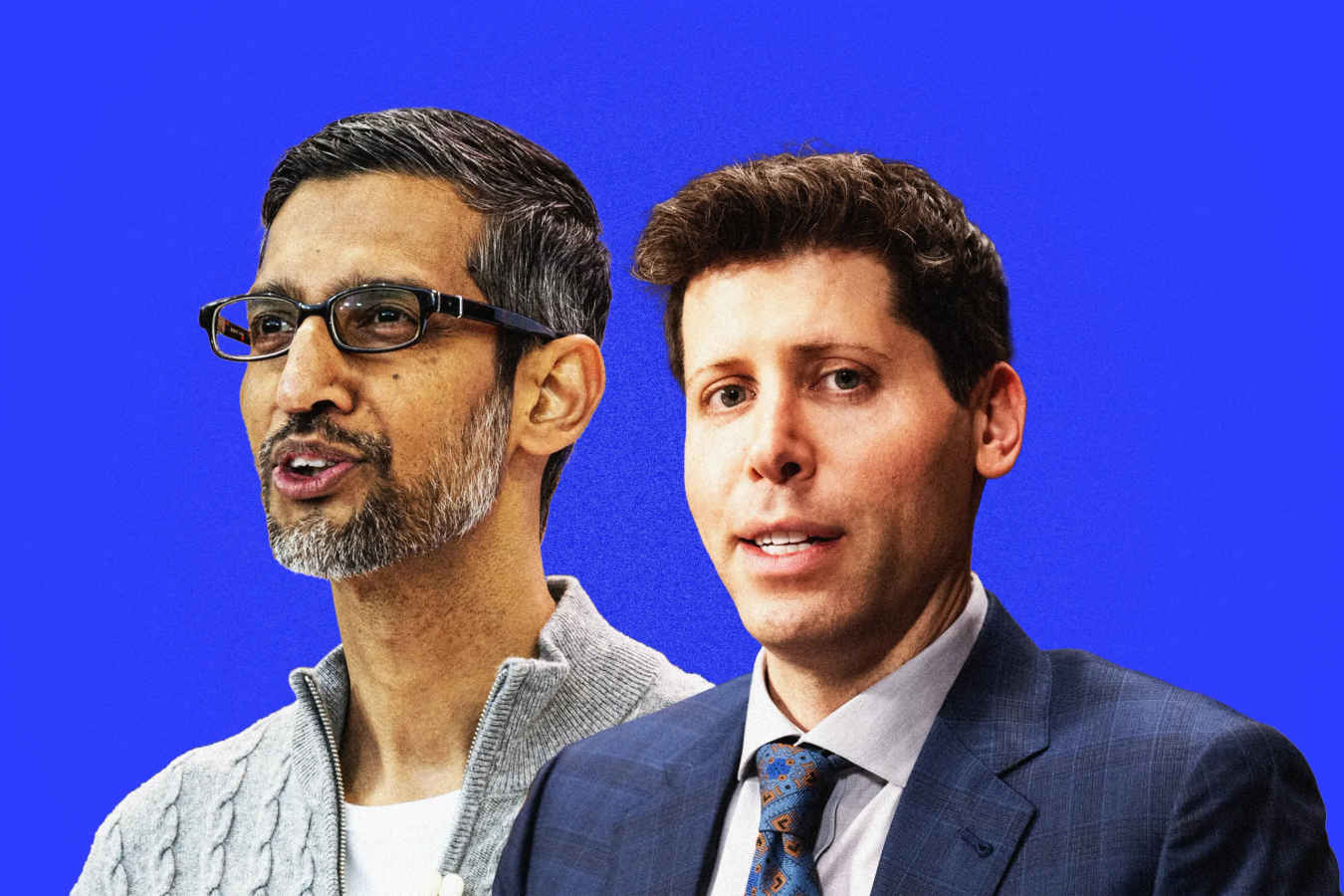
While the summit is a showcase of Indian talent, the presence of global “AI Royalty” is a major draw. Google CEO Sundar Pichai and OpenAI’s Sam Altman are confirmed to lead high-level plenaries, likely focusing on how their models will integrate with India’s Digital Public Infrastructure (DPI). However, the biggest news leading into the event is the last-minute withdrawal of Nvidia CEO Jensen Huang due to “unforeseen circumstances.” Despite his absence, Nvidia is sending a high-powered delegation led by Jay Puri to discuss India’s rapidly growing semiconductor ecosystem and the $1.25 billion AI hub planned for Vizag.
Move over, white papers; India is introducing a multilateral action plan organized under the Seven Chakras (Working Groups). These groups, covering themes like Human Capital and Democratizing AI Resources, are expected to release a “Unified AI Governance Guideline.” This framework aims to bridge the gap between the Global North and South, ensuring that AI resources, like datasets and GPUs, are shared more equitably. Watch for the February 17 release of the Global AI Compendium, a massive casebook of 500+ real-world AI applications that have already proven successful in developing economies.
Education is set for a “UPI-moment” with the introduction of the Bharat EduAI Stack. Anchored by the new Bodhan AI Centre of Excellence at IIT Madras, this initiative will provide an open-source, interoperable layer for education. The goal is to deploy AI-driven personalized tutors and teacher-assistance tools across schools nationwide. By ensuring the data stays within sovereign borders (the “Sovereign AI” mandate), the government aims to revolutionize skilling for millions of youth without compromising national digital security.
Also read: Saaras V3 explained: How 1 million hours of audio taught AI to speak “Hinglish”