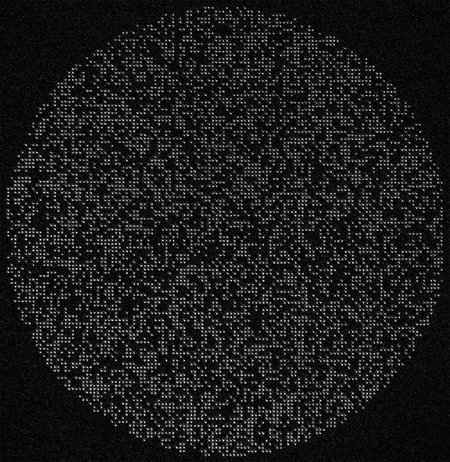
When scientists at Caltech revealed that they had assembled the world’s largest neutral-atom quantum computer, the announcement sent waves across both academia and industry. By trapping and controlling 6,100 cesium atoms inside an array of laser beams, the team achieved a scale that was previously unthinkable. For years, quantum physicists have struggled with the tension between size and stability: the more qubits you add, the harder it becomes to keep them from collapsing into classical behavior. This breakthrough suggests that balance might finally be within reach. But the real question remains: how powerful is this machine?
Also read: Arattai vs WhatsApp: Feature comparison, who wins?
Most of the public conversation around quantum computing has been dominated by superconducting qubits, like those pursued by Google and IBM, or by trapped ions, used by companies such as IonQ and Quantinuum. Neutral-atom quantum computers take a different path. Instead of wires or charged particles, they rely on optical tweezers, laser beams so finely tuned that they can grab and hold individual atoms in place, like invisible tractor beams.
The atoms serve as qubits, the quantum version of binary bits. What makes the neutral-atom approach intriguing is its flexibility. While superconducting qubits are etched onto rigid chips, neutral atoms can be physically rearranged like pieces on a chessboard. Researchers can reconfigure the array mid-experiment, opening up dynamic possibilities for building circuits that other platforms struggle to match.
What sets Caltech’s machine apart is not just its size but the combination of three essential factors:
Individually, these milestones would be noteworthy. Combined, they represent a system that begins to resemble the conditions required for a useful quantum computer.
Despite the impressive figures, Caltech’s machine is not yet capable of solving real-world problems in chemistry, optimization, or cryptography. At the moment, it is primarily a platform for experimentation: researchers can test how atoms behave when moved around in an array, run sequences of logic gates, and probe the limits of error control.
Also read: Meta reportedly tightens AI chatbot protocols to block inappropriate conversations with kids
In raw qubit count, it surpasses many superconducting prototypes. Yet in terms of actual computational power, the ability to execute algorithms that outperform today’s fastest supercomputers, it remains at the experimental stage. A helpful analogy is the early space race: Caltech has built a rocket with record-breaking fuel capacity, but proving it can reach orbit and return safely is still ahead.
The broader significance lies in the race to determine which qubit technology will scale first into a regime where quantum advantage – clear superiority over classical machines – can be demonstrated consistently. Each platform has its strengths and weaknesses. Superconducting qubits benefit from decades of semiconductor expertise but struggle with coherence. Trapped ions offer high fidelity but scale more slowly. Neutral atoms now present a third contender, showing that size and precision can grow together.
The flexibility of neutral-atom arrays also points toward the future of fault-tolerant quantum computing. To reach that stage, researchers will need millions of stable qubits arranged in complex error-correcting codes. A platform that can physically rearrange qubits while maintaining coherence could make those architectures far easier to implement.
By the most direct definition – can it run applications beyond classical reach? – the Caltech machine is not yet powerful. It cannot break encryption, revolutionize materials design, or optimize global supply chains. But in another sense, it is extremely powerful: it proves that quantum hardware can grow by orders of magnitude without losing the precision needed to make future breakthroughs possible.
In quantum research, that combination, scale plus control,is the ultimate milestone. Caltech’s neutral-atom system does not yet deliver the holy grail of practical quantum computing, but it may have just provided the blueprint for how to get there.
Also read: We should also start thinking of Right to Compute: Intel India MD Santhosh Viswanathan