Google is pushing its AI research assistant NotebookLM into more creative territory. The latest update introduces new video overview formats and visual styles powered by Google’s in-house “Nano Banana” image generation model, part of the Gemini 2.5 Flash suite. These upgrades transform NotebookLM from a text-based summarization tool into a more visual, expressive, and storytelling-oriented workspace, one that helps users turn research and notes into engaging multimedia summaries.
Also read: Google’s viral Nano Banana AI coming to Search, NotebookLM and Photos
NotebookLM was initially launched as an experimental project to help users “think with their notes.” It analyzes uploaded documents, transcripts, or links, and generates context-aware summaries or explanations. Over time, it has evolved into a full-fledged AI notebook capable not just of summarizing, but of connecting ideas and producing shareable content.
The newest update expands that mission by adding two new video overview formats and a range of AI-generated visual styles, making it easier to personalize how information is presented.
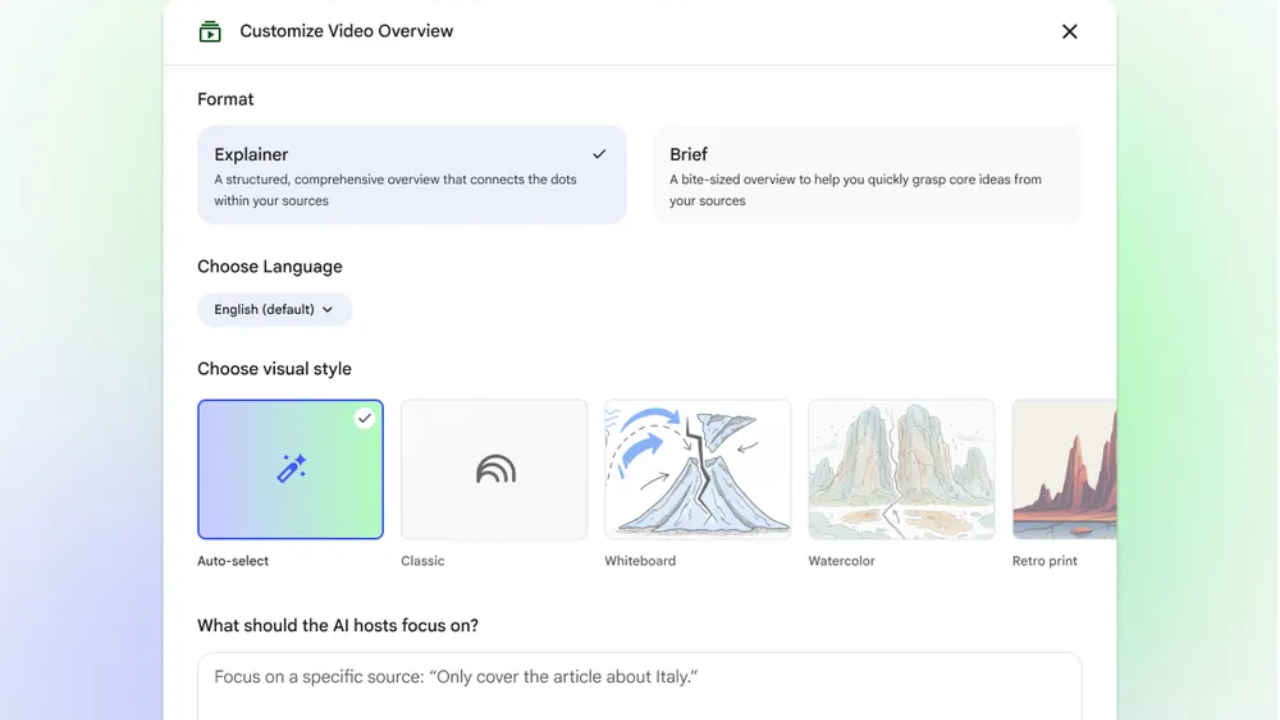
Until now, NotebookLM generated a single type of video overview: a standard AI-narrated summary based on your sources. With the update, users can now choose between two presentation formats – Brief and Explainer.
By offering both, Google gives users more control over the depth of their AI-generated videos, depending on whether they need fast insight or a structured walkthrough.
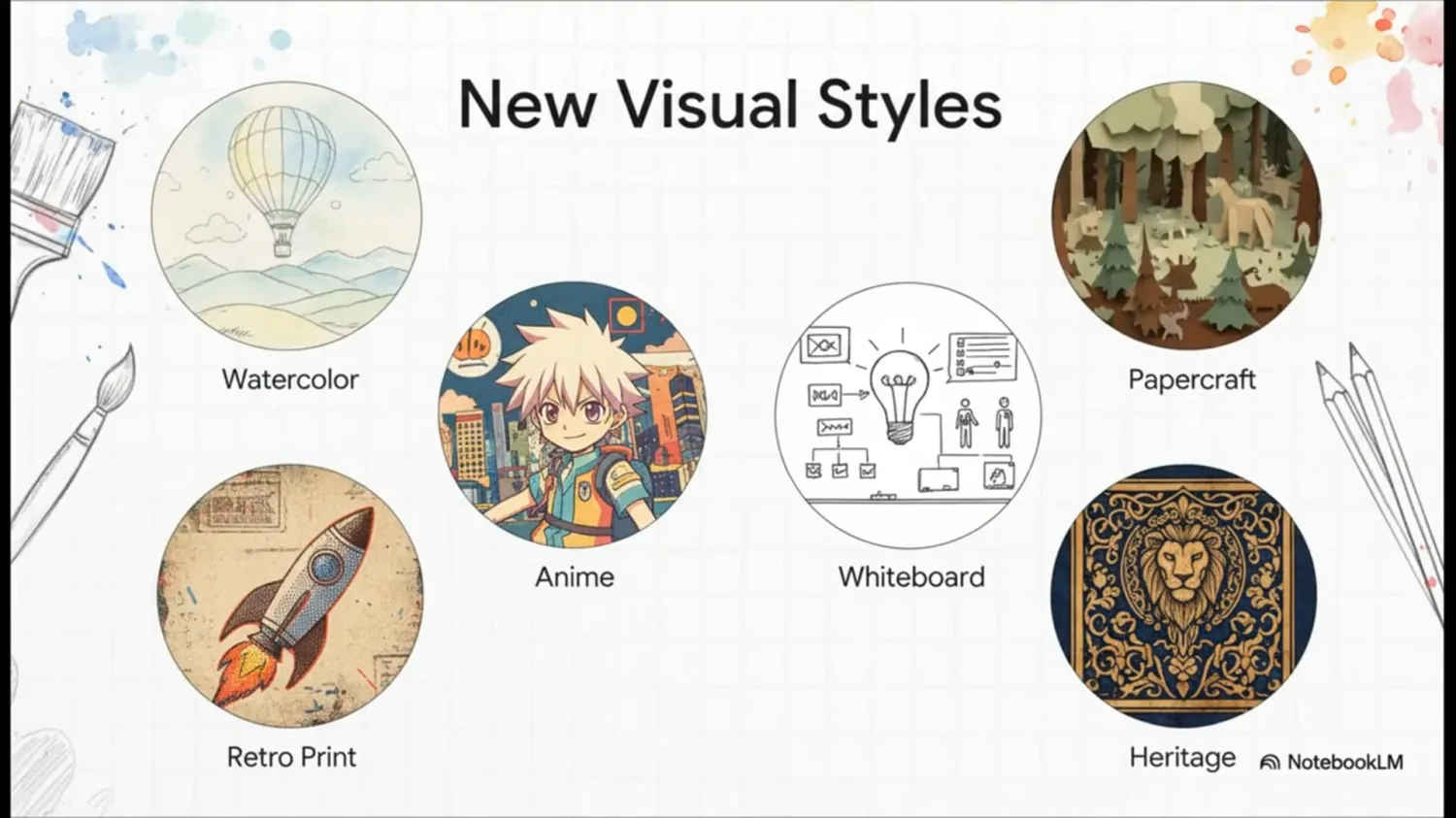
A standout addition is the integration of Google’s Nano Banana image generation engine, a compact model derived from Gemini 2.5 Flash. It powers six new visual styles that completely change how NotebookLM’s video summaries look and feel.
The new styles are:
Also read: What is MAI-Image-1: Microsoft’s first in-house text-to-image generation AI model
There’s also an Auto-select option that lets the AI choose the most fitting style based on your content type. Together, these styles make NotebookLM feel more like a creative studio than a research tool.
Google has also fine-tuned the interface. A pencil icon in the NotebookLM Studio panel now lets users edit overview settings directly. You can select a style, adjust pacing, or regenerate segments.
A new prompt box lets you guide the AI’s focus, for instance:
“Summarize only from Source 2 and keep the tone conversational,” or, “Make this an explainer with examples from the research paper.”
This level of customization helps users craft summaries that match their audience and intent, whether they’re preparing lecture material or a project overview.
Within minutes, you’ll have an AI-narrated video complete with visuals, transitions, and structured narration ready to export or share.
The new features are rolling out first to NotebookLM Pro subscribers and will reach free users in the coming weeks. Google says this staged release helps refine the experience and ensure quality across devices.
With this update, Google is positioning NotebookLM not just as a research assistant but as a creative AI workspace, one that blends knowledge synthesis with visual storytelling. For educators, students, and content creators, these tools bridge the gap between raw information and engaging presentation.
As AI assistants become more multimodal, NotebookLM’s evolution shows where productivity is heading: from plain summaries to visually expressive, personalized, and shareable knowledge experiences.
Also read: xAI is building AI models for gaming and robotics: Here’s what we know