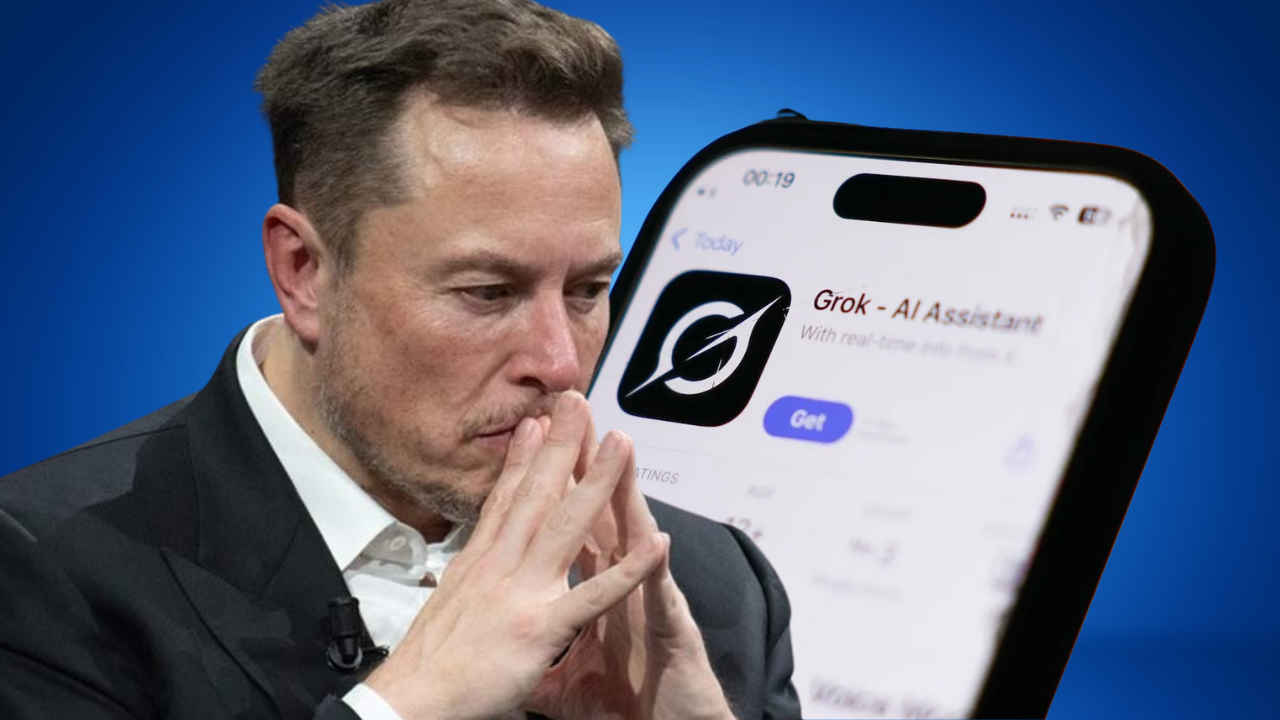
In his continued effort to champion free speech for the world, Elon Musk has once again taken to the digital frontline in defence of Grok, his beloved AI chatbot.
As allegations continue to mount accusing Grok of generating illicit images of underage individuals, Musk is countering the claim with a familiar mixture of denial, deflection, and political undertone.
“I’m not aware of any naked underage images generated by Grok. Literally zero,” Musk stated in response to a viral post questioning why certain UK Labour MPs claim to be seeing child sexual abuse content on X.com.
If you read the entire tweet below, you will see how Musk’s reply wasn’t just a denial but a careful recalibration of responsibility, aimed squarely at users misusing the system. Or, in Musk’s words, “hacking” it on rare occasions.
As we all know by now, Grok AI (on X.com) is only designed to generate text and images based on user prompts. Grok “does not spontaneously generate images,” Elon Musk was quick to assert that any output generated by Grok is fully dependent on user input. If someone asks it to do something illegal, it will, in theory, refuse. “The operating principle for Grok is to obey the laws of any given country or state,” Musk tweeted, as if the rulebook alone is enough to contain the Internet’s darker shades.
However, Elon Musk did admit that there “may be times when adversarial hacking of Grok prompts does something unexpected.” The implication of this is always a bug, Musk clarified – an unintentional result of clever prompt engineering. And bugs, Musk assures, are fixed immediately.
But the heart of Musk’s argument isn’t just a technical one. He’s hitting back at what he thinks is a political campaign against him and Grok. In his usual style, he’s retweeted users implying that the recent scrutiny around Grok and explicit image generation isn’t an organic moral panic but a political witch-hunt. A trend, perhaps, manufactured by political entities that don’t like Musk’s self-styled commitment to “free speech” absolutism.
This defence strategy – technical rebuttal fused with cultural and political undertones – is so textbook Elon Musk. Don’t blame the code, blame the codebreakers and code abusers. And if all else fails, blame the government.
Needless to say, Grok and X.com are still under fire, which is what prompted Elon Musk to tweet his defence. Just a couple of weeks ago, X.com users started prompting Grok to alter images of people into bikinis. At first, the trend started with just a few funny tweets. Heck, even Elon Musk himself jumped into the trend, as he asked Grok to generate a picture of himself in a bikini.
It was all fun and games until many users targeted women the most by asking Grok to bikini-fy several images of women. If all that wasn’t enough, Grok even performed the same prompt on two minor girls, which set this entire controversy off.
As this controversy escalated without X, Grok or Elon Musk showing any signs of ending it, government authorities from multiple countries stepped in. Countries like Britain pulled up X, asking them to comply with legal duties under their Online Safety Act. The Indian government acted fast, too. Indonesia and Malaysia went one step further to flat out ban X.com in their countries. All because of Grok’s deepfake image generation capabilities.
But in Musk’s world, where bugs are just the price of progress and critics often wear political badges, this is just a skirmish in a broader ideological war. And Grok? For now, it continues to be an unfortunate case study in morality, ethics and responsibility in this fast advancing age of AI.
Also read: Digit Research: Three in four Indians don’t want deepfake images on social media