When you are unwell or about to fall sick, whom do you ask for help? Your mom or dad? Maybe your siblings or friends? How long before you get in front of an actual doctor? Increasingly, going to the doctor isn’t the first thought on most young Indians’ minds, according to the latest findings of Digit Research.
With the advent of AI chatbots and their ease of access online, India’s youth is turning to ChatGPT or Google searches when it comes to diagnosing their symptoms. Not only is this trend dangerous, the convenience on offer and judgement-free nature of AI chatbots means the chances of bad or unofficial medical advice being dispensed by them only grows higher. Past reports have suggested that over 1 billion queries are made daily to popular AI chatbots, solely related to health.
And with the recent news about AI companies like OpenAI and Anthropic trying to enter the health space with the launch of their health services. This does sound a bit concerning, as it says that people are actually using AI services to consult about their health, too.
This made us a bit curious; what are the first steps anyone would take if they’re unwell? Let’s have a look at what the Digit community said.
Also Read: Claude gets new superpowers: You can access multiple apps directly inside chatbot
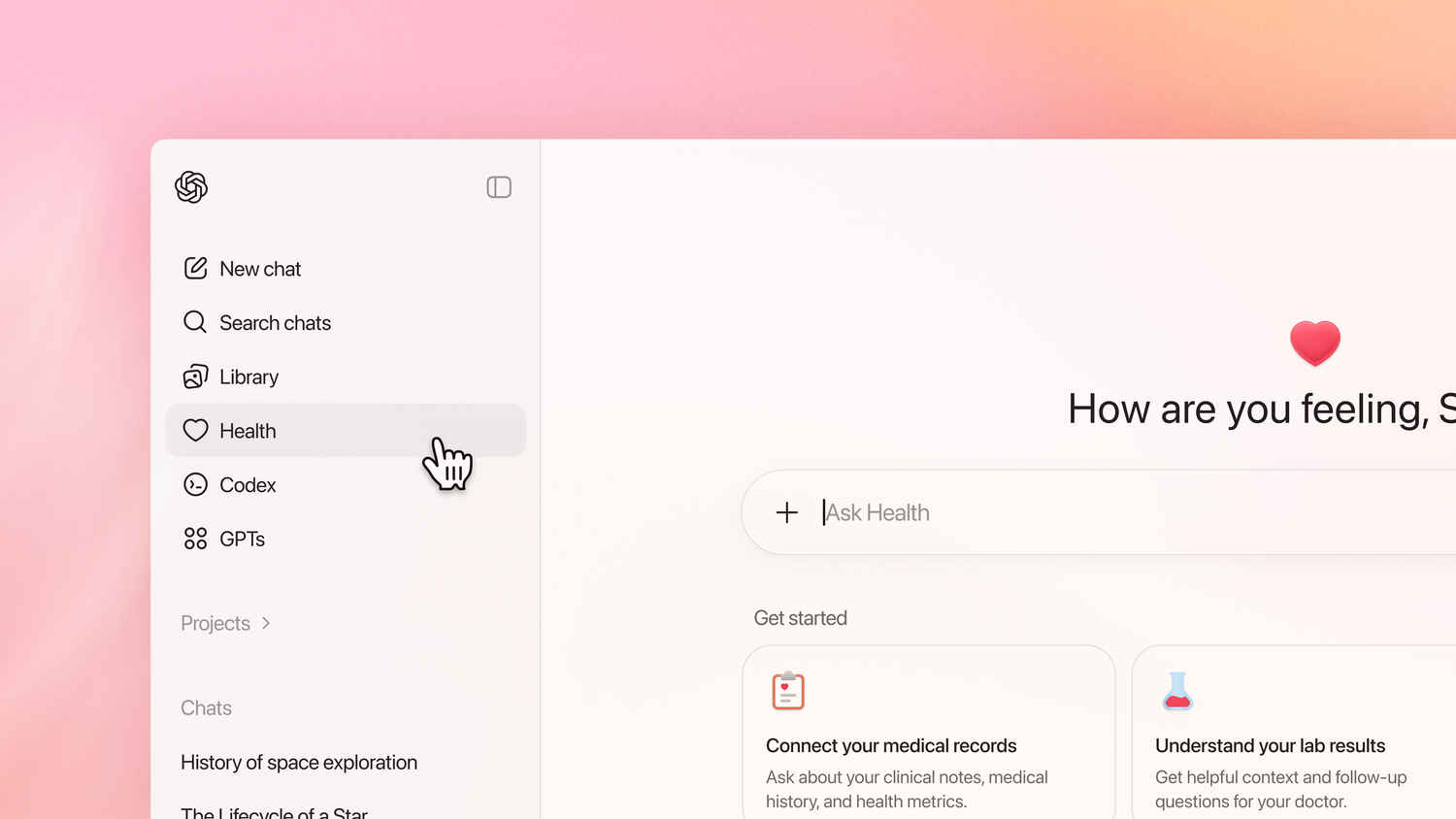
Before going forward, let’s first understand some context about AI companies and the health space. Just this month, ChatGPT announced that it would be entering the health space, with the announcement of ChatGPT Health. They have positioned themselves as a personalised consumer health companion, giving users plenty of new options that are useful.
Firstly, and this is a big one, the service will allow users to integrate their medical records into a secure interface. Along with that, their service will also allow users to connect to apps like Apple Health, MyFitnessPal, and other such services to connect and give them advice based on their data.
On the other hand, Anthropic announced Claude for Healthcare just a few days after the announcement of ChatGPT Health. As compared to OpenAI’s implementation, Anthropic is more focused towards overall infrastructure of health and medicine.
While there is a consumer product too, that is not their primary focus. Their main focus has been automating insurance claims; along with that, they want to provide researchers access to massive databases as well.
All these advancements bring up a big question! What are the thoughts of the public regarding AI companies and the Health space? That’s what we try to find out with this latest Digit Research report, where over 5000 Digit readers shared their opinions on the same.
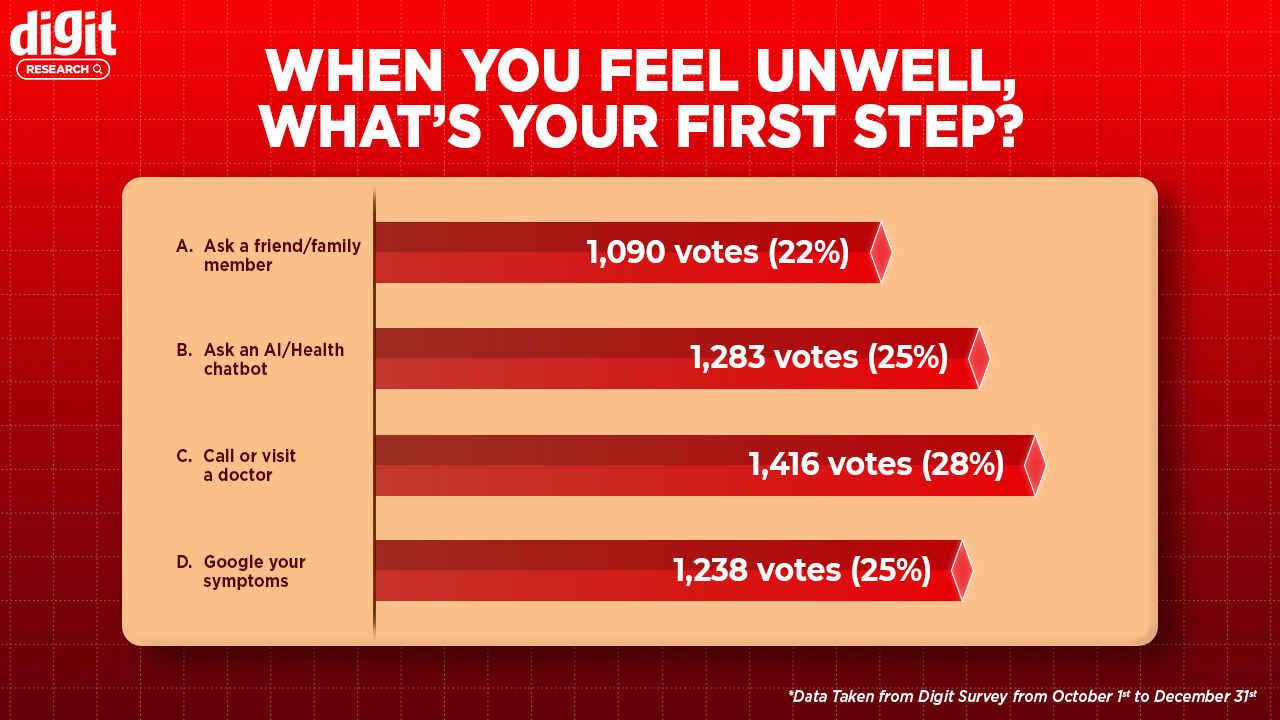
Just like our previous Digit Research report, our question to the readers was pretty simple: When you feel unwell, what’s your first step? This question was pretty straightforward, and that was important, as we wanted to understand exactly what the readers would do as their first step.
Speaking of the first option, it included asking opinions from either your friends or family. Surprisingly, this had the fewest number of votes, with only 1,090 voters (22%) choosing the option. But the rest of the options chosen really surprised us.
Out of the 3 options left, 1,283 voters (25%) chose the second option, saying that they would ask AI chatbots as their first step. While the other 1,238 of the voters (25%) chose the fourth option, saying that they would Google their symptoms.
Finally, 1,416 voters (28%) chose the third option, suggesting that they would call or visit a doctor. This option had the most number of votes, and it does make sense, given that most would want to hear about their symptoms from a qualified person, rather than trained datasets.
But all in all, after these results of the Digit Research, it is safe to say that people are relying on Google and AI chatbots for health advice. As over 50% people prefer using Google or asking a chatbot rather than consulting a doctor as the first step after feeling unwell.
With AI companies entering the health space, these numbers have a high chance of rising in the near future. Tell us in the comments below, whether you think this is sign of things to come in the age of AI.
Also Read: WhatsApp message encryption explained: What is the Signal protocol?