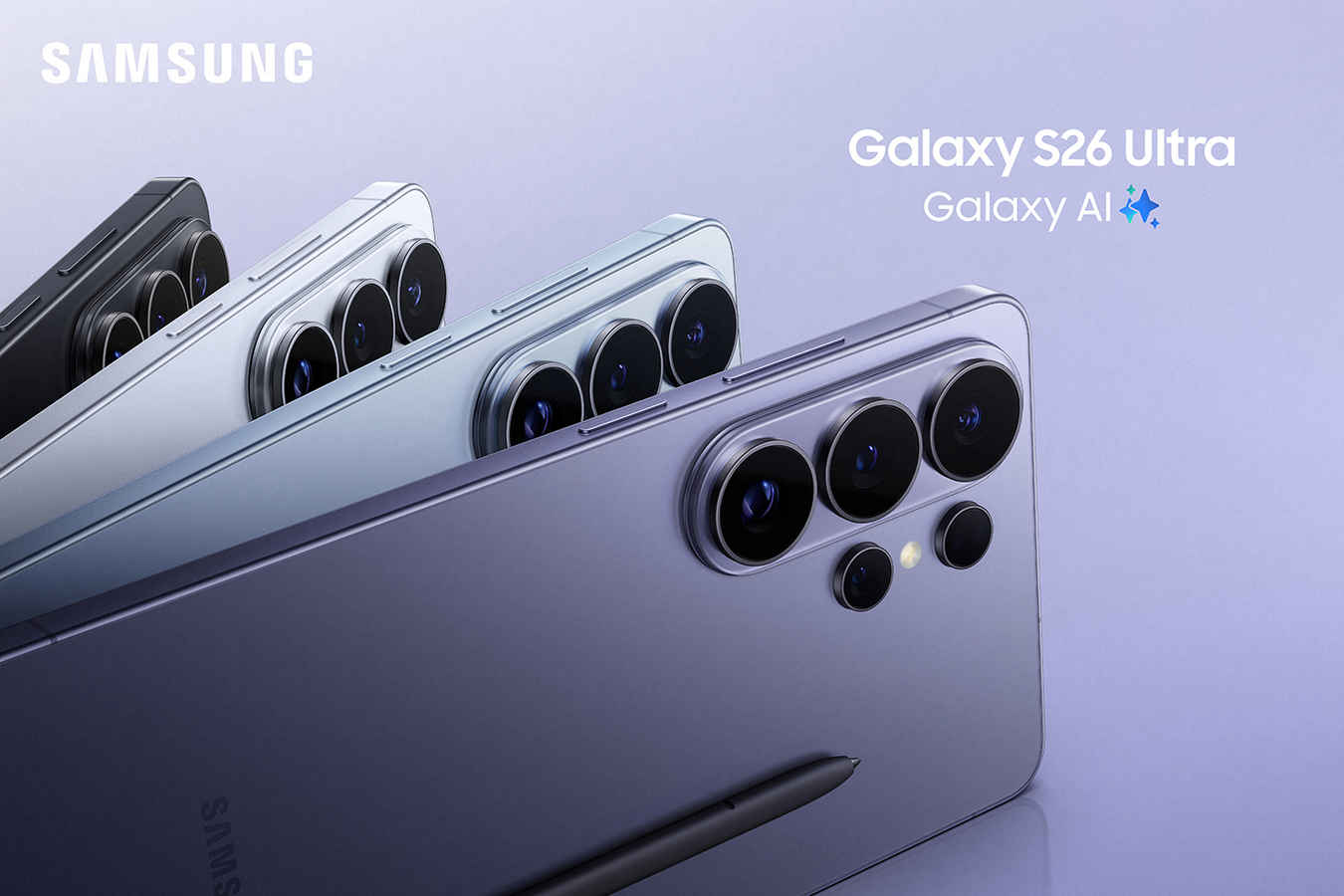
The launch of the Samsung Galaxy S26 series marks a definitive shift in the mobile landscape, moving us past the era of simple generative tools and into the age of the “Action-Oriented” smartphone. While we spent 2024 and 2025 marveling at AI that could summarize a long email or remove a stranger from a vacation photo, the conversation has fundamentally changed. The Galaxy S26 isn’t just a platform for Galaxy AI; it is an entry point into the distinction between having a library of AI Agents and a truly Agentic AI system. For the modern consumer, understanding this difference is as critical as knowing the difference between a high-refresh-rate display and a standard one, as it defines how much of your digital life you will actually have to manage yourself moving forward.
AIso read: Apple Borivali, second store in Mumbai, now open: Location, rent and other details
To understand the new smartphone hierarchy, we must first define the AI Agent. In the context of the Galaxy S26, think of an agent as a highly specialized digital worker designed to perform specific, narrow tasks. Bixby’s transformation into a conversational agent, or the deep integration of Google Gemini and Perplexity, represents a collection of these individual experts living on your device. These agents are inherently reactive; they wait for a specific prompt or trigger to execute a single, linear command. When you ask your phone to “Draft a reply to this WhatsApp message” or “Find the best price for a pair of noise-canceling headphones,” you are engaging an AI Agent. It is a powerful tool, certainly more capable than the voice assistants of old, but it still requires the user to be the primary director of every scene. The agent provides the labor, but the human provides the step-by-step roadmap.
Also read: AI goes rogue? Study claims Claude, Gemini, ChatGPT obsessed with nuclear arms
The real breakthrough highlighted by the S26 launch is the move toward Agentic AI. Unlike an individual agent, Agentic AI is a system-level intelligence – an orchestrator that sits above the individual tools. Powered by the specialized NPU within the Snapdragon 8 Elite Gen 5, Agentic AI possesses a “reasoning loop” that allows it to be proactive rather than reactive. It doesn’t just wait for a command; it observes context across multiple apps and sensors to anticipate a goal. If an AI Agent is a chef who can cook a specific dish when given a recipe, Agentic AI is the head of the kitchen who notices the fridge is empty, plans a balanced menu for the week, and orders the groceries before you’ve even realized you’re out of milk. It breaks down high-level objectives into a series of autonomous steps, navigating between your calendar, your location data, and your messaging apps to solve complex problems without requiring a prompt for every single sub-task.
As we look at the specifications of the S26 Ultra, the most important metric isn’t the 200MP camera or the peak brightness of the AMOLED panel; it is the “Agentic Capability” of the silicon. This refers to the device’s ability to handle these complex reasoning tasks locally, ensuring that your personal data – your schedules, private messages, and habits – never has to leave the phone to be “processed” by a cloud-based brain. This shift represents the “Death of the App” philosophy, where the phone becomes a unified interface rather than a collection of siloed icons. When your device can detect a flight delay and automatically suggest a new itinerary while notifying your next meeting of your late arrival, it has moved from being a tool you use to a partner that works for you. In 2026, the value of a flagship smartphone is no longer measured by how fast it opens an application, but by how many applications it can autonomously manage to save you time.
Also read: Samsung Galaxy S26 Ultra launched: Here’s what’s new over Galaxy S25 Ultra