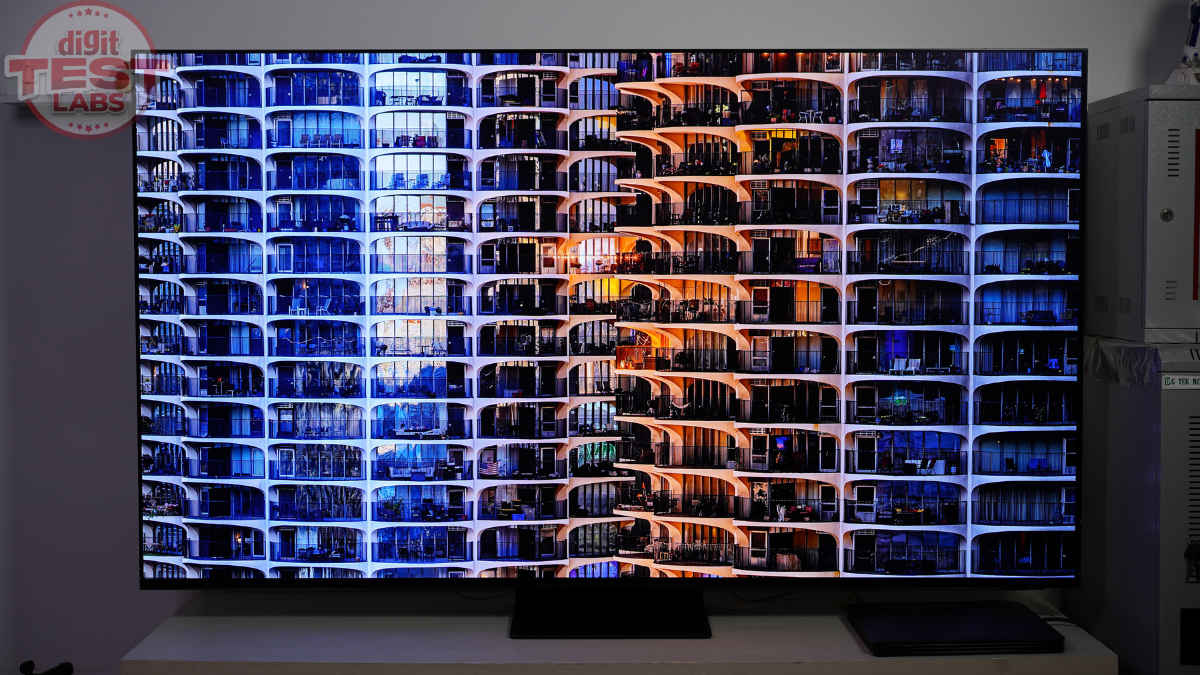
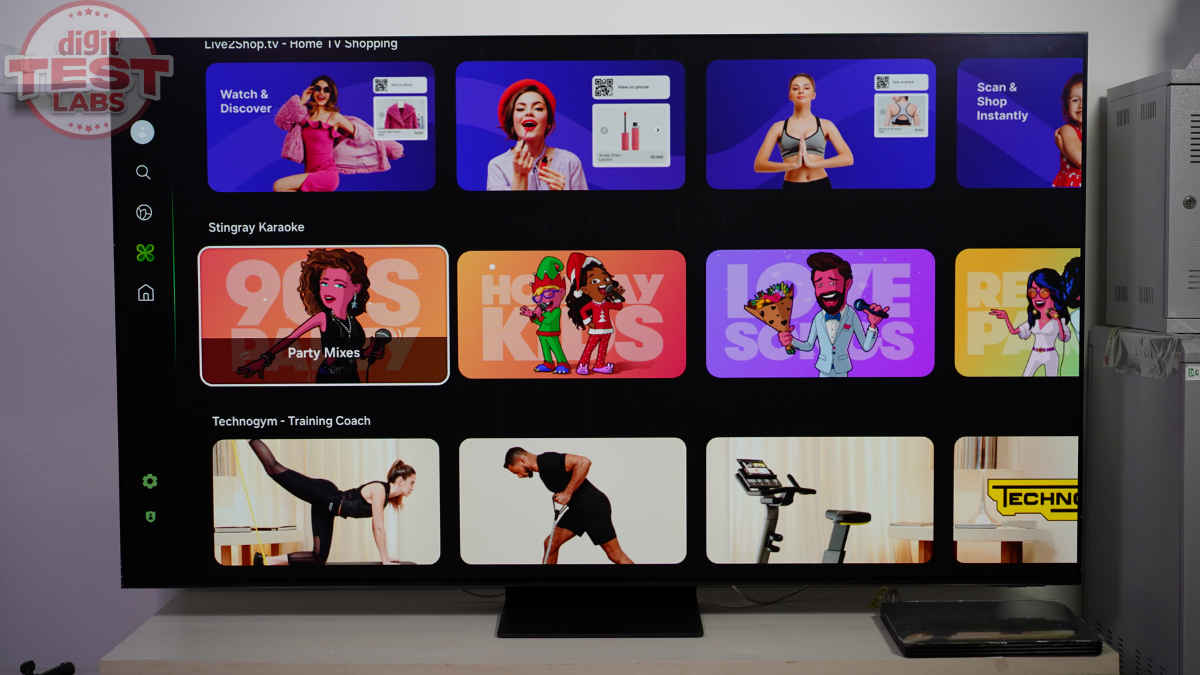
The Samsung S95F OLED arrived in the Digit test labs as a 77-inch showpiece, the kind that makes everyone stop what they are doing and gather around. Even the unboxing drew a crowd, and the panel’s striking visuals kept colleagues standing there longer than expected. The TV boots in Retail Mode by default, which explains the jaw-dropping screensavers meant to catch attention, but the real work began once we switched to Home Mode and calibrated it for a fair comparison with two other OLED contenders for 2025: The LG Evo G5 and Sony Bravia 8M2. This review focuses on how the Samsung S95F performs in everyday use, supported by its core features, which include the Tizen interface with seven years of updates, support for multiple voice assistants, a 100Hz native refresh rate, four HDMI 2.1 ports, gaming-friendly tools, and a 70W speaker system. To give you a heads-up, the 55-inch variant of S95F recently won the Best Buy award at the Digit Zero1 Awards, helped by a relatively accessible starting price (Rs 1,60,990), but there are clear performance reasons behind that win. This review explains what they are.
At Rs 4,37,990, the 77-inch Samsung S95F stands out for its bright panel, wide colours, fast gaming response, matte anti-glare finish, clean One Connect setup, feature-rich Tizen UI, and strong software support. The trade-offs are artefacts, and audiovisual fidelity that shows only when compared against its rivals. Even so, it remains a solid pick for anyone who wants a big, bright and beautiful OLED TV.
The Samsung S95F delivers vibrant colours, impressive HDR performance and near-perfect contrast. Samsung claims up to 4,000 nits of brightness in a 3% window. In our testing with Vibrant mode, S95F remains brighter than LG G5 and Sony 8M2, with up to 1,120 nits in a 25% window. LG hits roughly 1,050 nits, and Sony hits 750 nits in that same window size.
The viewing angles on the Samsung TV are also good, and even if you watch from the side seats, you wouldn’t see any colour shift.
The Samsung S95F pulls ahead of most OLED models, including LG G5’s WOLED and Sony Bravia 8M2’s QD-OLED, both of which use glossy panels. Glossy panels reflect more light during the day, which can be distracting. Samsung carries over the matte anti-glare finish to the S95F, which thwarts reflections to a great extent, and visuals remain largely enjoyable in both bright and dark rooms.
Largely being the operative word. During the TV’s initial bootup, I noticed a faint glow around the white Samsung logo on a black background. This was also visible on white subtitles in dark scenes. It happens because small bright objects, like subtitles or the logo, have very strong contrast against black. The matte coating on the screen scatters a little of that bright light as it disperses reflections, so thin white edges look slightly fuzzy. You can tweak brightness and sharpness to reduce it, but it’s a minor artefact and nothing to worry about.
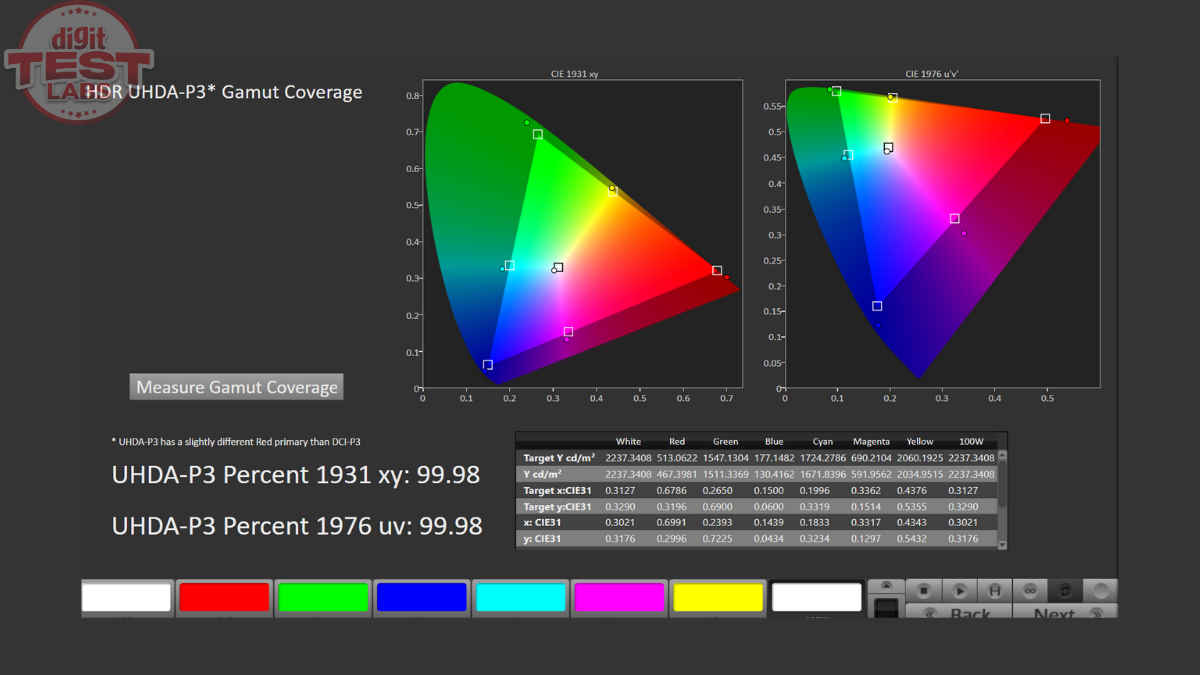
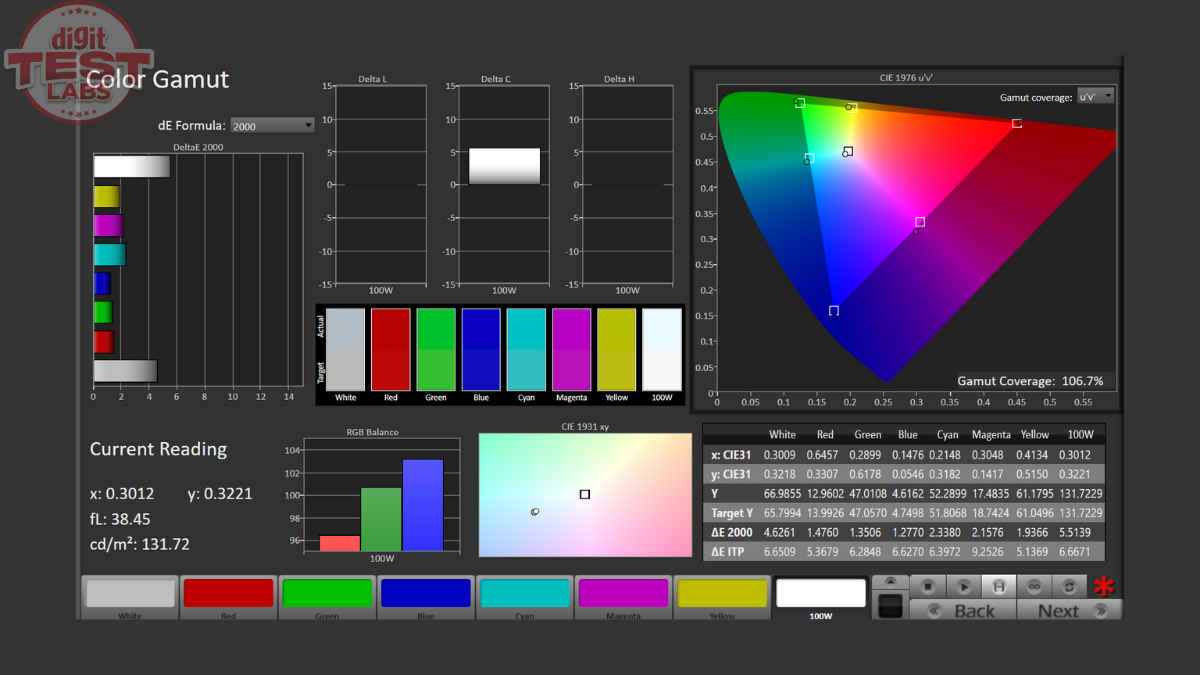
When it comes to colours, the Samsung S95F achieved Delta E values averaging around 3 in SDR and 1.6 in HDR, while LG posted even stronger results with 2.1 and 1.1, respectively. Sony’s averages sit close between them. Samsung does, however, show extremely wide colour coverage, hitting over 88% of BT.2020 and nearly 100% of UHDA-P3. LG and Sony sit in a similar range, but LG has slightly weaker BT.2020 coverage than Samsung.
Unlike the LG G5 and Sony 8M2, the Samsung S95F does not support Dolby Vision. It relies on HDR10+, which looks strong on this bright, colour-rich panel. Unless you are particular about or often watch content mastered in Dolby Vision, the S95F delivers a comparable experience.
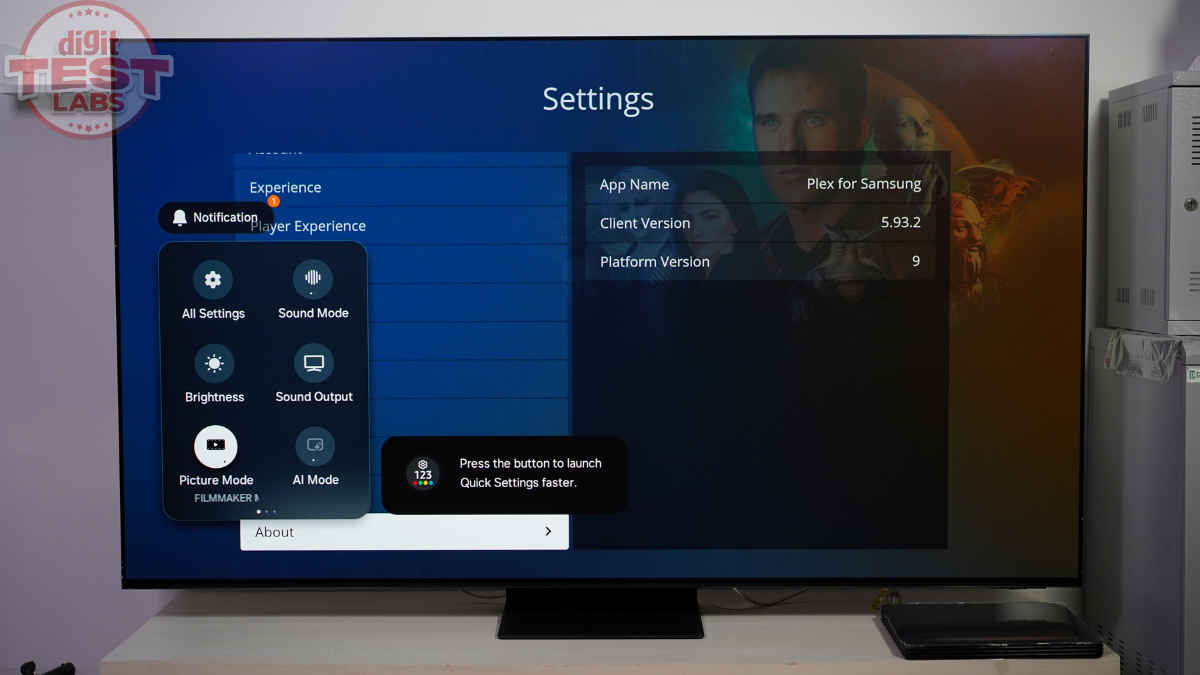
Most visuals stand out on the large screen. The size helps pull out finer details in some scenes, though you may notice grain or mild pixelation at times. SDR shows like Friends look respectable, but Sony offers a more accurate presentation. I watched everything in Filmmaker Mode. Skin tones in interview segments and shows like Severance look close to natural, sitting only slightly behind the Sony panel.
Overall, the experience is solid. But there were some occasions where the TV struggled. In the nighttime scenes from Godzilla Minus One (yes, the Shirakawa base attack sequence), the S95F handled explosions and fireballs with impressive brightness, but the fine details appeared slightly less defined compared with the Sony Bravia 8M2. Samsung’s processing also leans towards slightly saturated colours. These aspects of detail and accuracy are apparent in the facial features, fabric textures, and colours in the closing scenes of Knives Out. There was also mild black crush or a lack of details in certain dark sequences, like shadows.
In gaming, the S95F delivers a consistently strong experience. The panel is bright enough to enjoy titles like Ghost of Tsushima even during in-game night scenes, without losing visibility or impact. Graphics look clear and vibrant, making almost every game feel visually rich, while gameplay stays fluid and smooth with no noticeable frame drops. The large screen adds to the sense of immersion, pulling you into the world rather than making you feel like a distant observer. When paired with a PS5 Pro, the TV made full use of the console’s power, with visuals appearing sharp and well-defined. Details such as reflections, water surfaces and environmental textures remain easy to see, adding depth to the overall presentation.
That experience is backed by a full gaming feature set. The S95F supports HDMI 2.1 with 4K at 120Hz, along with VRR, ALLM and FreeSync Premium Pro, which helps keep gameplay smooth and tear-free on both PS5 and Xbox. When connected to a PC, the panel can run up to 165Hz, a clear advantage for fast-paced shooters and racing titles. With 120Hz VRR enabled in Game Mode, input lag drops to around 5ms, placing the S95F among the most responsive large-screen TVs for gaming.
LG and Sony also offer excellent game performance, but Samsung remains the most responsive of the three, especially for PC users who push refresh rates beyond 120Hz.
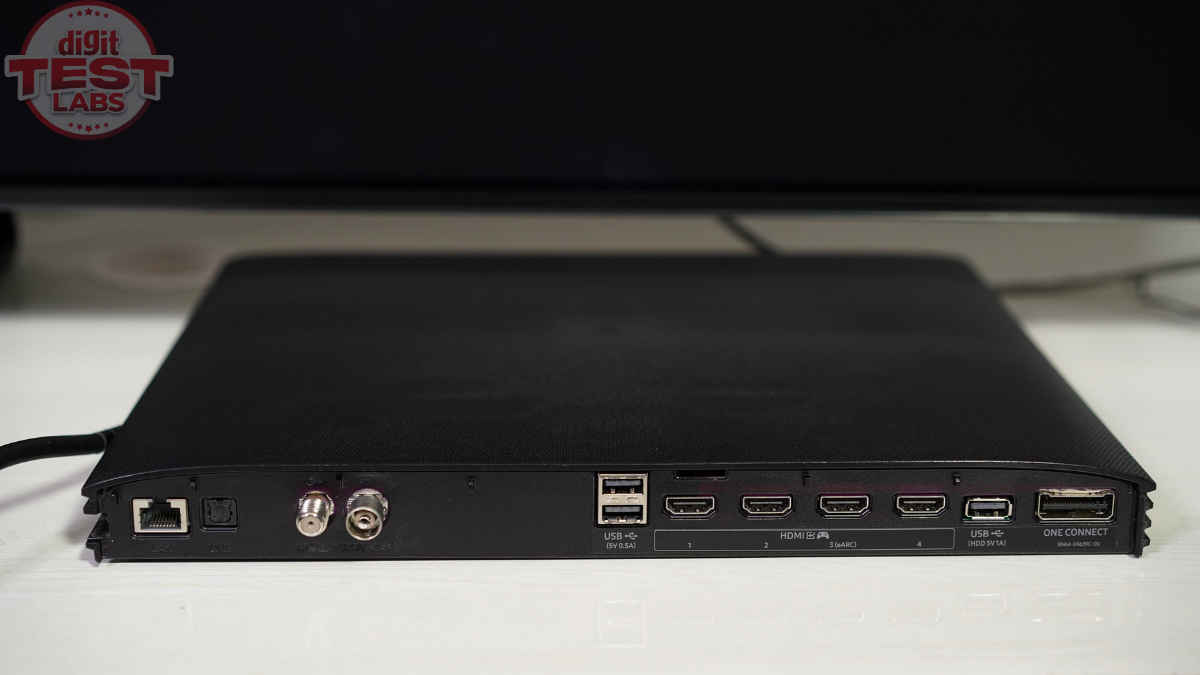
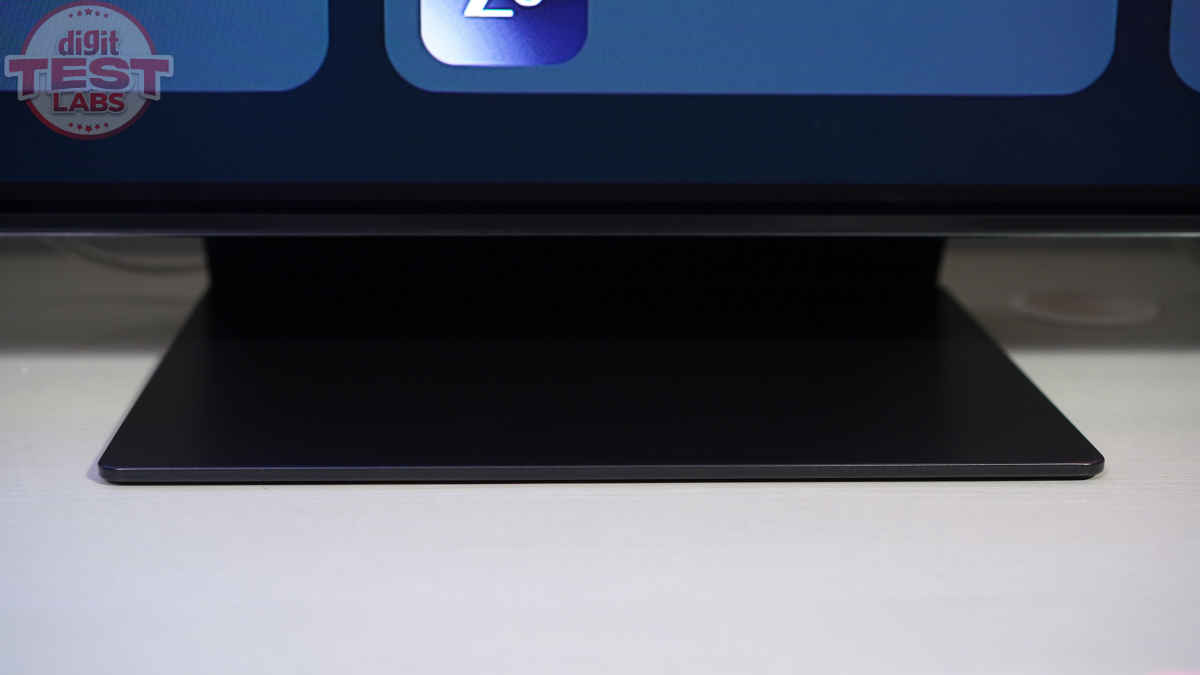
The Samsung S95F’s design is premium and minimal. The panel is extremely thin, making it look nearly flush to the wall when mounted. The One Connect box keeps ports and electronics separate from the screen, which leaves the rear clean and reduces cable clutter. In my setup, the box sat inside a media cabinet, making it easy to swap HDMI connections without moving the TV. The stand is stable and does not draw attention away from the screen.
Connectivity is generous, with four HDMI 2.1 ports supporting high refresh rates and full-bandwidth gaming. Users with multiple devices such as soundbars, PlayStation, Xbox and set-top boxes, will appreciate not having to choose which HDMI port gets the bandwidth. Compared with the LG G5, which integrates everything into the panel, Samsung’s approach offers better cable management. Sony’s 8M2 also has strong build quality, though its port placement is less flexible than Samsung’s One Connect design.
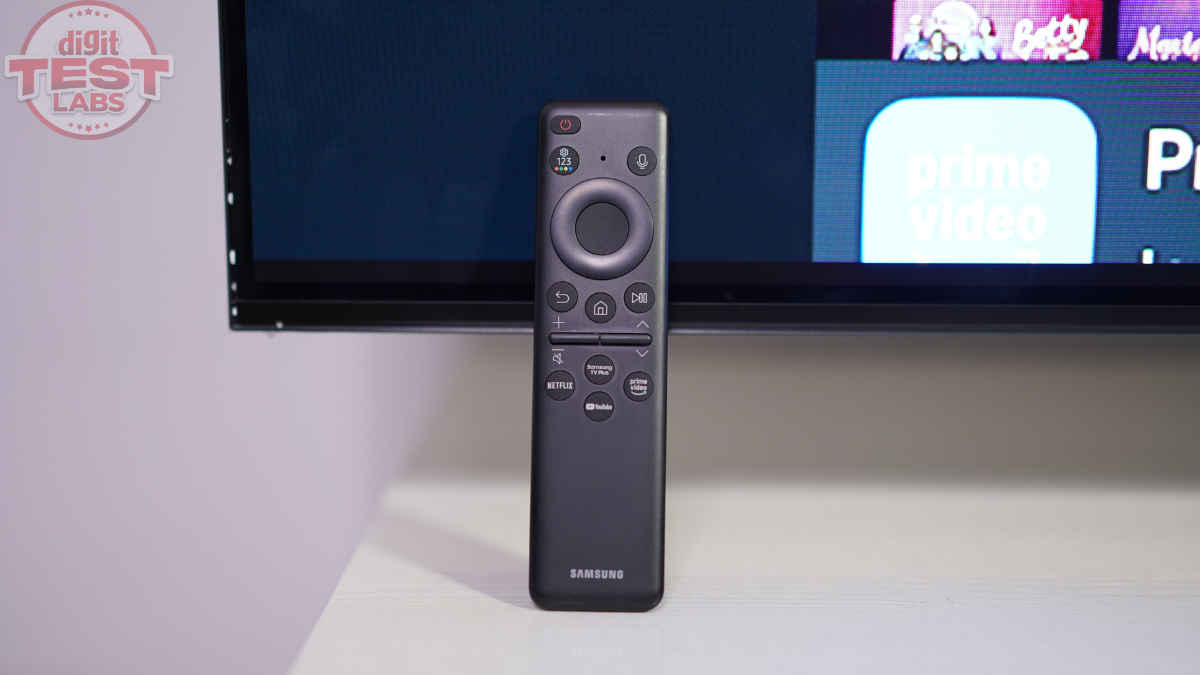
The S95F ships with Samsung’s SolarCell remote, a slim and lightweight, rounded rectangular bar. It has no backlight and a minimal button layout. It has the essential buttons and offers quick access keys for popular streaming apps and a dedicated microphone for voice control. Some may like it for its simple design, but others may not if they prefer more direct controls. What everybody would appreciate is that it charges using ambient light as well as USB-C. So, it doesn’t require disposable batteries to work.
Also Read: JBL Tour One M3 review: Good sound and smart features come at a price
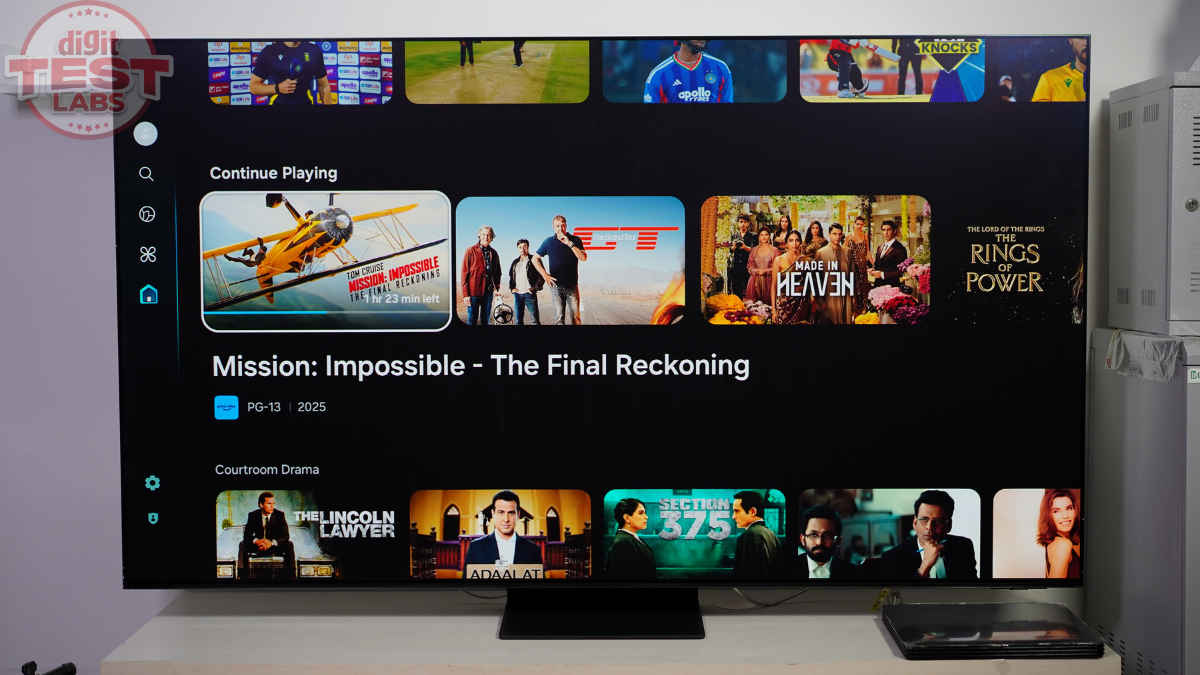
Tizen OS runs smoothly on the Samsung S95F. Opening apps, switching between services and returning to the home screen feel quick and fluid. Casting a YouTube clip from a smartphone takes only a moment and starts playback without stutter. Content recommendations still favour Samsung’s services, but the menu structure remains easy to navigate.
Audio is acceptable for general viewing. Dialogue is clear and front-facing, and casual content such as sitcoms and news broadcasts sounds fine. In contrast, the Sony Bravia 8M2 offers stronger built-in sound with better low-frequency performance and spaciousness. The LG G5 sits somewhere in the middle: better than Samsung in bass and overall clarity, but not as rounded as Sony.
For better sound from the Samsung TV, you could connect a soundbar. The TV could benefit from the proprietary Q-Symphony feature, which syncs audio from the TV and a compatible soundbar or external audio system for a better output.
The Samsung S95F’s main strengths lie in its brightness, wide colour coverage, responsive gaming performance and stunning design. The matte anti-glare finish gives it a benefit in bright or mixed-light rooms, and the One Connect box keeps the setup slim and tidy in a way most OLED rivals cannot match. In everyday use, the TV delivers consistent HDR output, feature-rich Tizen UI, and the connected smart ecosystem benefits. You also get industry-leading software support, which helps the TV stay current for longer. Gamers get some of the best responsiveness in this category, helped by low input lag, 4K at high refresh rates and four HDMI 2.1 ports that let you connect multiple high-bandwidth devices without much fuss.
However, we are talking about the big leagues; there are a few limitations you should account for before you spend the big money. The matte coating can produce some artefacts in darker scenes, there is no Dolby Vision support, and the audio lacks the oomph some of its competitors offer. And when compared against these rivals, Samsung trails behind the Sony Bravia 8M2 in fidelity, especially in dark-room detail, colours, and audio.
Still, with these trade-offs, the S95F makes sense for many buyers. If your room gets light through the day, you want a responsive gaming screen, or you value the cleaner setup that the One Connect box enables, the S95F’s strengths remain compelling for the price.
Keep reading Digit.in for similar reviews.
Also Read: Amazon Fire TV Stick 4K Select review: A lean but healthy offering with only the essentials