The Sony WH-1000XM6 (Mark 6) are the company’s flagship headphones for 2025, and they feel every bit the part. Rather than reinventing the wheel, Sony has built on what already worked brilliantly with the WH-1000XM5, polishing the experience with thoughtful, real-world improvements. Under the hood, a new QN3 processor is working alongside a 12-microphone array to deliver smarter, more adaptive noise cancellation and clearer call quality, even in noisy spaces. Sony’s also added support for 360 Reality Audio Upmix for Cinema, which gives your favourite films and shows a more immersive soundstage. Then there’s the all-new 30mm driver unit, made with a carbon fibre composite dome, which tightens up the audio response for cleaner highs and more precise detail. The tuning, co-crafted with mastering engineers from Sterling Sound, Battery Studios, and Coast Mastering, aims for what Sony boldly calls ‘studio-level accuracy.’
But the first thing you’ll actually notice doesn’t require any tech spec sheet. The Sony XM6 finally folds again! Yes, the foldable hinge is back, and the case is smaller and sleeker, complete with a new magnetic latch that feels satisfyingly premium. It’s a small change, but one that makes a big difference when you’re on the move.
So, while it’s clear that the design tweaks make a real difference in everyday use, the bigger question is whether Sony’s refinements in sound, noise cancellation, and overall performance truly justify the higher price tag. The Sony WH-1000XM6 has launched in India at Rs 5,000 more than the XM5, and after spending some time with them, here’s what I’ve found.
The Sony WH-1000XM6 offers strong noise cancellation, clear calls, and a lighter, more travel-friendly design. The sound is warm and full, and the battery easily lasts through long use. A few smart features remain a bit inconsistent, and the lack of water resistance is a minor miss, but overall, the XM6 feels thoroughly refined. It strikes the right balance between comfort, performance, and dependability, making it one of the most practical and desirable wireless headphones you can buy today.
Like we said in our first impressions, the key difference from the XM5 is the XM6’s new foldable hinge. It lets the headphones pack down smaller, and the metal reinforcement adds durability. Sony also includes a redesigned case with a magnetic latch for opening and closing. It’s easy to open, but fitting the headphones inside takes a bit of effort. You have to align them properly for the latch to snap shut.
Out of the case, the headphones look gorgeous. Our review unit is the Platinum Silver variant, and you can pick it in Black and Midnight Blue colours, too.
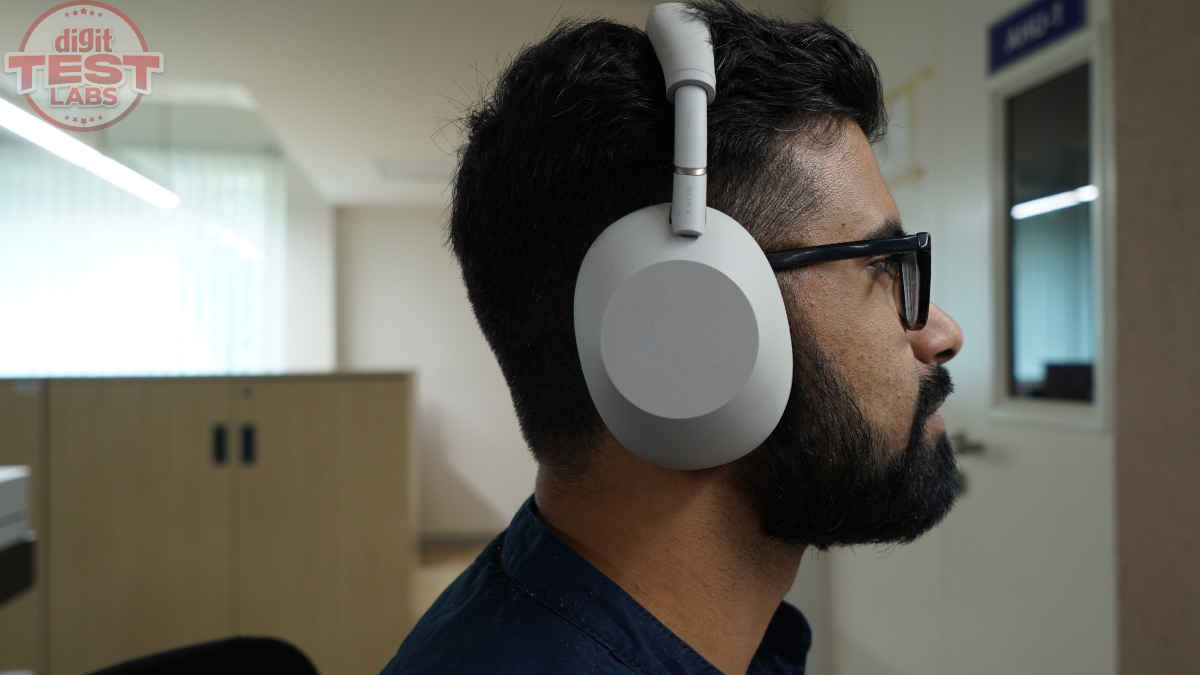
The XM6 keeps the familiar Sony look but introduces small changes that make it easier to wear for longer stretches. The headband is flatter and sits closer to the head, which reduces pressure points. The new vegan leather ear pads seal better around the ears, improving passive isolation without feeling stiff. Comfort is generally solid, though the clamp can feel warm and slightly sweaty in Delhi summers.
Sony now allows users to replace the ear pads. It is not as simple as pulling them off, so watching a quick YouTube guide before attempting it is recommended.
At 254g, the Sony XM6 is much lighter than the 386g AirPods Max. The polycarbonate build helps keep the weight down, and you can feel the difference during long listening sessions. There is still no IP rating, so users should be careful around rain and workouts. Also, the headphones can slip more easily on long hair, especially if worn loosely.
In terms of controls and ports, the left earcup houses six microphones, a 3.5mm headphone jack, a power button, and a customisable button that switches between ANC and ambient sound, or can be reassigned to other functions if you prefer. The right earcup features additional microphones, a USB-C port, and responsive touch controls for playback and volume adjustments.
Although the Sony XM6 is primarily a wireless pair, the included 3.5mm cable comes in handy for low-latency or high-resolution wired listening, and it’s a reliable backup when the battery runs out. In the box, you also get a USB-A to USB-C charging cable, a 1.2m aux cable, and a quick start guide. Alongside the physical buttons, the touch gestures work smoothly for managing music, calls, and volume without needing to reach for your phone.
Also Read: OnePlus Nord Buds 3r review: Affordable TWS buds that don’t compromise on quality
Let’s now get to the process of using the headphones, starting with its setup:
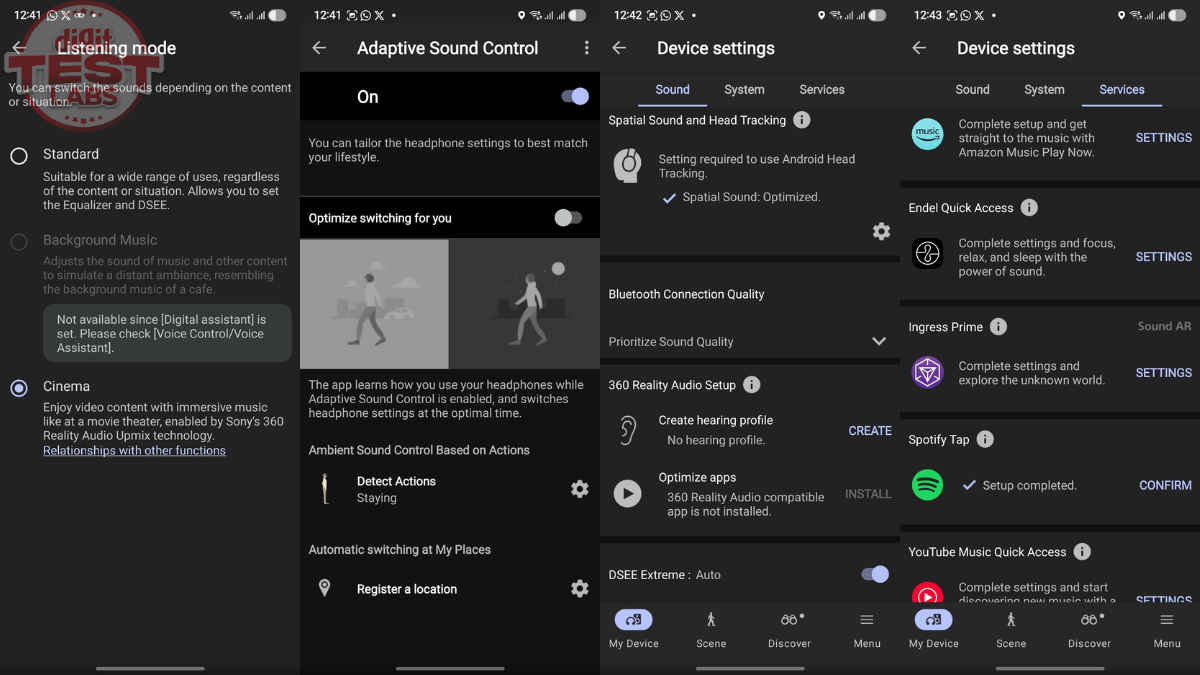
Pairing the Sony WH-1000XM6 is easy. Simply hold down the power button for a few seconds to enter pairing mode, and a prompt will appear on your phone nearby. Tap it, and you’re connected. Once paired, the Sony Sound Connect app (available on all major app stores) lets you view battery levels, adjust noise cancellation, fine-tune sound through the 10-band EQ, and customise other features to suit your preferences.
Some of the highlights are a customisable NC/AMB button that can be tapped to launch Spotify or other music apps, or secretly switch the microphone on/off, auto-pause when you take the headphones off, auto-off when they’re idle, multipoint pairing with two devices, a multi-profile EQ with a custom slot, and hands-free access to your phone’s voice assistant for simple commands like turn the noise cancellation on.
On the other hand, a few features felt less practical in daily use. Gesture controls for accepting or rejecting calls can be hit-or-miss. Speak-to-Chat is meant to automatically pause music when you start talking, but many people may prefer removing the headphones instead of speaking through them, since it can feel awkward or impolite.
Meanwhile, the Sound Connect app also lets you toggle features such as Spatial Sound with Head Tracking, 360 Reality Audio, and DSEE Extreme. Let’s see how these features work in the next section:
The Sony WH-1000XM6 come with a specially designed 30mm driver unit and supports various codecs like SBC, AAC, LDAC, and LC3 (LE audio ready). We tested in the LDAC codec and with DSEE Extreme (upscaling feature for low-res files) enabled, and equaliser set to none. I kept the volume around 60% on the OnePlus 13. I found the XM6 noticeably louder and has better bass output than the AirPods Max.
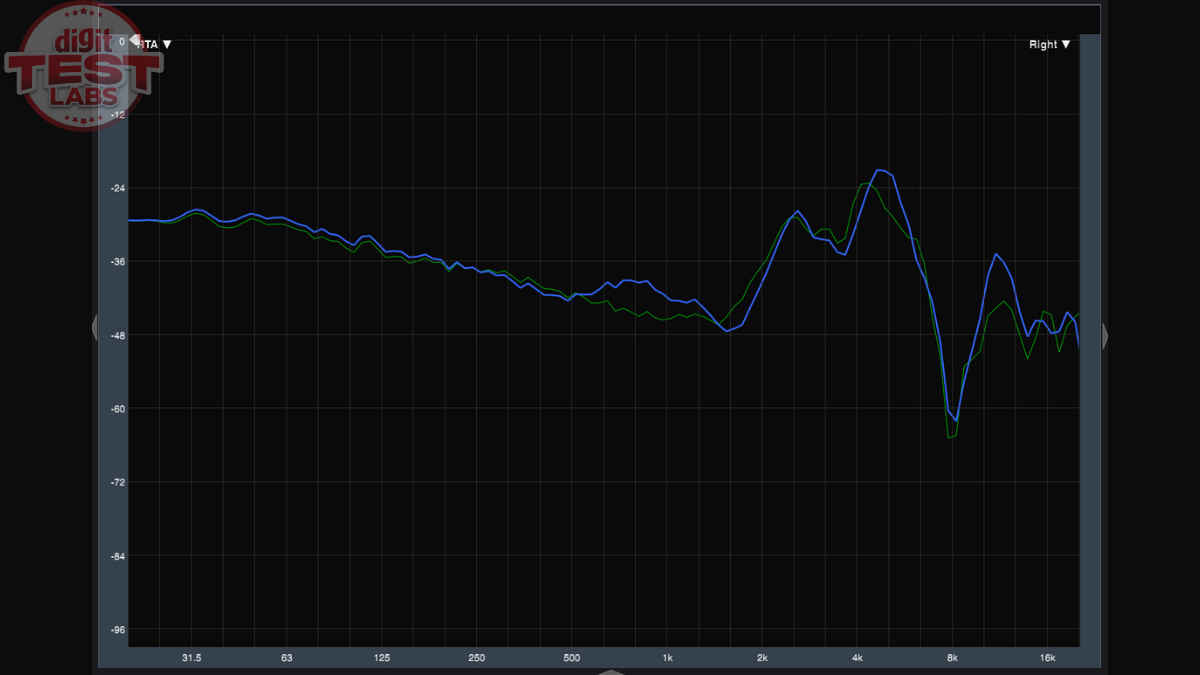
Based on the (V-shape) frequency response graph, the Sony XM6 has a warm, bass-focused sound with slightly relaxed mids and a smooth treble. That means the music would feel full and pleasant, but perhaps not very sharp or clinical like studio-grade headphones.
In my song-by-song analysis, I found the bass is full, rounded and satisfying on tracks like Bad Guy. Vocals are finely clear, so emotional recordings like Hurt feel close and intimate. The treble is smooth and controlled, which keeps harshness in check on brighter tracks like Centuries, but this also reduces sparkle in guitars and cymbals. Audio enthusiasts may not like how it handles complex portions of Pull Me Under by Dream Theater or Selkies by Between the Buried and Me.
In dense metal tracks such as Selkies, I felt the headphones didn’t separate every layer clearly. I liked the spaciousness and staging in tracks like Hotel California by The Eagles or Hunter by Björk.
Overall, the Sony XM6 is tuned for comfort and long-term listening. It delivers a warm, enjoyable sound that works well for most genres, especially bass-heavy or modern pop music. It is not a detail-focused or analytical headphone, but a smooth all-rounder designed to avoid fatigue, even during hours of playback.
Now, in the Sony Sound Connect, you can choose different listening modes like Background Music (for distant ambience, as if you are listening to music in a cafe) or Cinema (for a spatial 360 feel). The Standard mode focuses on direct sound reproduction, so vocals and instruments feel closer and more centred. It’s better for clarity and detail. In Cinema mode, Sony applies virtual surround processing to widen the soundstage. It adds a sense of space and distance, which works well for tracks like ‘Hotel California’ that have layered guitars and ambient elements. But in the case of Under Pressure by Queen ft David Bowie, I prefer the intimacy and definition offered by the standard mode.
Spatial Sound with Head Tracking works only with supported phones like the Pixel. I tried it with ‘Lose Yourself to Dance’ by Daft Punk on a Pixel 10, but the difference compared to regular stereo wasn’t clear to my ears. Similarly, 360 Reality Audio also needs supported apps and compatible tracks, and some of these apps require a paid subscription before you can use them. The DSEE Extreme upscaling will be seldom discernible, but since it is meant to automatically work in low-res content, I kept it on.
Sony positions the WH-1000XM6 as its best noise-cancelling headphones yet. For this, the company credits the new QN3 chip, which is said to be seven times faster than the XM5’s processor, along with more microphones and an updated Adaptive NC Optimiser algorithm.
With ANC off, both the XM6 and AirPods Max let a small amount of ambient sound through. When ANC is switched on, the XM6 creates a near-silent space. If you look for it, human voices are still faintly audible, but overall noise reduction is slightly better than the AirPods Max.
The difference here tilts in Apple’s favour, especially when it comes to ambient or transparency mode. While the XM6 does a good job of amplifying outside sounds, it still feels like you’re hearing them through a layer of headphones. Apple’s transparency mode, on the other hand, sounds far more natural, almost identical to hearing your surroundings without wearing any headphones at all.
Sony’s Adaptive Sound Control can also be unreliable. It triggered ambient mode at the wrong time in several instances.
As for calls, the XM6 uses a six-microphone array with AI-based beamforming, and its noise suppression during calls is noticeably better than the XM4.
Among other things, the XM6 repertoire consists of Bluetooth 5.3, Bluetooth LE, and support for Auracast audio broadcasting.
Sony claims the WH-1000XM6 offers up to 30 hours of playback with noise cancellation on and up to 40 hours with it turned off. In our continuous pink noise on loop test, the headphones lasted close to 50 hours with ANC enabled, LDAC audio, and volume set at around 60%. The runtime would increase if you turn off ANC, use a standard codec and lower other optimisations. But the given battery life suggests you don’t need to be that conservative.
For refilling, Sony claims the device would take 3.5 hours, and in our testing, it refilled the tank in about 2 hours and 45 minutes. Also, when you need a quick charge, the company says the XM6 can gain up to 3 hours of charge in just 3 minutes of charging with a compatible PD adapter.
Although it takes some time to fully charge, it offers consistently long battery life. And to top it all, you can always rely on the bundled aux cable for wired listening.
The Sony WH-1000XM6 combines premium build, refined tuning, and best-in-class noise cancellation. Its foldable design makes it more portable than the XM5, and the lighter build adds comfort for long sessions. Sound is warm and full, battery life is excellent, and call quality is among the best in any wireless headphone today. Features like multi-device pairing, LDAC support, 360 Reality Audio, and a refined app experience round out a solid flagship package.
That said, it’s not without limitations. There’s still no water resistance, which limits outdoor or gym use. The Speak-to-Chat, Adaptive Sound Control, and Spatial Sound don’t work as reliably as advertised. And while the sound is rich and easy on the ears, it’s tuned more for everyday listening than studio-grade precision.
If you prefer a cleaner, more balanced sound, you can consider the Sennheiser Momentum 4 Wireless or the Sonos Ace. These may be relatively older models, but they are therefore available at a lower price. And in case you are in the Apple ecosystem, you may consider AirPods Max, which also offers a warm sound signature, better Transparency Mode, a premium build and seamless integration with other Apple products. But the Apple headphones cost more and are inferior in portability.
So, you see, against its competitors, the XM6 stands out where it matters: Its improved ANC is genuinely upgraded and consistently effective. The redesigned hinge and case make it easier to carry. The call experience is clearer, especially in noisy environments, and the sound tuning feels smooth and warm. Add to that Sony’s solid battery life, flexible codec support, and brand value, and it’s clear why the XM6 remains the most well-rounded option in its class.
Yes, it costs Rs 5,000 more than the XM5 did at launch, but the upgrades feel justified. The Sony WH-1000XM6 offers improved ANC, better calls, better design, and better portability together make it an aspirational yet practical choice for those who want a flagship pair of wireless headphones that can do almost everything well.
Keep reading Digit.in for similar reviews and posts.
Also Read: Noise Master Buds Max first impressions: When Noise goes ambitious with Bose’s touch