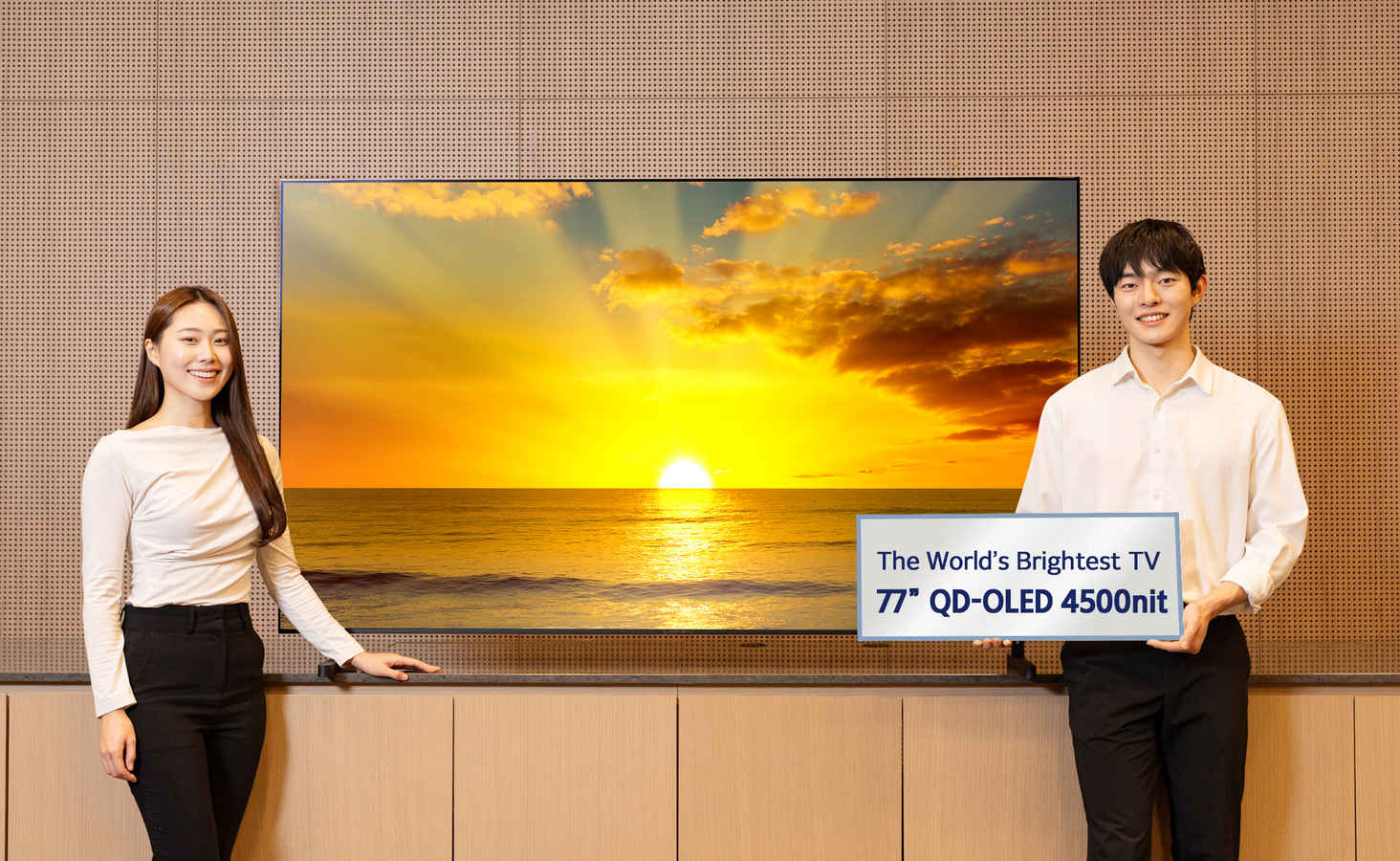
The new Samsung QD-OLED TV panel claims up to 4,500 nits peak brightness under specific test conditions.
Samsung 2026 TVs including the 130-inch Micro RGB TV will be the first with HDR10+ Advanced support.
The new RGB micro-OLED for XR headsets sport 5,000 PPI.
At CES 2026 in Las Vegas, Samsung is unveiling its next wave of display technology, led by a brighter QD-OLED TV panel and a 5,000-PPI Micro OLED built for XR headsets. Alongside this, the company will also showcase the world’s first 130-inch Micro RGB TV. So, you can look forward to seeing ultra-premium screens that will be used by Samsung and other brands for their TVs and other devices.
2026 QD-OLED TV panel: up to 4,500 nits
Samsung Display says the 2026 QD-OLED TV panel uses newly optimised organic materials and can reach peak brightness of 4,500 nits, which the company calls one of the highest levels yet for a self-emissive display. This coincides with LG also announcing its Tandem WOLED TV panel with 4,500 nits.
Although 4,500 nits is achieved in lab conditions within a small window, Samsung highlights that the latest QD-OLED achieves this brightness by pushing each RGB component to its maximum, aided by AI-based picture optimisation.
Full-screen brightness could be way low, and for reference, last year’s flagship Samsung S95F achieved around 400 nits only.
The panel sizes and other details are unconfirmed at this point.
Also Read: First RGB-stripe QD-OLED and OLED monitors announced: Asus and MSI lead the rollout
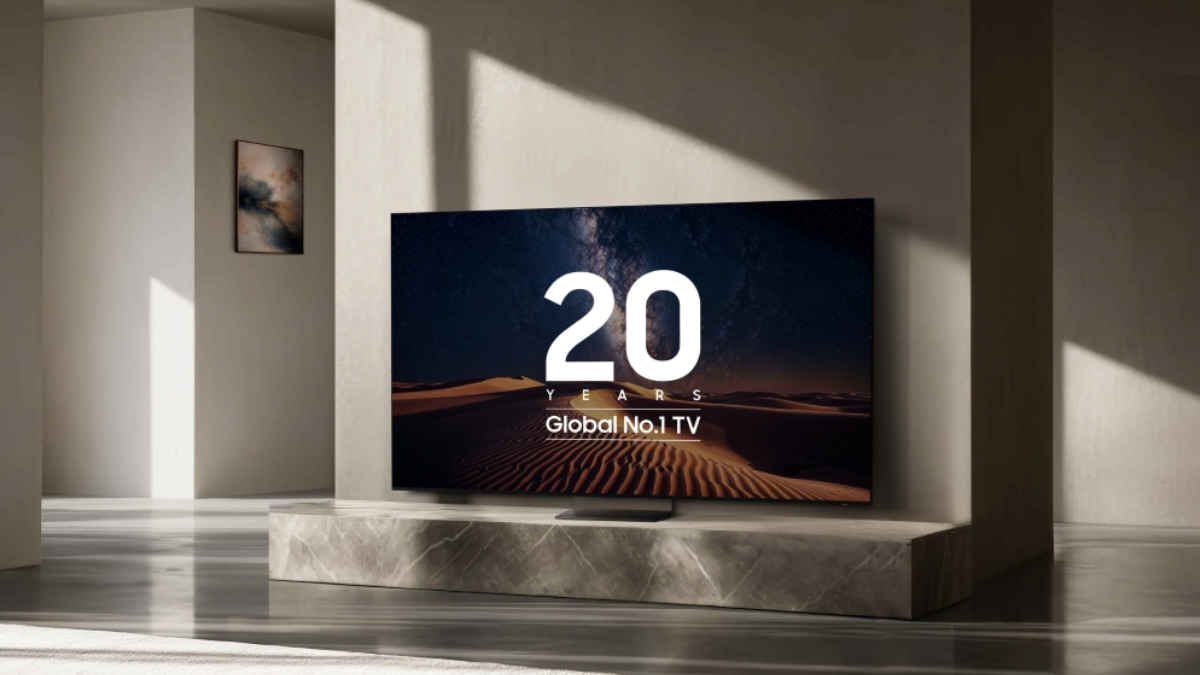
Samsung’s 130-inch Micro RGB TV
Samsung Electronics has unveiled the world’s first 130-inch Micro RGB TV (R95H) and will demo this at CES 2026. It is the company’s largest Micro RGB display yet, and this technology is its top offering. Its Frame design and upgraded colour and contrast control are expected to appear like a ‘vast immersive window’.
Under the hood, the TV is powered by Micro RGB AI Engine Pro, along with software features like Colour Booster Pro and HDR Pro to refine tones and contrast, and Micro RGB Precision Colour 100 to enable coverage of 100 percent BT.2020. There is VDE certification for precise colour handling, a Glare-Free layer for a matte anti-reflective finish, and support for HDR10+ Advanced, Eclipsa Audio and Samsung’s Vision AI Companion (bundled with Microsoft Copilot and Perplexity, depending on region and model).
The speakers are integrated into the frame and tuned to the screen’s scale.
RGB Micro-OLED for XR headsets: 5,000 PPI
Samsung Display will also showcase a next-generation RGB micro-OLED (OLED-on-Silicon) for XR headsets. It measures 1.4 inches and reaches 5,000 ppi, significantly higher than today’s high-end headset panels.
Earlier details mention potential support for up to 15,000 nits, 99 percent DCI-P3 and 120 Hz refresh rate. If these numbers hold, expect sharper text, reduced screen-door effect and richer colour than micro-WOLED solutions found in current premium headsets.
UT OLED, automotive and AI-era concepts
Samsung Display will demo OLED for new categories, including cars, robots, lamps and portable devices. Its UT (ultra-thin) OLEDs, around 30 percent lighter and thinner, are expected to enter production in 2026.
We will track CES developments and update as TV makers reveal their own line-ups using these new panels, including pricing, availability and regional rollouts. Keep reading Digit.in for more such announcements.
Also Read: Hisense announces 2026 TV lineup with RGB Mini LED and Dolby Vision 2: Models and availability