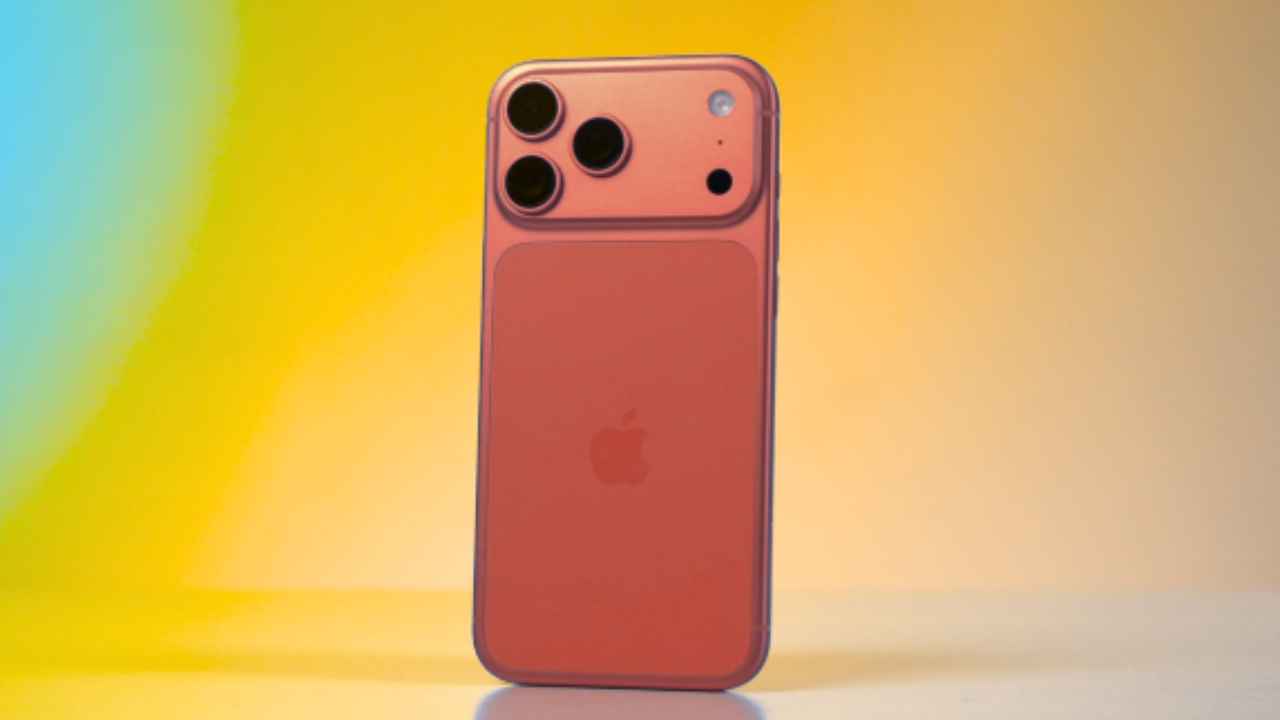
Major design revamp with a new camera island, smaller dynamic island, and aluminium frame.
A19 Pro chipset with up to 12GB RAM, vapour cooling, and Apple Intelligence support.
Triple 48MP rear cameras, 24MP front camera, bigger battery, and Wi-Fi 7 support.
The Apple iPhone 17 series could be released as early as next month, and the internet is already abuzz with anticipation after seeing leaks. The iPhone 17 series lineup may be very similar to last year’s, with the exception of the iPhone 17 Plus, which has been replaced by the iPhone 17 Air. According to the leaks, the Pro variants will be the centre of attraction this year, hinting at many upgrades, with the iPhone 17 Pro Max stealing the show.
And if you are somebody looking to buy a new iPhone, here are 5 reasons why you should wait for the upcoming flagship.
- Design
Apple is said to be giving its Pro series a major design revamp. The rear panel is said to be different from this, with a new rectangular camera island, a familiar triangular camera, and flash moved towards the right. The logo is also said to be positioned. Additionally, the device is said to get a new aluminium frame, ditching the titanium frame. On the front, we may get to see a smaller dynamic island, narrow bezels, and an anti-reflective coating.
- Performance and AI
The Apple iPhone 17 Pro Max will reportedly come powered by the A19 Pro chipset. It will also reportedly get an improved RAM, maybe up to 12GB, to support upcoming Apple Intelligence. It may also have a vapour cooling chamber to help manage the thermals while performing heavy tasks.
Also read: From iPhone 17e to M5 MacBook Pros: Here’s every Apple product expected in early 2026
- Camera
This year, the Apple iPhone 17 Pro Max is said to get an improved triple camera setup. It will reportedly feature a 48MP main, 48MP telephoto, and 48MP ultrawide sensor. On the front, the device will have a 24MP front camera.
- Battery
Apple is said to offer a bigger battery. As per the reports, the device could offer an increased 8.725mm, up from 8.25mm on the iPhone 16 Pro Max. With this, we can speculate that a bigger battery will debut.
- Apple-Designed Wi-Fi 7 Chip
For the first time, the Apple iPhone 17 Pro and iPhone 17 Pro Max may receive a Wi-Fi 7 chip. This will enable faster Wi-Fi speeds, reduced latency, and more dependable connectivity by enabling the Pro models to send and receive data simultaneously over the 2.4GHz, 5GHz, and 6GHz bands with a compatible router.