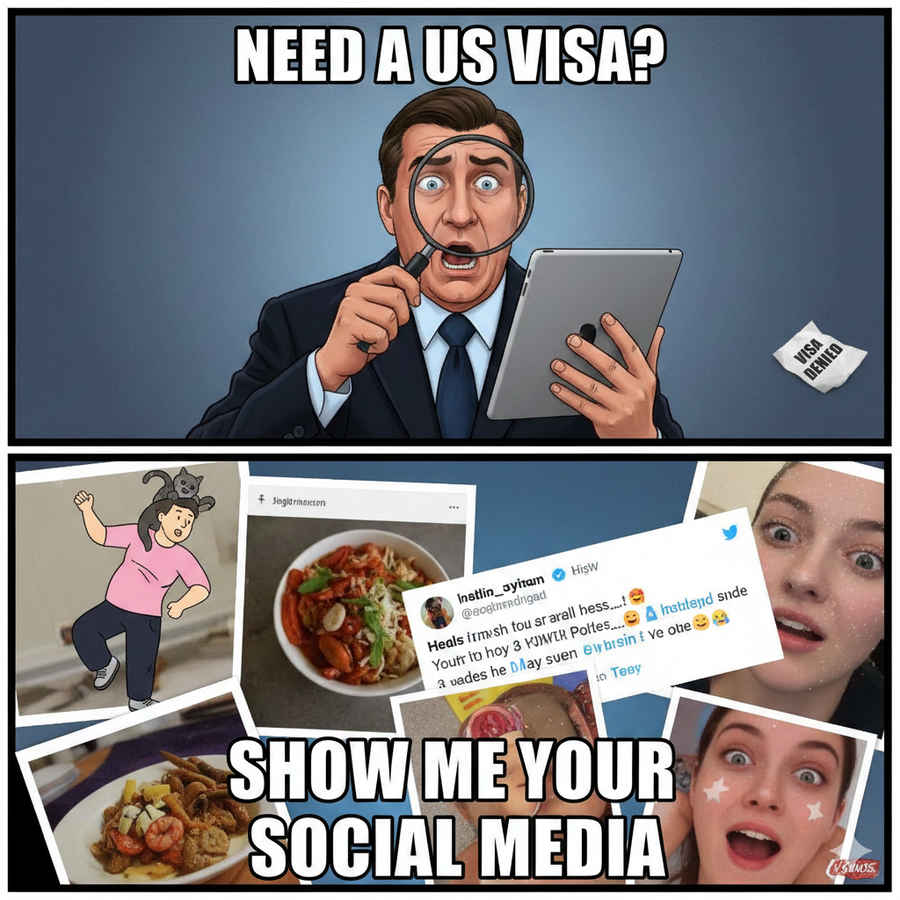
US may soon make it compulsory for tourists to share 5 years of social media handles as part of immigration checks.
Missing or hiding any online account could lead to visa refusal, raising major privacy concerns among travellers.
Experts say tighter digital screening and new travel restrictions may be hurting US tourism, with visitor numbers declining.
Who would have thought that your social media could determine whether you are allowed to enter a country? Yes, you heard that right. According to recent reports, the Trump administration may soon require tourists from dozens of nations to hand over their social media handles before entering the United States. This follows a proposal from the US Customs and Border Protection, which suggests making a traveller’s social media history from the past five years a mandatory part of the immigration screening process. According to the US State Department, reviewing social media activity helps officials identify online behaviour that may indicate potential security risks.
The American government has already been examining the online presence of student visa and H-1B applicants. The requirement has raised concerns, especially among young applicants who use multiple platforms and frequently switch between them.
For many of us the social media is simply a place to share personal moments, thoughts and trends and having the posts scrutinised as part of a visa application feels as a breach of personal space, particularly because privacy settings may need to be made public. Officials have also warned that leaving out any account, even accidentally, could lead to a visa refusal in the future.
Also read: Govt issues notice to Apple over spyware alert, CERT-In offers free device scans
Recent developments suggest that digital checks may expand as the administration discusses new travel bans. Currently, visitors from the UK can still enter the United States by filling out an ESTA form rather than applying for a full visa. However, travellers from several countries in Africa, the Caribbean and the Middle East already face stricter rules, and reports indicate the government is considering adding more nations to that list. The announcement followed a violent incident in Washington involving an Afghan man accused of shooting two National Guard members.
Also read: Donald Trump confuses 6G with camera tech during live event: Here’s what he said
Travel experts say these increasing restrictions, combined with expanded social media screening, may be contributing to a decline in tourism to the United States. Research by the World Travel and Tourism Council shows that international visitor spending in the United States is expected to fall this year. Canada has also seen a drop in travel to the United States, with some Canadians avoiding trips as a form of protest. Since Canadians make up a large portion of international visitors, this drop could significantly affect the tourism sector.
Also read: Hackers trick ChatGPT and Grok to install malware onto devices: Report
For everyday travellers, the biggest change is the growing link between online presence and visa approval. It underscores how closely the digital and real worlds are now connected. Posts, comments and even old usernames can influence whether someone is allowed to study, work or holiday in another country. As social media continues to shape global conversations, it is also shaping how nations approach safety and border control.