Expressive Speech rolls out in 8 languages to preserve creator tone.
Lip Sync pilot aims to match translated audio with on-screen lip movement.
Smart filtering prevents unsuitable videos from being dubbed.
YouTube has announced a major update to its auto dubbing feature, aimed at creators and viewers worldwide. The platform is expanding language support to 27 languages, introducing a Preferred Language control for viewers, and testing a Lip Sync service. The update is designed to help creators reach a global audience without manual translation, while giving viewers more control over how they consume multilingual content.
More dubbing languages for expressive speech
YouTube’s auto dubbing tool is now available across 27 languages. This allows creators to automatically translate and voice their videos into multiple languages without recording separate tracks. According to the company, more than 6 million daily viewers in December watched at least 10 minutes of auto-dubbed content, indicating growing adoption.
Beyond plain translation, dubbing supports Expressive Speech in eight languages: English, French, German, Hindi, Indonesian, Italian, Portuguese and Spanish. This feature aims to preserve a creator’s tone, pacing and emotional cues rather than delivering flat, robotic narration.
What it means:
For creators, this reduces the barrier to entering new markets without hiring voice actors. For viewers, it improves the naturalness of dubbed content, especially in personality-driven formats such as vlogs and explainers.
How it works:
Eligible creators can enable auto dubbing in YouTube Studio. Expressive Speech is automatically applied in supported languages where available.
Also Read: Spotify now lets you use lyrics, previews and translations offline: Here’s how
Preferred language control for viewers
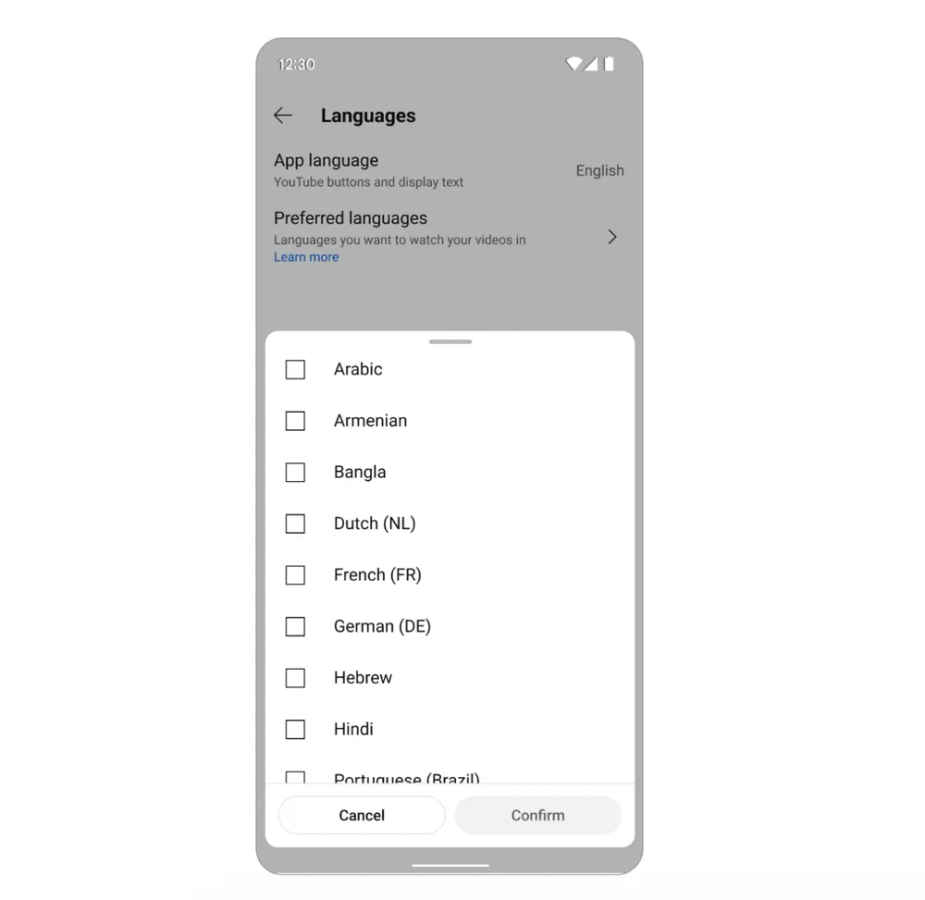
YouTube has added a Preferred Language setting that allows users to choose how they want to hear multilingual content. While the platform already uses watch history to determine default audio preferences, viewers can now manually set their preferred language or opt to watch videos in the original language.
What it means:
This is particularly relevant in multilingual markets such as India, Europe and Latin America, where users often switch between regional and global content. The feature gives viewers greater control over the playback experience.
How to use:
Viewers can update their language preference in account settings. When available, YouTube will prioritise that language for dubbed content.
Lip Sync pilot for realism
YouTube is testing a Lip-Sync pilot that subtly aligns a speaker’s lip movements with the translated audio. The goal is to make dubbed videos feel closer to native recordings rather than layered voiceovers.
What it means:
If rolled out widely, this could address one of the main limitations of auto dubbing, the visual mismatch between speech and lip movement. It also signals YouTube’s deeper investment in AI-powered content localisation.
Smart filtering and creator control
YouTube has introduced automatic smart filtering at the video level. The system detects content that may not be suitable for dubbing, such as music-heavy videos or silent vlogs, and prevents automatic translation where it could reduce authenticity.
Importantly, YouTube states that auto dubs do not negatively affect a video’s discovery ranking. In fact, dubbed versions may improve discoverability in other language markets. Creators can also upload their own dubbed tracks or disable auto dubbing entirely.
Auto dubbing is becoming a strategic growth lever for YouTube. As competition intensifies from short-form and regional platforms, the ability to localise content at scale gives YouTube an advantage in cross-border discovery.
For creators, especially mid-sized and emerging channels, this update lowers the cost of global expansion. For viewers, it simplifies access to international content without relying on subtitles.
Keep reading Digit.in for similar stories.
Also Read: Valentine’s Day 2026: Best tech gifts under Rs 10,000 for your loved ones