Large-screen televisions are no longer niche products in India. With 4K streaming now mainstream, fibre broadband expanding, and console gaming gaining ground, buyers are upgrading beyond 55-inch and 65-inch screens. The 75-inch segment, once reserved for luxury homes, is now accessible under Rs 1 lakh. A 75-inch TV changes how you experience content. At a viewing distance of around 8 to 10 feet, the screen fills more of your field of vision without visible pixel structure. Films feel cinematic. Live sport feels immersive. And games feel larger than life. For Indian living rooms that are spacious, open-plan, or part of a home theatre setup, a 75-inch makes practical sense. It also reduces the need to sit too close to enjoy 4K resolution.
At this price, most 75-inch TVs offer 4K HDR visuals with a 60Hz native refresh rate. Some models simulate higher refresh rates, often by reducing resolution. Audio output is generally adequate, and you get multiple HDMI ports, though full HDMI 2.1 support remains limited. There are several options available on platforms such as Amazon India, and below we have ranked our picks in ascending order of price.
Price: Rs 60,990
Vu differentiates itself with audio. The 75VIBE-DV features an integrated 88W soundbar system, significantly higher than rivals in this range.
The 4K QLED panel supports Filmmaker mode, Cricket Mode, Dolby Vision and HDR10. It runs Google TV. Refresh rate remains 60Hz. For gamers, there are features like VRR, ALLM, HDR Gaming, Game Mode and a Gaming Dashboard. Among other things, the TV features 3 HDMI ports, one of which has eARC, and 2 USB-A ports.
Price: Rs 62,999
The Philips 8100 Series is among the most affordable 75-inch QLED TVs in India. It uses a Quantum Dot layer to improve colour volume compared to standard LED panels. It supports Dolby Vision and HDR10+. The native refresh rate is 60Hz only, but with HSR, you can get a simulation of smoother 120Hz frames.
The TV runs on Google TV, giving access to major streaming apps and voice search through Google Assistant. Audio output is rated at 30W with Dolby Atmos passthrough.
For connectivity, you get 3 HDMI ports and 2 USB ports, among other things.
Also Read: Philips 8100-series 50-inch 4K QLED TV review: Lots of features and modest performance
Price: Rs 66,990
TCL has built a strong presence in the large-screen segment. The 75T6C features a QLED panel and supports Dolby Vision and HDR10+. It uses TCL’s AiPQ processor for upscaling and colour optimisation. Native refresh rate is 60Hz, but it includes a 120Hz Game Accelerator mode that simulates faster frames.
Audio output is 30W with Dolby Atmos and DTS support. The IO ports include 3 HDMI and 1 USB port. The software onboard is Google TV.
Price: Rs 68,999
Hisense E7Q offers a native 60Hz panel with 120Hz HSR. For gaming, VRR and ALLM. The QLED display supports Dolby Vision and HDR10+. The TV has 3 HDMI ports, including eARC support. For audio, there is a 30W speaker output.
You also get Dolby Vision and Filmmaker mode. The TV runs on VIDAA OS, which is fast and responsive, though app availability is narrower than Google TV.
Price: Rs 69,999 (launch price: Rs 64,990) First sale on February 27, 2026
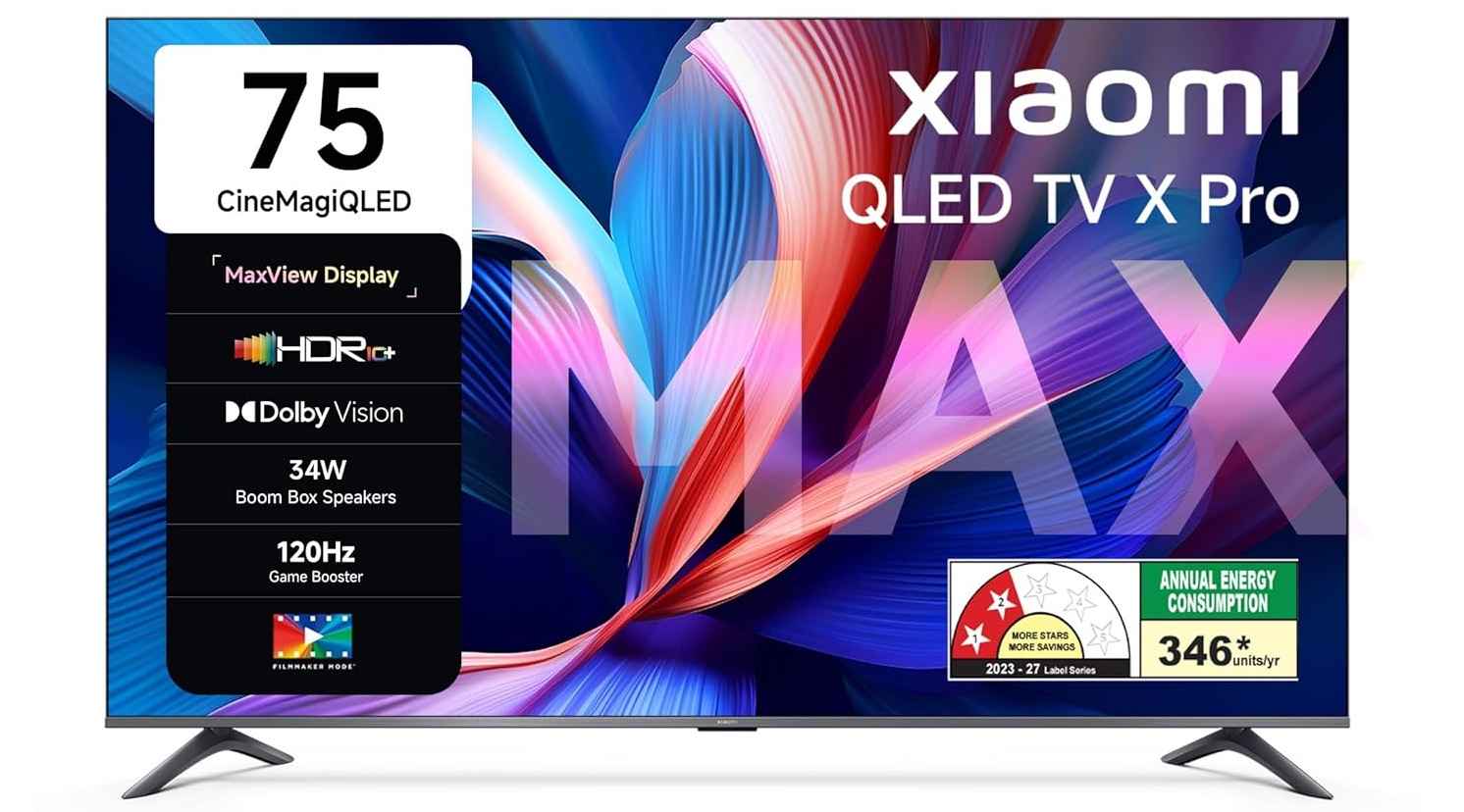
Xiaomi’s 75-inch X Pro QLED brings reliable brand recall and a content-focused software experience.
It supports Dolby Vision, Filmmaker mode, and HDR10+. Audio output is around 34W with DTS and Dolby support. You also get ALLM, MEMC, Eye-Care mode and the 120Hz Game Booster feature.
It runs Google TV with Android 14 base and Xiaomi’s PatchWall interface layered on top. PatchWall aggregates content across apps, which is useful for Indian viewers who consume regional and OTT content.
The connectivity options include 3x HDMI (1 contains eARC) and 2x USB-A (2.0 speeds).
Price: Rs 74,990
The TCL 75T8C is one of the strongest gaming TVs under Rs 1 lakh. It features a native 120Hz refresh rate panel and HDMI 2.1 support with 144Hz VRR, ALLM, and DLG 288Hz. This allows 4K at 120Hz gaming on PlayStation 5 and Xbox Series X.
The QLED panel supports Dolby Vision Gaming. For gamers, this is a clear step above standard 60Hz TVs. You also get 4 HDMI Ports, 1 USB port, and 35 Watts.
Price: Rs 79,990
Samsung’s Crystal 4K Vivid Pro focuses on processing and brand reliability.
It uses the Crystal Processor 4K for upscaling and runs the Tizen OS platform. Samsung supports HDR10+ but not Dolby Vision.
It sports a 50Hz refresh rate natively, but there is support for Motion Xcelerator. You can also enjoy Samsung’s ecosystem benefits if you own other smart devices from the company.
Price: Rs 99,990
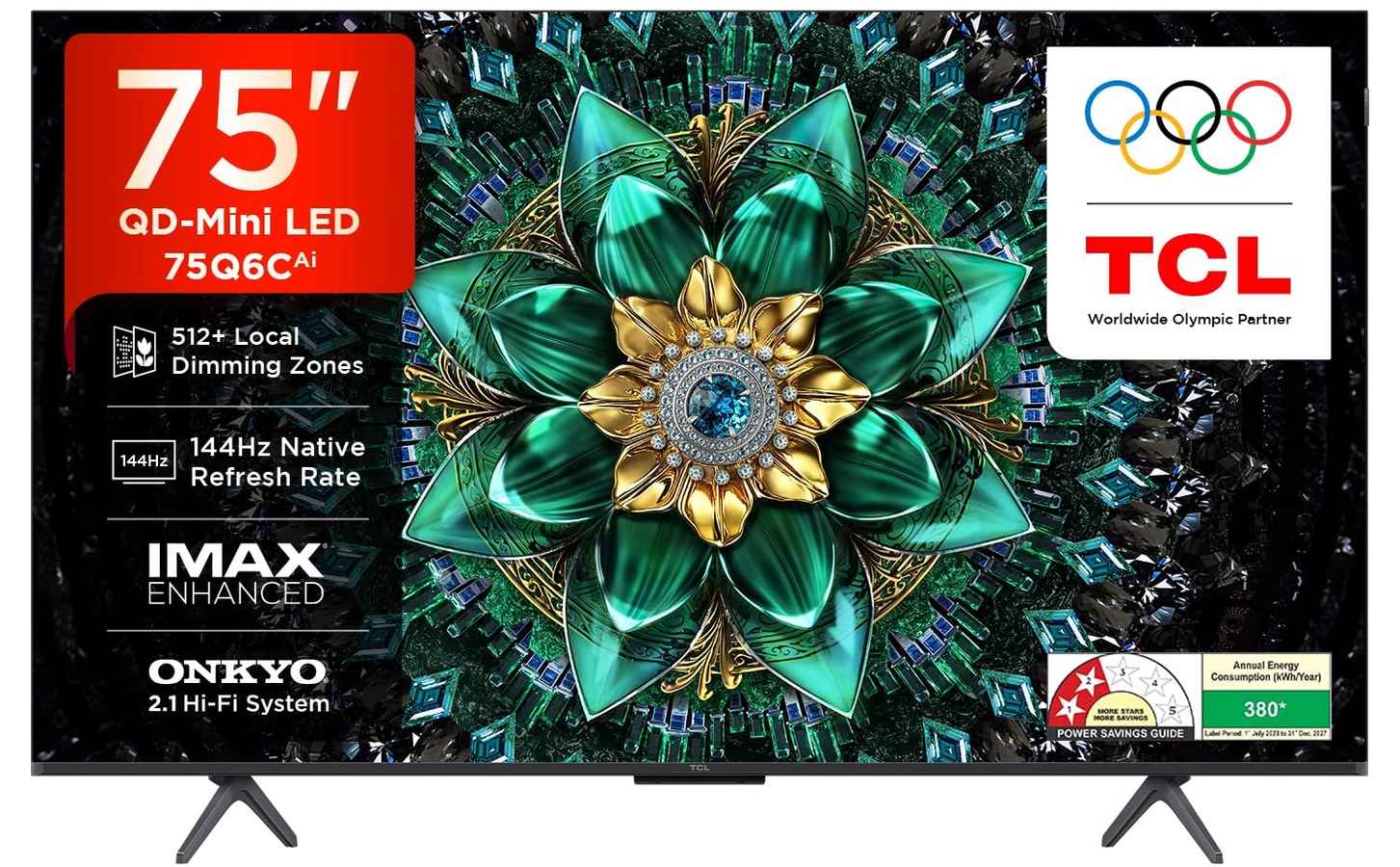
The TCL 75Q6C introduces QD-Mini LED technology under Rs 1 lakh.
Mini-LED backlighting enables multiple local dimming zones, improving contrast and reducing halo effects compared to standard LED TVs. For buyers who want deeper blacks and stronger HDR impact, this is the most advanced hardware in this list.
It features a 144Hz panel, HDMI 2.1 support, Dolby Vision, 40W audio, Dolby Atmos, DTS: Virtual X and Google TV. Connectivity-wise, there are 4 HDMI ports (2 of which support 4K144Hz and one supports eARC) and 1 USB port.
Overall, you have some choices when it comes to buying large screens under a lakh. If you have space and stable internet, you can consider one of these 75-inch TVs.
Keep reading Digit.in for similar stories.
Also Read: Hisense U7Q Mini LED TV review: Practical option under Rs 70,000 with fair trade-offs