Getting Windows to work on ARM hasn’t been without its challenges, just ask Microsoft – they’ve been trying since 2012 with Windows RT and so on. The arrival of high-performance ARM chips in the form of Qualcomm’s Snapdragon X Elite brought Windows on ARM closer to mainstream viability for consumers, and with the Snapdragon X2 Elite there’s plenty in the hardware that’ll make the platform attractive for business and enterprise customers as well.
At the architecture deep dive at Qualcomm Labs, I experienced firsthand the following demos that showcase some of the rapid strides Snapdragon X series compute chips are making on Windows-based laptops.
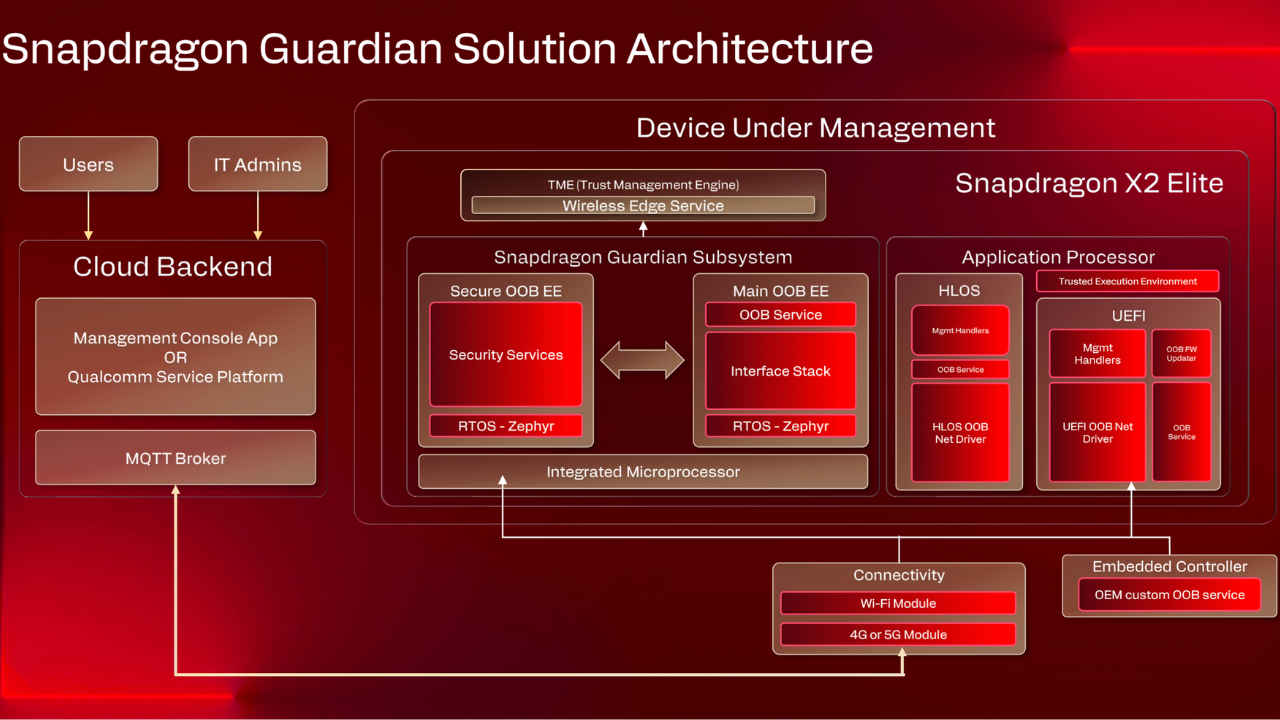
With the rise of work from home and out-of-office field workers, managing Windows 11 laptops becomes a cumbersome task – just any IT department of a SMB or enterprise company. Here I must say that Snapdragon Guardian Technology on the Snapdragon X2 Elite aims to deliver enhanced security and remote management capabilities for Windows PCs, at par or even over and beyond what’s possible on Qualcomm’s x86 rivals.
It helps position the platform as an attractive AI PC option for business and enterprise customers in 2026 and beyond. The key to Snapdragon Guardian Technology on the X2 Elite is its always-connected nature, maintained through integrated cellular (4G/5G) and Wi-Fi connectivity.
Also read: Snapdragon X2 Elite chip: Qualcomm is serious about AI PC domination!
This connectivity enables true Out-of-Band (OOB) PC management, allowing IT Admins or users to manage the device virtually anywhere. The solution architecture relies on a Snapdragon Guardian Subsystem which features an integrated microprocessor and dedicated secure OOB EE (Execution Environment) running security services on an RTOS-Zephyr kernel.
Key security and manageability features include:
Also read: Inside Snapdragon X2 Elite’s Oryon: The CPU challenging Intel, AMD and Apple
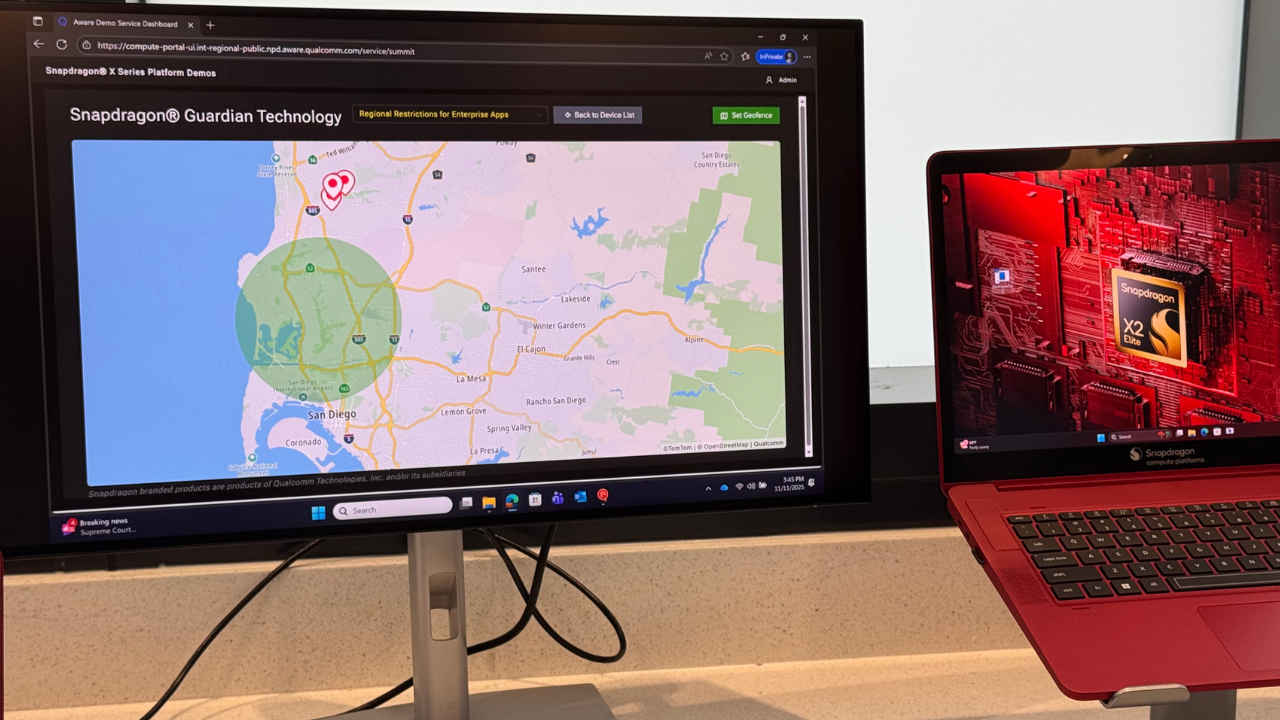
Qualcomm demonstrated these features on engineering samples of new Snapdragon X2 Elite-based laptops with remote lock and wipe and locate and track capabilities. Seeing it with my own eyes was indeed believing that the tech worked, giving business users turnkey solutions in device management.
The gamechanging bit here is that this unique out-of-band control and secure architecture remain functional even when the main operating system (HLOS) is offline, powered down, or unbootable, establishing a persistent security link between the device and the cloud backend via the MQTT Broker. This is music to IT admin’s ears, believe me, and allows for more secure device control on a business laptop or enterprise Windows PC than ever before.
Another way the Snapdragon X2 Elite showcases its low-power functionality is through the Qualcomm Always On Subsystem built into the chip. This subsystem maintains essential functions, like network-connectivity, even when the device is in suspend or sleep states.
Also read: Snapdragon X2 Elite benchmarks: Windows 11 gaming on Adreno X2 GPU
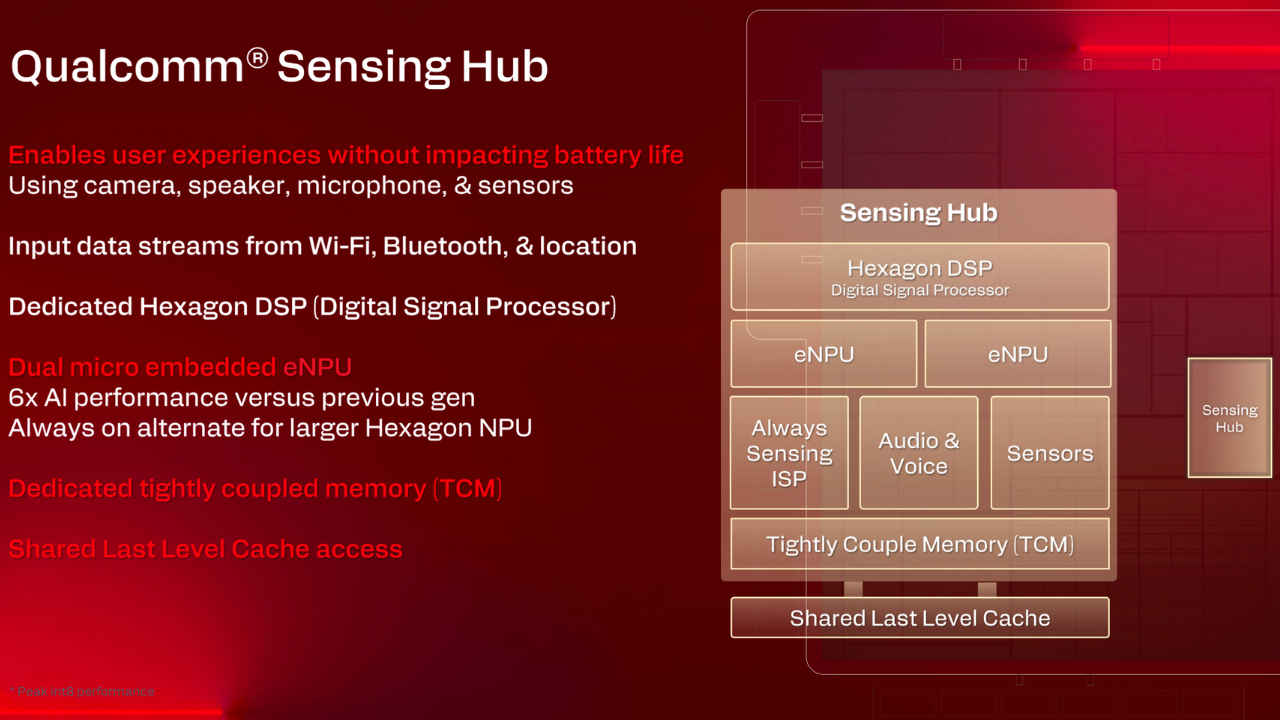
For always-on user experiences without impacting battery life, the platform integrates the Qualcomm Sensing Hub. The Sensing Hub acts as a low-power island to offload sensor tasks for efficient processing. It takes input data streams from the camera, speaker, microphone, sensors, Wi-Fi, Bluetooth, and location services.
The core of the Sensing Hub is built around:
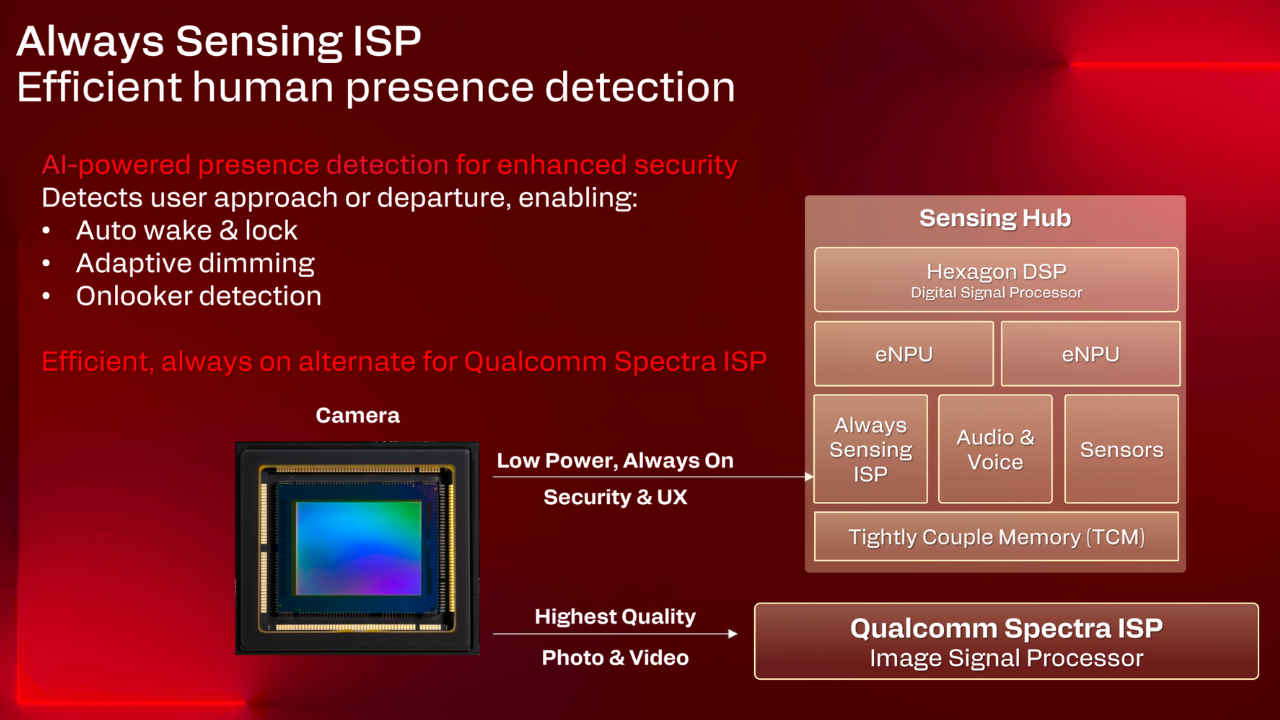
This was demonstrated through human presence detection while approaching or going away from a Snapdragon X2 Elite-based laptop, showcasing how the Sensing Hub and Qualcomm Spectra ISP work together on the chip to detect an onlooker passing by, instant auto wake and screen turning on when the authorized user approaches in front of the webcam, and screen lock and adaptive screen dimming immediately after the user walks away from the laptop.
Who doesn’t want better video calling from their Windows laptops? Organizations definitely rank reliable, high-quality video and audio as key laptop procurement criteria, according to Frost & Sullivan and Omdia reports.
This is where the Snapdragon X2 Elite excels, offering an enhanced video conferencing experience powered by its Qualcomm AI Engine. In fact, the Snapdragon X Elite has been recognized as the #1 platform by DXOMark for video calling quality on Windows devices, according to Qualcomm.
Also read: CD to floppy disk: Super slim AI PC concepts on Snapdragon X2 Elite chip
The platform’s dedicated Hexagon NPU (Neural Processing Unit) and ultra-low power Sensing Hub are key to this performance. They enable seamless, on-device AI acceleration for critical features known as Windows Studio Effects, which include:
By processing these demanding tasks locally, the NPU significantly reduces the load on the CPU and GPU, ensuring better overall responsiveness and lower power draw during video calls.
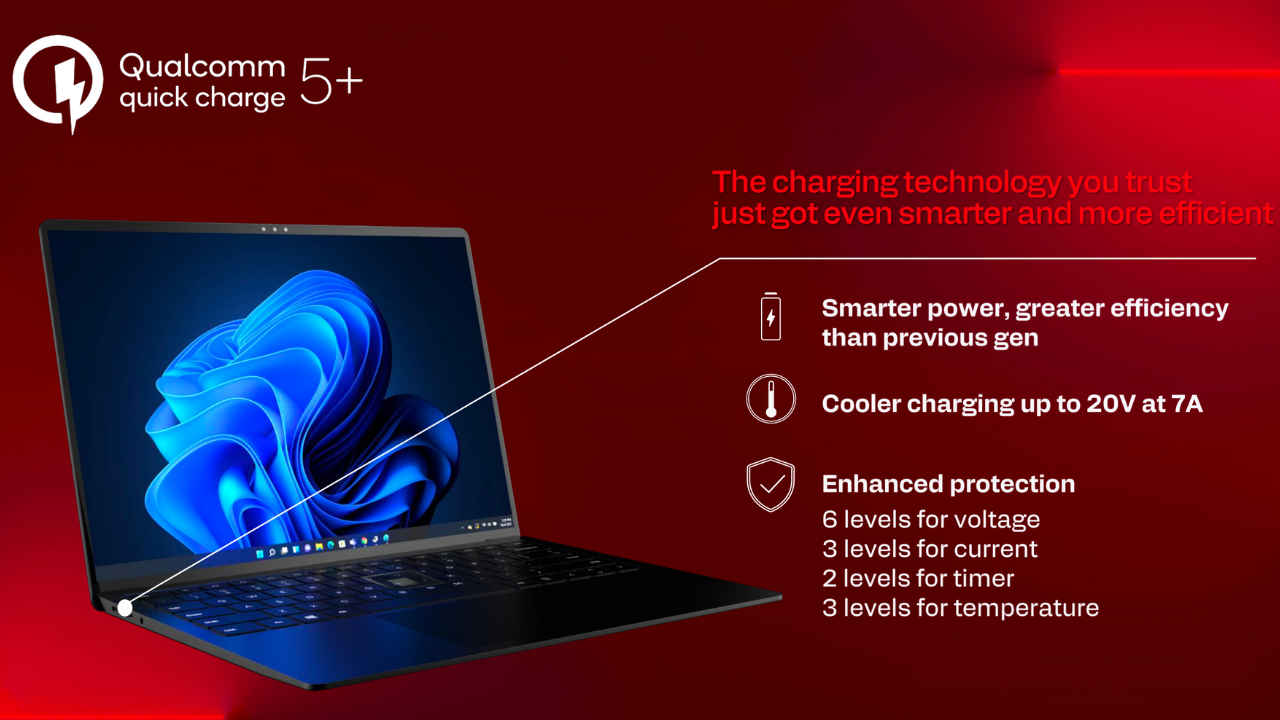
Alongside premium collaboration features, the Snapdragon X2 Elite also addresses the demand for all-day battery life and rapid power-ups. The architecture supports modern fast-charging standards, including Qualcomm Quick Charge 5+ technology, ensuring users don’t have to wait hours to charge their Windows laptops anymore.
Quick Charge 5+ is designed to deliver reliable, high-speed charging while prioritizing cooler, more consistent performance. It intelligently adapts voltage and current (up to 20V at 7A) to minimize heat, which is essential for sustained top speeds without thermal throttling or slowdowns. This smarter power delivery allows devices to be powered up in minutes, making the Snapdragon X2 Elite ideal for professionals who are constantly on the move.
Also read: NPU to power: Snapdragon X2 Elite beats Intel, AMD, Apple chips, says Qualcomm