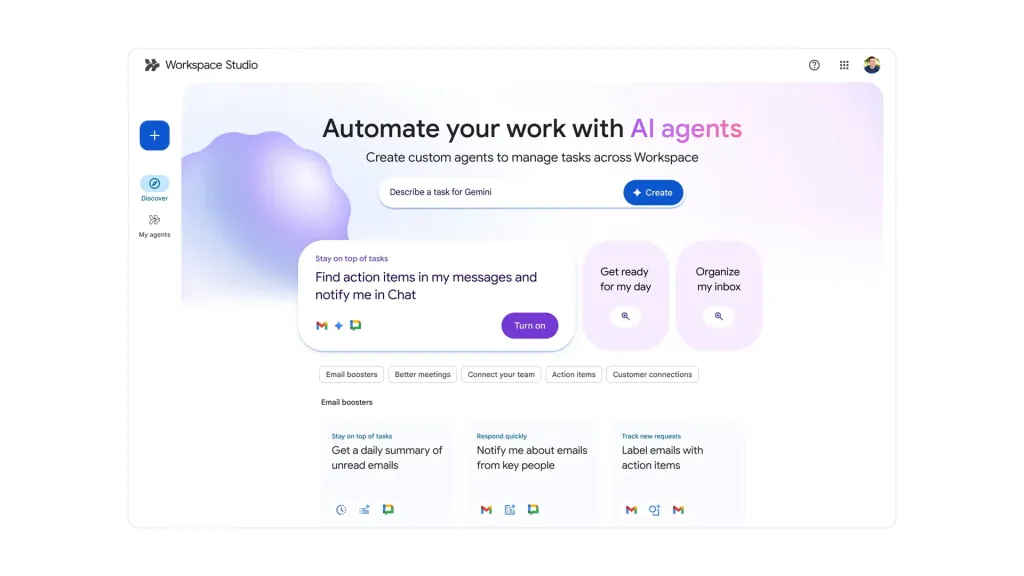
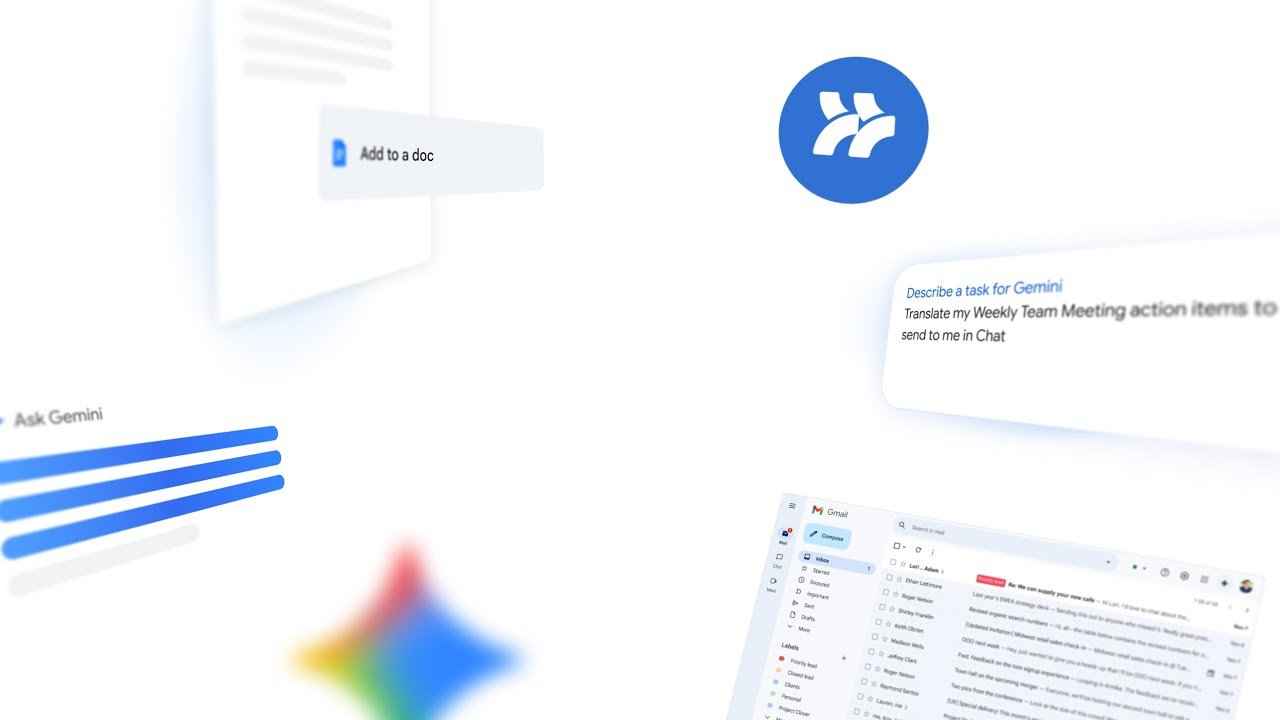
Google is preparing for a future where office software does far more than respond to prompts. With Workspace Studio, the company is laying the foundation for AI agents that can observe workflows, take actions across apps and complete complex tasks without constant human oversight. It signals a shift from conversational assistants to fully fledged autonomous helpers that operate inside the tools millions already use.
Also read: Crucial RAM is dead, blame it on AI: Why Micron is shifting its memory priorities
Workspace Studio is Google’s new environment for building, testing and deploying agent style workflows across Gmail, Docs, Sheets, Drive and Calendar. Instead of relying on traditional scripting or API integrations, it allows developers and enterprises to create agents that understand context, learn patterns and coordinate tasks across the entire Workspace ecosystem. The idea is simple but ambitious. If today’s AI helps you draft an email, tomorrow’s AI should be able to read incoming messages, understand priorities, schedule meetings, update spreadsheets and alert teams, all with minimal human intervention.
A central part of Google’s pitch is that agents are not replacing core applications. They are meant to extend them. Workspace Studio gives teams the ability to map multi step tasks, connect them to company specific data and let agents run these processes repeatedly with oversight controls in place. For example, a customer support team could build an agent that pulls issues from a shared inbox, triages them based on urgency, logs them in Sheets and assigns them to the right person. A finance team could create an agent that reads invoices, extracts details and updates expense trackers on its own.
What makes this moment significant is that Google sees agents as the next platform shift inside the enterprise. While chat based AI has become common, businesses are now asking for automation that can work at scale. Workspace Studio is Google’s answer to that demand. It borrows ideas from software engineering, workflow automation and large language models, merging them into one environment where AI can act with both precision and flexibility.
Google also argues that this approach will help organisations avoid fragmented setups. Many businesses today rely on a mix of Zapier style automations, custom scripts and manual steps that break down when teams grow. By putting agents inside Workspace, Google wants to centralise orchestration, logging, permissions and data security in one place. That is likely to appeal to companies that already trust Google’s infrastructure and want automation without creating more complexity.
Also read: Claude 4.5 Opus ‘soul document’ explained: Anthropic’s instructions revealed
There is also a competitive angle. Microsoft has Copilot Studio, which lets enterprises construct custom agents inside the Office ecosystem. OpenAI is pushing agent style capabilities across its API stack. Google needs a clear entry point into this emerging market, and Workspace Studio gives it one. With Workspace already embedded in so many organisations, Google is betting that enterprises will choose an automation layer that sits natively inside tools they already understand.
Still, the promise of agents raises questions. How much autonomy is too much for office software. Will companies trust AI to make decisions that affect customers or finances. And can Google deliver reliability in real world environments where workflows vary widely. These are not trivial challenges, but Google believes the benefits outweigh the risks. In its view, the future of productivity is not just smarter documents and emails, but systems that take work off human hands in a tangible way.
Workspace Studio reflects that belief. It shows a company trying to move beyond chat responses toward continuous, structured automation. If Google succeeds, the next wave of workplace AI will not simply answer questions. It will act, coordinate and complete work alongside us.
Also read: Trainium 3 explained: Amazon’s new AI chip and its NVIDIA-ready roadmap