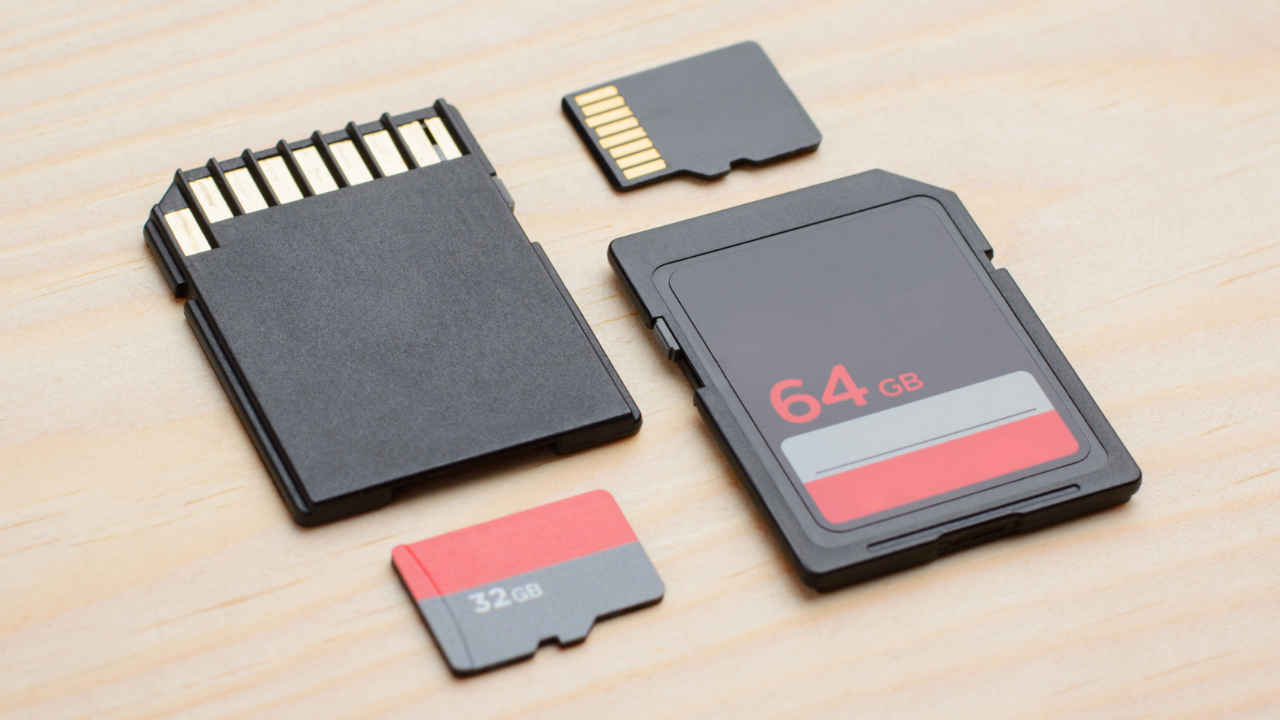
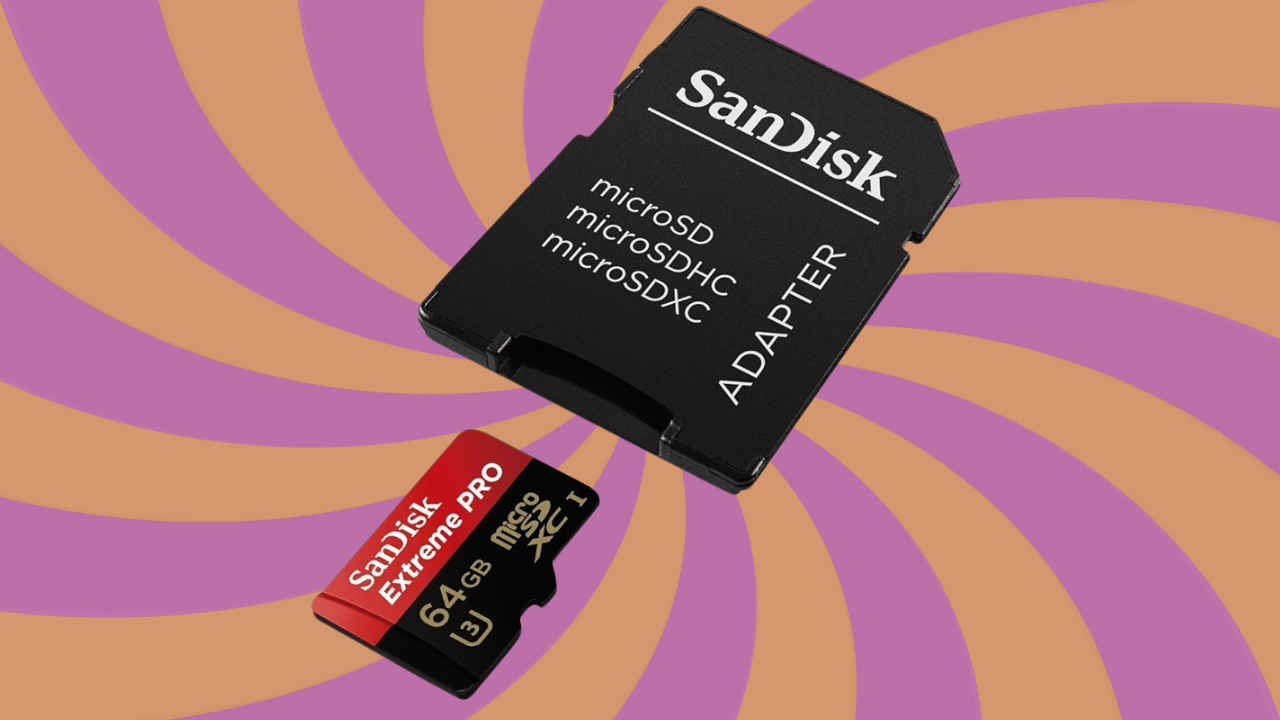
Somewhere deep in a forgotten table drawer, under a warranty slip for a phone you definitely don’t own anymore, lies the future of consumer tech in 2026. A 32GB microSD card you bought on sale before the pandemic for ₹299. Congratulations, you now own the future of memory as we know it!
This was not the plan. We were supposed to transcend ports, embrace the cloud, and trust that soldered storage onto our smartphone and laptop’s PCB would carry us into a frictionless future.
Instead, AI data centres are gobbling up high-bandwidth memory (HBM) like there’s no tomorrow and DDR5 prices look like Indigo airline surge fares in the first week of December. This perfect storm has led to the humble microSD card shuffling back into the room like a forgotten character in a long-running soap. And somehow, unbelievably, it now has leverage.
The short version of the memory story goes something like this, please bear with me. The NAND flash market suffered a massive 39.9% revenue drop in 2023 due to weak PC and smartphone demand, causing severe losses for major memory producers. To fight the oversupply, giants like Samsung, SK Hynix and Micron (which recently killed its consumer RAM brand, Crucial) enforced production cuts, with Samsung reducing NAND output by nearly 50% by late 2023. This, coupled with a focus on high-margin QLC NAND for AI, quickly shifted the market from surplus to scarcity.
In short, DRAM/NAND makers spent 2022–23 losing money on every bit they sold, swore “never again”, and then the AI boom showed up with a blank cheque. Overnight, every spare wafer started dressing up as high-bandwidth memory for GPUs, and the boring stuff – laptop RAM, phone storage, SSDs that mere mortals actually buy – got whatever was left over.
HBM capacity for 2026 is effectively pre‑sold to AI customers, and that locked‑in demand is pulling wafer, equipment and engineering resources away from “plain” DRAM and NAND that power consumer PCs, smartphones and SSDs. The result is higher prices and longer lead times.
If you’re a hyperscale data centre, this is thrilling. If you’re trying to upgrade your 4-year-old PC, it’s more “how is 32GB RAM now the price of a small vacation?” This is where the microSD card, spiritual successor to the floppy, enters the conversation with a wide grin.
Think of microSD as the aam aadmi’s hedge against AI-driven memory inflation. While NAND memory makers chase fat margins selling HBM stacks to cloud providers, regular people are rifling through online listings for 512GB cards like they’re buying gold biscuits. A terabyte microSD used to be a party trick – in 2026, it’s the emergency fund you quietly move your photos and 4K footage into before your phone storage starts reaching the limit.
It’s leading to this bizarre split reality. Premium smartphones without card slots are in all likelihood going to charge you extra for that 256GB/512GB/1TB built-in capacity. You’re pre-paying for storage you might need in year three, because you know fully well the upgrade tax is coming. Meanwhile, scrappy mid-range phones with microSD slots look less like compromises, where regular people still get to decide how much storage they want and when.
Come to think of it, technically, microSD never really left. It just went where the nerds went. Creator laptops quietly re-added full-size SD and SD Express slots, not as nostalgia but as serious I/O muscle. A place to dump 4K camera footage, and then some.
Now imagine that logic applied to phones and tablets where 4K HDR video is the default. Not just that, but where every app wants to cache a small country’s worth of data locally for best performance. Add to that how GenAI models will fight for the same on-device memory for increased AI features on smartphones launching through 2026, and it’s just more insult to injury.
Suddenly, that “ancient” microSD slot starts to look less like a relic and more like the new external scratch disk for the AI age. A little pressure valve you can open yourself, without waiting for a cloud provider to bless you with another 50GB of “reward storage” if you watch an ad.
So if 2026 does end up being “the year microSD came back”, it won’t just be about storage. It’ll be a tiny, plastic middle finger to a decade of mindlessly putting all our photos, videos and data onto the cloud. Because who would’ve thought that in the age of trillion-parameter AI models and holographic keynote stages, the breakout character would be a thumbnail-sized sliver of NAND, grinning from the side of your phone like an arcade video game cartridge and saying: “Miss me?”