Perplexity CEO on AI Browser
For most people, the browser is a passive tool – a window into the web. But for Aravind Srinivas, co-founder and CEO of Perplexity, the browser is something much more radical: the future home of true AI agents.
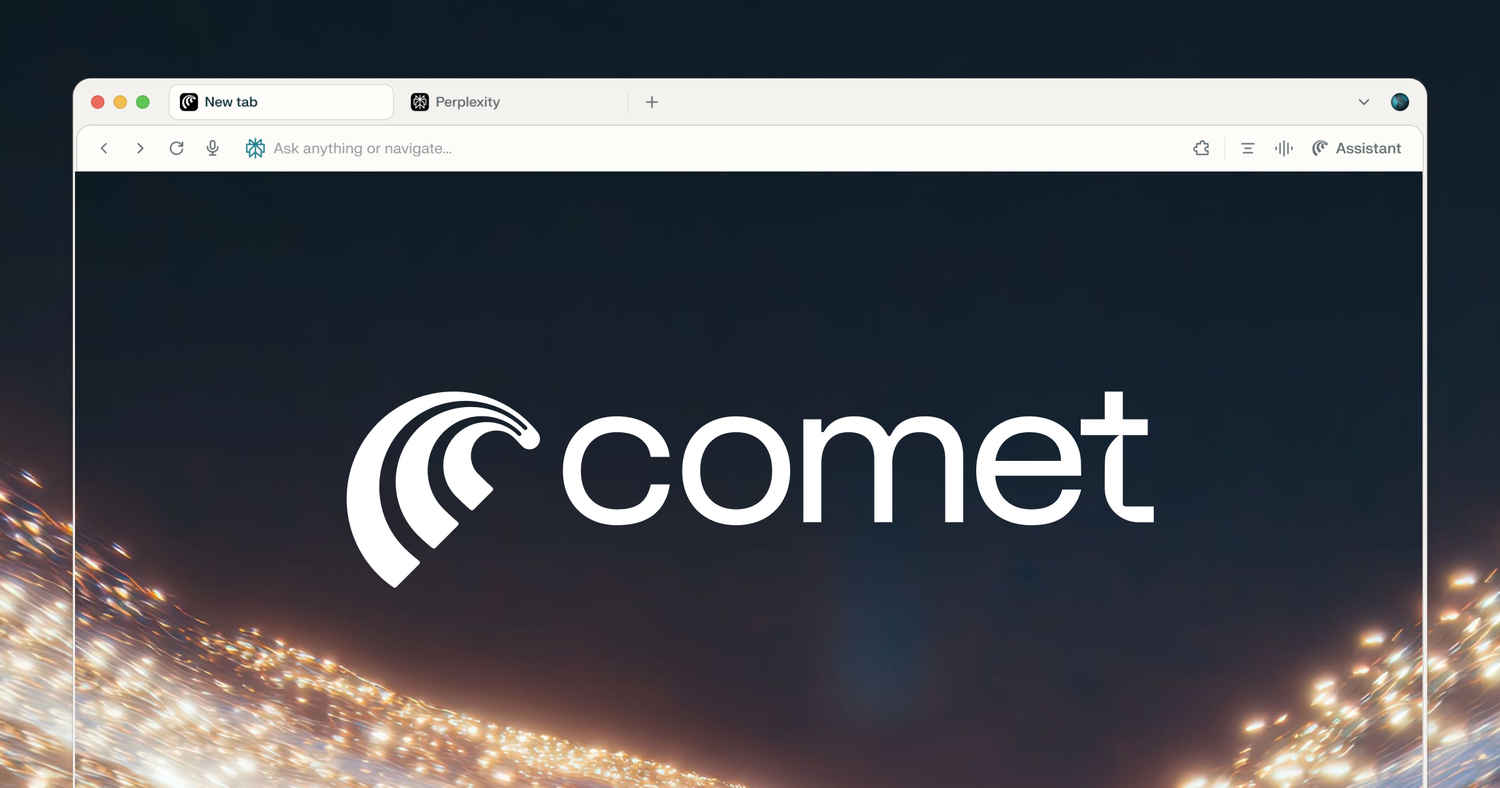
In a recent episode of The Verge’s Decoder podcast, Srinivas laid out his bold vision for Comet, Perplexity’s new AI-powered browser that blurs the line between user and agent. Unlike Chrome or Safari, Comet isn’t just where you go to consume content, it’s where work gets done for you.
As Srinivas put it, “The browser is the most agentic software that we use every day. It has your login state. It has all the pages you’re on. It’s the most powerful surface area where AI can actually take actions for you.” To him, the browser isn’t just a tool, it’s infrastructure for intelligence.
Also read: Meet Comet, Perplexity’s new AI browser: How’s it different?
Comet builds on Perplexity’s core search technology but goes further: it embeds an AI assistant directly into a Chromium-based browser. This assistant lives in a sidebar, analyzing your browsing context, summarizing information, scheduling meetings, shopping on your behalf, even drafting emails all through natural language prompts.
This isn’t a chatbot slapped onto a search engine. It’s a rethink of the entire browser experience. “This assistant is not something that just passively responds,” Srinivas explained. “It’s something that looks at your context and says: okay, here’s what I think you should do.”
That proactive quality, AI that takes initiative rather than simply answering, is what Srinivas believes separates agents from assistants. It’s also what he believes legacy tech companies can’t deliver anytime soon. “I don’t think Google can copy Comet very quickly,” he noted, pointing out the complexity and risk involved in cannibalizing their own ad model. “It’s not a chatbot. It’s a new category.”
Perplexity already offers a compelling answer-based search experience, backed by real-time web sources and clean citations. With over 30 million users and a valuation that reportedly exceeds $18 billion, it’s one of the fastest-growing AI companies in the space. But search, according to Srinivas, is only phase one.
Also read: Open AI’s Aura AI browser: How will it compete with Google Chrome?
Comet moves from finding information to doing something with it. Want to buy a flight, compare laptops, or email a PDF to your boss? The assistant can perform those tasks without switching tabs or copying and pasting between apps. “We’re not just building a product, we’re building a new way of interacting with the internet,” Srinivas said. He imagines a future where the browser evolves into a “personal OS” – a layer that sits across devices, platforms, and tasks. This assistant won’t just read the web with you. It will run errands.
Srinivas is candid about the tension between agentic computing and the ad-based business model that fuels companies like Google. In his view, AI agents pose a fundamental threat to that ecosystem. “Google’s business model depends on making people click on ads. But AI agents will reduce clicks,” he explained. “So they’re stuck.”
While Google experiments cautiously with AI summaries and products like Gemini, Perplexity is already shipping aggressive changes. Comet is available to Max plan users ($200/month) in a closed beta, with plans for broader rollout later. According to Srinivas, Perplexity is also exploring usage-based pricing for “high-ROI tasks” like shopping decisions, legal research, or automating workflows, where saving a few hours could be worth hundreds of dollars to the user.
Other startups are circling the idea of an AI-native browser. Arc has its own assistant. Rewind is working on memory tools. OpenAI is rumored to be building a browser under the codename Mariner. But Srinivas believes Comet’s full-stack approach, answer engine, assistant, and browser, all tightly integrated, gives it a major head start.
“It’s not easy to bolt AI onto a browser. You need deep integration, real context awareness, and strong incentives to keep improving it. That’s why I think Big Tech can’t just replicate this.”
In his mind, we’re at the start of a shift as big as the one from desktop to mobile. The interface of the future isn’t touchscreens or voice, it’s intent. Users won’t need to navigate menus or tabs. They’ll describe their goal, and the AI will figure out the rest.
Ultimately, Srinivas sees Comet not just as a better browser, but as a replacement for how we currently use the web. AI won’t just assist, it will act, understand and respond. “It’s not just about replacing search,” he said. “It’s about replacing the whole way you use the web.” The stakes are high, the competition fierce, but if Srinivas is right, the future won’t be about what you click. It’ll be about what gets done.
Also read: Dia the AI-powered browser: How does it stack against Chrome and ChatGPT